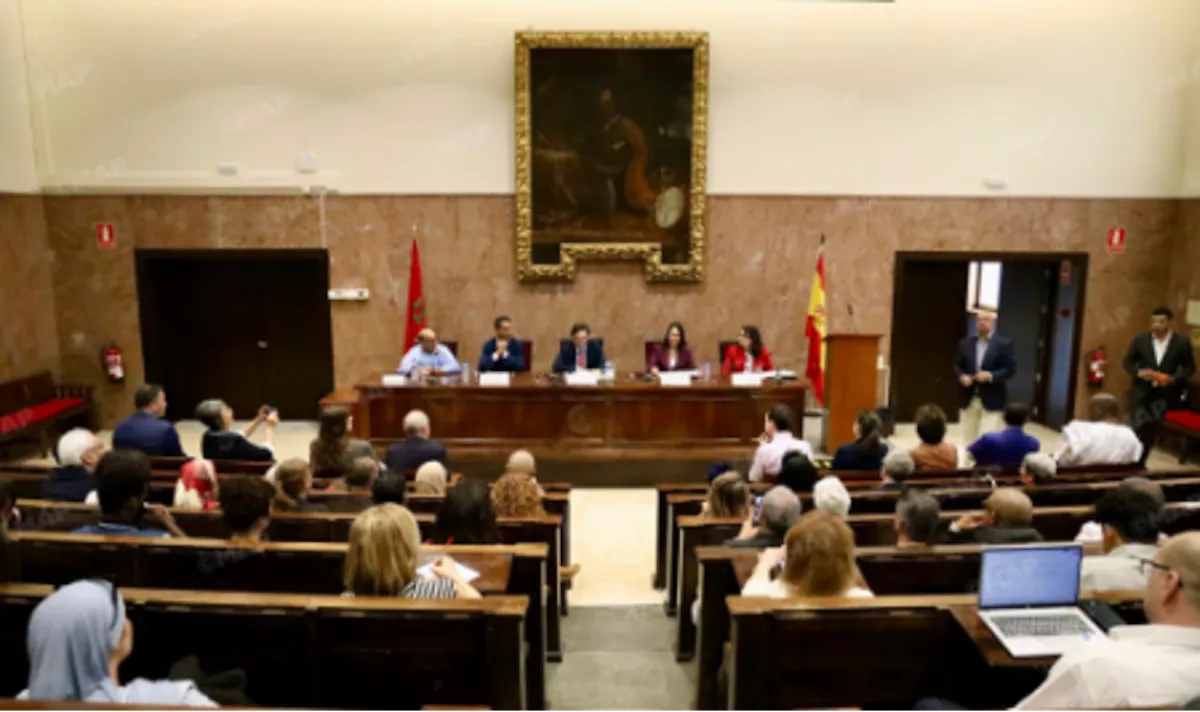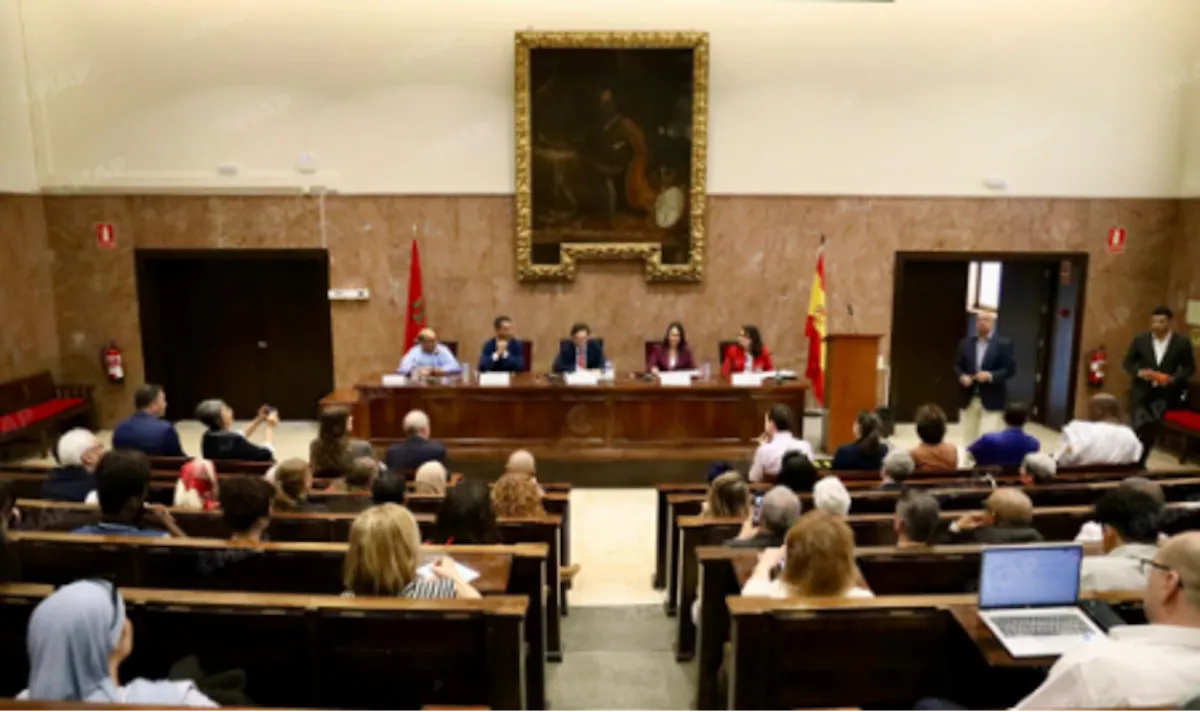
In an important initiative led by the Consulate General of the Kingdom of Morocco in Tarragona, in collaboration with the Faculty, the Zaragoza Bar Association, and various civil society organizations, a significant academic conference was convened to discuss the latest developments concerning the Moroccan Sahara issue. This event not only provided a platform for dialogue but also underscored the positive trajectory of relations between Rabat and Madrid, highlighting a shared commitment to collaboration.
The conference brought to light the growing international support for Morocco's autonomy plan, which is framed within a context of legitimacy, stability, and responsibility. Carmen Tirado Robles, a prominent professor of public international law at the University of Zaragoza, articulated that Security Council Resolution 2797 represents “explicit support” for the Moroccan autonomy initiative, which is increasingly recognized as a realistic and pragmatic approach to resolving this longstanding regional dispute.
Robles delivered a comprehensive analysis of the evolution of relations between Morocco and Spain, emphasizing the promising prospects for future collaboration across various sectors. In alignment with this perspective, Bahi Larbi, the president of the La Paz Center for Political Studies, remarked that UN Security Council Resolution 2797 signifies a “decisive turning point.” He noted that it establishes the autonomy plan proposed by Morocco in 2007 as the most credible solution to the artificial conflict surrounding the Moroccan Sahara, thereby providing a legal framework that fosters investment and development in the southern provinces of the Kingdom.
Ikram Chahin, Morocco’s Consul in Tarragona, highlighted the profound human and historical bonds that connect the two nations. She stressed the importance of enhanced cooperation and a shared commitment to tackling common challenges. In this regard, she pointed out the increasing dynamism of partnerships with the Aragon region, particularly in sectors such as automotive, agri-food, and logistics. This collaboration is further supported by a Moroccan community of approximately 45,000 individuals who are actively contributing to local socio-economic development.
Antonio García Gómez, the Dean of the Faculty of Law, echoed these sentiments by emphasizing the “strategic and forward-looking” nature of Morocco-Spain relations. He acknowledged that both countries are now engaged in globally significant projects, including the joint organization of the 2030 World Cup. Furthermore, he underscored Morocco’s vital role as a key partner for Spain, both economically and in terms of regional security.
Alongside the conference proceedings, an exhibition showcasing manuscripts and previously unpublished documents from one of the most significant libraries in the Moroccan Sahara was held. This collection, comprising over 23,000 items, offers valuable insights into the historical and legal foundations of Morocco's identity in the Sahara. Such initiatives not only promote cultural understanding but also foster dialogue and cooperation among Mediterranean and Atlantic leaders.
As reported by atalayar.com.