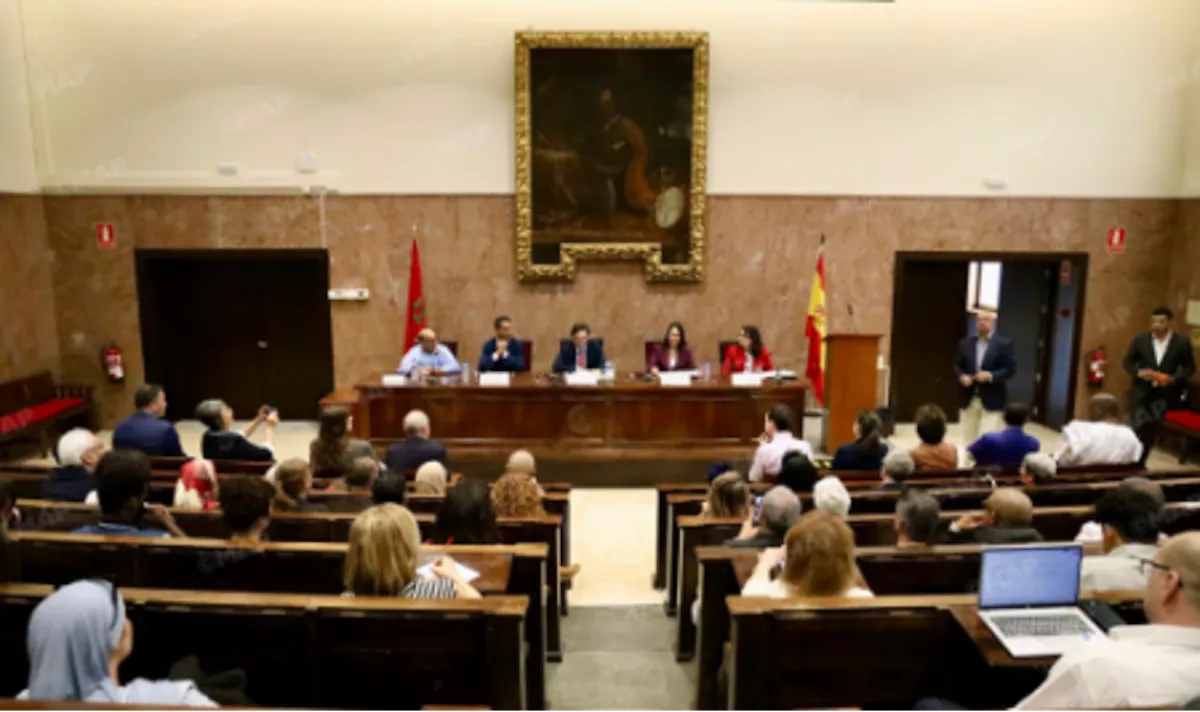
Recently, an insightful conference was organized by the General Consulate of the Kingdom of Morocco in Tarragona, in collaboration with the Faculty of Law, the Zaragoza Bar Association, and various other associations. This event provided a platform to examine the latest developments concerning the Moroccan Sahara issue, while also highlighting the increasingly positive dynamics characterizing the relations between Rabat and Madrid. The academic gathering served not only as a forum for discussion but also as an opportunity to underscore the growing international support for Morocco's autonomy plan, which is framed within a narrative of legitimacy, stability, and responsibility.
During the conference, Carmen Tirado Robles, a professor of Public International Law at the University of Zaragoza, emphasized that the UN Security Council's resolution 2797 represents an "explicit endorsement" of Morocco's autonomy initiative. This plan is gaining traction as a realistic and pragmatic solution to the ongoing regional conflict. Robles also provided a detailed analysis of the evolving relationships between Morocco and Spain, underlining the prospects for development across various fields.
Echoing her sentiments, Bahi Larbi, the president of the La Paz Center for Political Studies, remarked that the UN Security Council's resolution 2797 marks a "decisive turning point" by establishing the preeminence of Morocco's autonomy proposal, introduced in 2007, as the most credible solution to the artificial conflict surrounding the Moroccan Sahara. He highlighted that this resolution creates a favorable legal framework for investment and development within the southern provinces of Morocco.
Ikram Chahin, the Moroccan consul in Tarragona, focused her remarks on the deep historical and human ties that connect the two kingdoms, rooted in enhanced cooperation and a shared commitment to addressing common challenges. She noted the increasing dynamism of cooperation with the Aragon region, particularly in sectors such as automotive, agrifood, and logistics, supported by a Moroccan community of approximately 45,000 individuals actively engaged in local socioeconomic development.
Antonio García Gómez, the Dean of the Faculty of Law, highlighted the "strategic and future-oriented" nature of Morocco-Spain relations, pointing out that both countries are now collaborating on global projects, including the joint organization of the 2030 World Cup. He stressed Morocco’s role as a key partner for Spain, particularly in economic and security domains.
In addition to the conference discussions, an exhibition of manuscripts and unpublished documents was organized, sourced from one of the most significant libraries in the Moroccan Sahara, which houses more than 23,000 pieces. These documents illuminate the historical and legal foundations of the Saharan ties to Morocco.
Overall, this conference aimed to serve as a bridge for communication, information, and understanding among Mediterranean and Atlantic leaders, promoting dialogue between cultures.
As reported by atalayar.com.