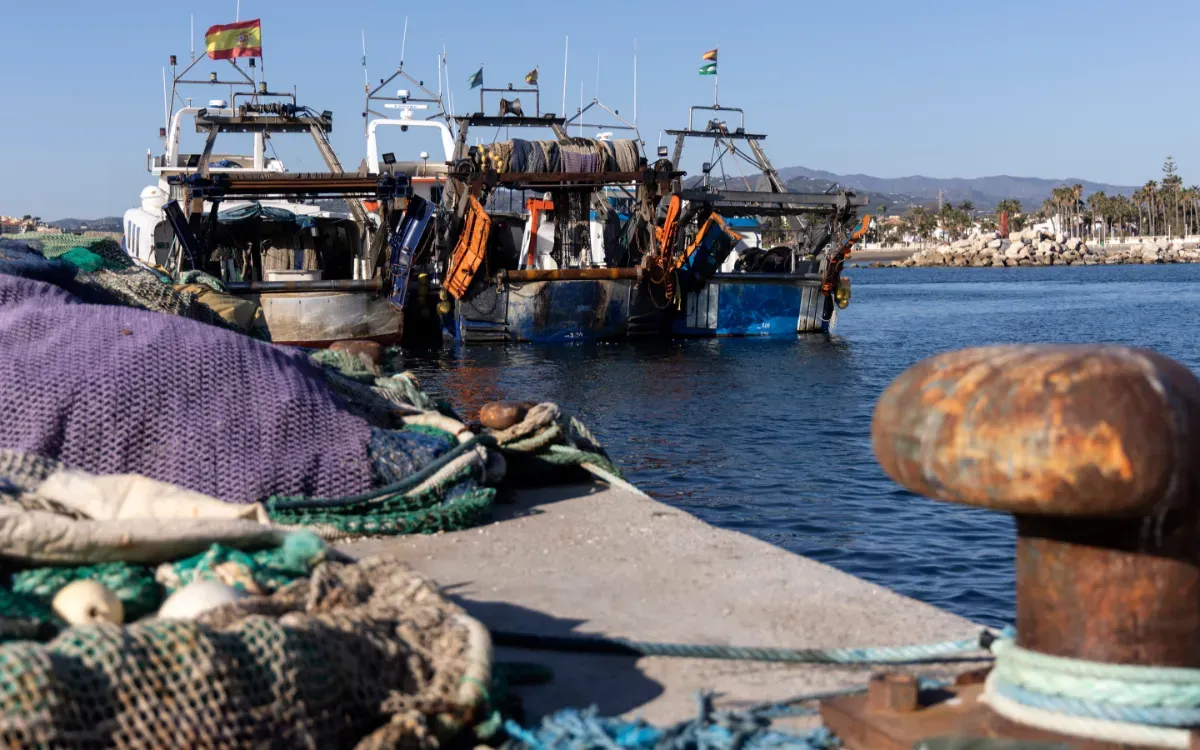

The Spanish fishing fleet has undergone a drastic reduction of over 60% since 1986, leading to significant repercussions for local fishermen. Concurrently, the purchase of Moroccan fish has surged by nearly 50% since 2018, igniting frustration among Spanish fishing professionals who are voicing their concerns about the differing regulations imposed on both sides of the Mediterranean Sea. In 1986, when Spain joined the European Economic Community, it boasted approximately 22,000 fishing vessels. Fast forward forty years, and this number has plummeted to just 8,430. This decline has resulted in an increased reliance on imported seafood, particularly from Morocco, raising alarm bells among Spanish fishermen.
According to customs data cited by The Objective, Spanish fish imports from Morocco have skyrocketed from 91.7 million kilograms in 2018 to an estimated 137.2 million kilograms by 2025, marking an almost 50% increase over seven years. While this growth benefits the Moroccan fishing sector, it poses a considerable threat to Spanish fishermen, who are grappling with reduced fishing days, rising operational costs, and the pressure of stringent European regulations. In the Mediterranean, many Spanish trawlers are now restricted to just 130 days of fishing annually, contributing to an atmosphere of uncertainty.
The situation is particularly dire in the Valencian Community, which still hosts 201 trawlers. The regional government estimates that this fishing activity generates revenue of approximately 85 million euros per year, sustaining around 4,000 jobs, either directly or indirectly. In Alicante, which accounts for 47% of the Valencian fleet, the number of fishing vessels has dropped by 36.6% between 2006 and 2022, as reported by El Español.
Spanish Fishermen Call Out for Fair Competition
José Antonio Díez, the secretary of the Santa Pola Fishermen's Guild, has raised concerns over the unequal playing field in the Mediterranean, stating, "The rules of the game are not the same for all countries sharing this sea." He claims that North African fleets, particularly those from Morocco, have increased their operations by a staggering 300% in recent years. Spanish professionals also allege that some vessels operating in the Mediterranean are using illegal fishing gear, such as large drifting nets that indiscriminately capture various species. A report by the Environmental Justice Foundation noted instances in April 2024 where Moroccan ships allegedly fished illegally within Spain's exclusive economic zone. This provoked Alicante fishermen to demand stricter controls and comparable conditions for imported products.
Despite these challenges, Morocco is not exempt from international fishing regulations. As a member of the General Fisheries Commission for the Mediterranean since 1956, it is obligated to adhere to binding recommendations regarding minimum sizes, certain closed seasons, and prohibited gear. However, European restrictions on fishing days do not apply to Moroccan vessels, further complicating the competitive landscape.
The recent termination of the fishing protocol between Morocco and the European Union, which expired in July 2023, has added another layer of complexity. This lapse means European vessels no longer hold the licenses that permitted them to fish in Moroccan waters, with disputes over the inclusion of Saharan waters hindering its renewal. Nevertheless, Moroccan products continue to gain traction in the Spanish market, with mollusk imports alone amounting to an estimated 622 million euros in 2025. Spain has established itself as one of the primary European markets for Moroccan seafood products over the years.
The decline of the Spanish fleet cannot be solely attributed to Morocco; it is the result of decades of restructuring, European limitations, and rising costs. However, the rapid increase in Moroccan imports, coinciding with a contraction in Spanish fishing activities, amplifies the sentiment of an uneven competition across the Mediterranean.
As reported by bladi.net.