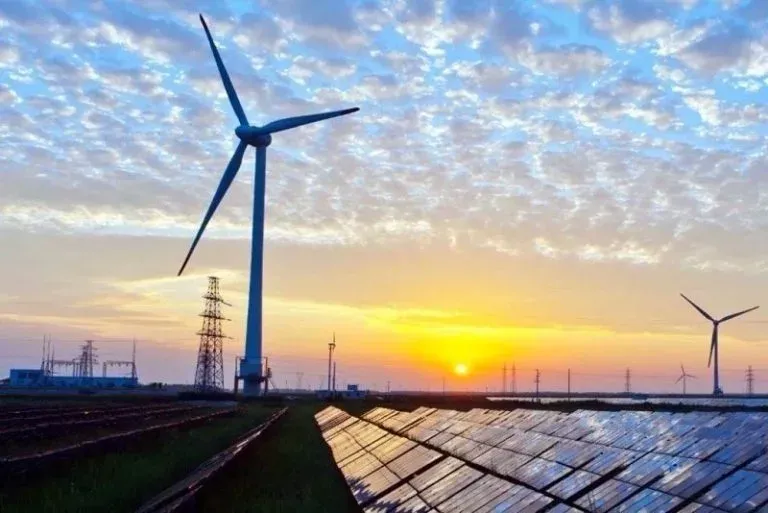

Recent insights reveal that Morocco is cementing its status as one of Africa's leading renewable energy markets, driven by incredibly low solar power costs and significant investments in green hydrogen initiatives. A comprehensive report by Mordor Intelligence highlights the country's strategic advantages in the burgeoning renewable energy sector.
The Africa Renewable Energy Market is set for robust growth, with an anticipated average annual increase of 15.62% from 2026 to 2031. This growth is expected to elevate the installed renewable capacity from 86.95 gigawatts in 2026 to a staggering 179.66 GW by 2031. Notably, solar photovoltaic capacity is projected to be the fastest expanding segment of this market, boasting an annual growth rate of 27.84%. This rapid expansion underscores the declining costs associated with solar power generation, making it increasingly accessible.
Morocco is particularly distinguished in this report due to its highly competitive solar sector. In fact, utility-scale solar auction prices in Morocco and Egypt have dropped below $0.03 per kilowatt-hour as of 2025, showcasing the significant reductions in solar energy costs. Moreover, the nation is not just resting on its laurels; it is ambitiously positioning itself as a burgeoning hub for green hydrogen production. Alongside Egypt, Namibia, Mauritania, and South Africa, Morocco is emerging as a key player in the development of green-hydrogen export hubs across the continent.
The report notes that Morocco is investing a staggering $32.5 billion (equivalent to MAD 304.5 billion) into renewable energy projects that align with its green-hydrogen ambitions. This includes significant initiatives like the Noor Midelt and Atlantic wind complexes, which aim to facilitate the production and export of up to 3 million tonnes of hydrogen annually, with a portion of this supply targeted for European markets.
Furthermore, Morocco's renewable energy strategy is drawing the attention of major international developers. The report highlights prominent companies such as ACWA Power, Masdar, ENGIE, and Enel Green Power as key contributors to the growth of Africa's renewable energy landscape. The broader African market is also witnessing exciting developments, propelled by decreasing solar photovoltaic costs, the expansion of mini-grids, and the establishment of green-hydrogen corridors. Notable countries like South Africa, Namibia, Egypt, Nigeria, and Kenya are advancing large-scale renewable energy projects; however, the sector is not without its challenges, including grid limitations, renewable energy curtailment, and currency-convertibility issues.
In this dynamic context, Morocco is striving to merge competitive renewable electricity pricing with extensive green-hydrogen development, reinforcing its aspirations to act as a crucial energy connector between Africa and European markets.
As reported by moroccoworldnews.com.