
Understanding Morocco's Economic Landscape and International Aid Dynamics
It remains uncertain how much Morocco invests in promotional efforts that highlight the supposed virtues of its economy, nor do we know the compensation received by the myriad of lobbyists and sycophants hired by King Mohammed VI to advocate for the nation across Spain, Europe, and the United States. These advocates continue to proclaim that few countries have experienced economic development comparable to Morocco's, where the GDP has nearly quadrupled within just two decades. According to the International Monetary Fund (IMF), the Moroccan kingdom is expected to sustain an impressive growth rate of approximately 5% annually for the foreseeable future. A prime example of this growth is the **Tanger Med** port, projected to manage over 161 million tons of goods by 2025, solidifying its status as a leading port in Africa and the Mediterranean region. The statistics paint a picture of a nation that attracts foreign capital, expands its infrastructure, bolsters its automotive industry, and funds ambitious projects in anticipation of the **2030 World Cup**.
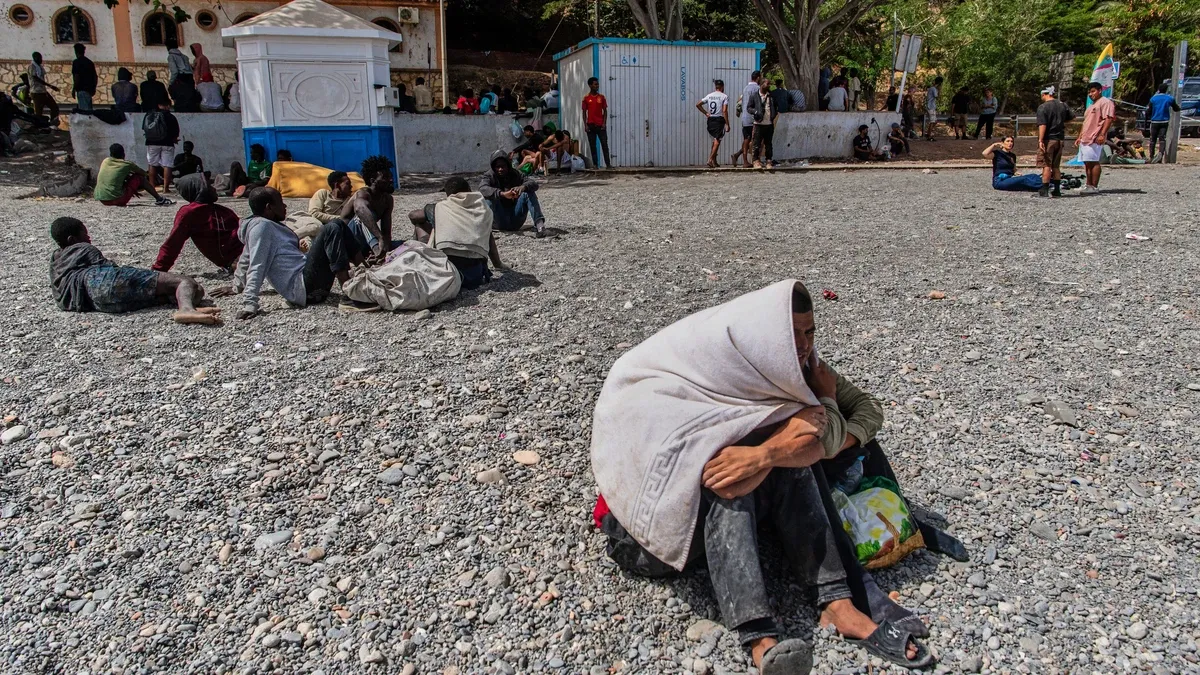
However, despite this narrative of prosperity, the question arises: why do we continue to provide financial aid to a neighbor that displays treachery, as evidenced by its recent actions in Ceuta, where it facilitated the entry of over 50,000 immigrants in a matter of hours? Official development assistance from Spanish Prime Minister **Pedro Sánchez** has amounted to a staggering 205 million euros to Rabat. This figure represents only a fraction of the total, as the most recent data from the Spanish Agency for International Development Cooperation (AECID) is from 2023, raising concerns about the government’s transparency.
Calls for Accountability in Aid Distribution
Moreover, the European Union (EU) ought to demand accountability regarding the non-repayable aid granted to Morocco for immigration control. **Carlos Echeverría**, director of the Ceuta and Melilla Observatory, argues that if Morocco cannot manage these funds effectively, it raises serious questions about the justification for receiving such financial assistance. Over the last decade, Europe has allocated more than 500 million euros to Morocco for this purpose, alongside initiatives aimed at combatting human trafficking.
In February 2023, a High-Level Meeting (RAN) between Spain and Morocco took place in Rabat, resulting in a financial protocol worth 800 million euros aimed at facilitating new Spanish business ventures in Morocco. This agreement was followed by a similar initiative in Madrid, culminating in 15 agreements intended to strengthen political dialogue and cooperation. If Sánchez's administration possessed even a modicum of dignity, it would reassess its financial support to Mohammed VI, particularly in light of the recent assault on national sovereignty, and redirect those resources to Ceuta as compensation for the difficulties faced by its residents.
The repercussions of the current situation are significant and immediate. As **Arantxa Campos**, president of the Ceuta Business Confederation, notes, "It is too early to quantify the losses, but in the short term, the damage is immense. We had to cancel the Fair, which is a critical week for local commerce and hospitality, and we must accept that no one will want to come to Ceuta. The fear is palpable because we have not communicated a sense of control over the crisis, but rather the opposite." She further emphasizes that this predicament should serve as a wake-up call for Ceuta, transitioning from a neglected city to one with a strategic plan and future solutions, especially considering that unlike Gibraltar, which has recently received tailored support, Ceuta is part of the European Union.
As reported by eldebate.com.