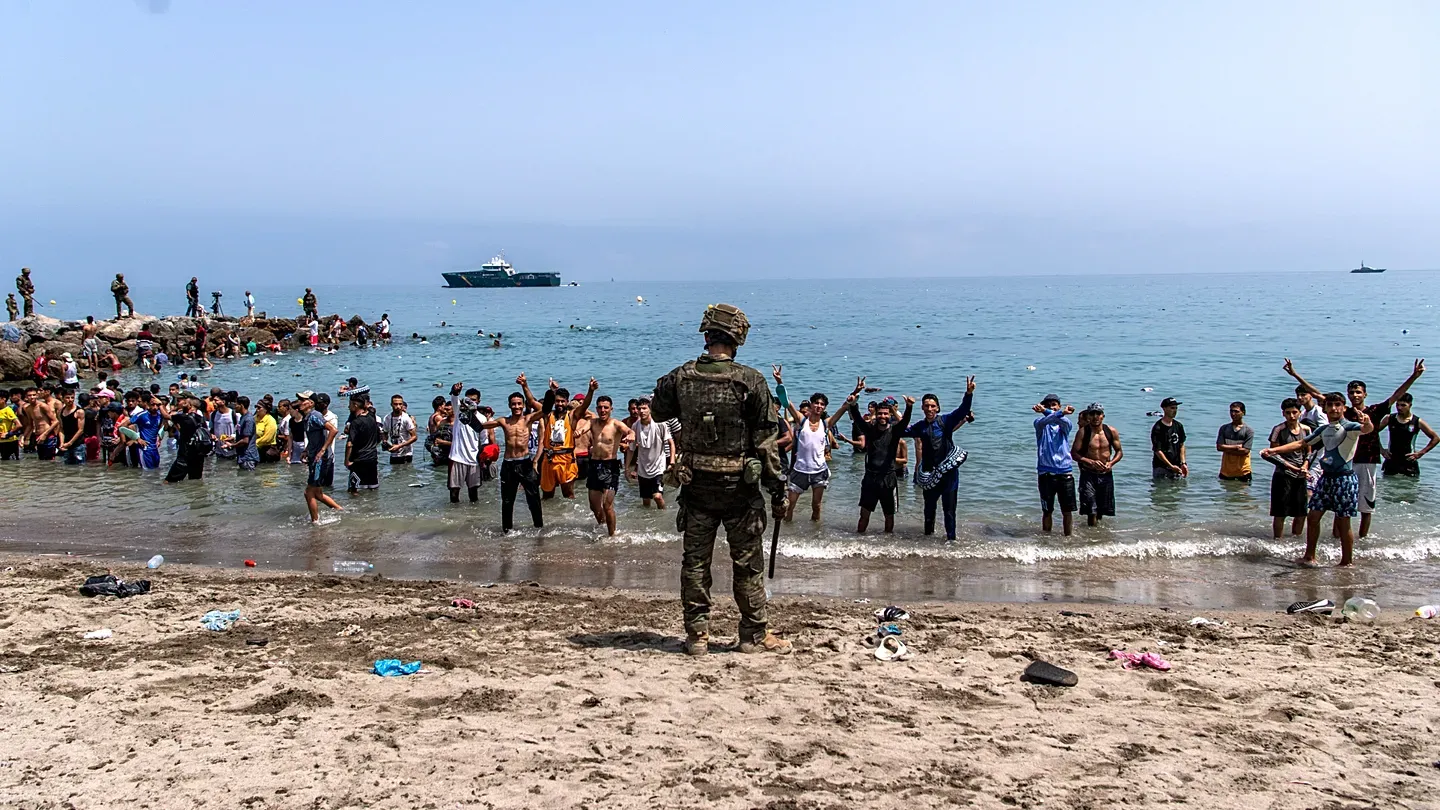

The recent surge of migrants fleeing to the Spanish exclave of Ceuta has raised pressing questions regarding the potential influence of misinformation as a catalyst for this mass exodus. In the wake of tens of thousands of migrants arriving in Ceuta, the Spanish government has vehemently denied allegations that it ignored warnings from the National Intelligence Centre (CNI) regarding an impending migration crisis. According to government officials, there were no intelligence reports indicating that such a significant influx was anticipated.
As the situation unfolds, efforts continue in Ceuta to accommodate and repatriate the remaining migrants, as well as to search for additional victims. Reports indicate that 72 bodies have been recovered so far, as stated by the Ministry of the Interior in Madrid. However, discrepancies arise regarding the actual number of fatalities, with some local officials asserting that the number of deceased could be as high as 88.
Intelligence Warnings and Government Response
The spokesperson for the opposition conservative People's Party (PP), Miguel Tellado, expressed disbelief that the CNI was unaware of the looming "human wave". Furthermore, reports from Cadena Ser described multiple warnings issued prior to the crisis. In response, government spokesperson Elma Saiz remarked that such an unprecedented event was not anticipated by any party involved. On a particularly tumultuous Thursday, tens of thousands of individuals crossed into Ceuta from Morocco, with most arriving by swimming and others scaling the six-meter-high border fence. While the exact figures remain uncertain, Regional President Juan Jesús Vivas initially estimated 60,000 arrivals, later revising the number to 80,000, while the Spanish government maintains its estimate at 50,000. Morocco indicated that around 40,000 migrants aimed to reach Ceuta.
Additionally, Morocco has attributed the surge of migrants to misinformation circulating on social media, denying any shared culpability in the crisis. The situation in Ceuta remains tense, particularly concerning unaccompanied minors. The local authorities report that they are currently caring for at least 862 children and adolescents, despite having only 29 designated places available. Consequently, temporary accommodations are being established in repurposed buildings to alleviate the pressure on existing facilities. The CETI reception center for adults is also overwhelmed, designed to house around 600 individuals while approximately 1,000 more migrants are reportedly camped outside in makeshift shelters.
The Spanish authorities anticipate that the number of casualties may continue to rise, suggesting a critical moment for the credibility of Europe as the EU Interior Ministers convene to address the ongoing crisis. The unfolding events in Ceuta highlight the complexities of migration dynamics and the urgent need for a coordinated response to humanitarian challenges.
As reported by zdfheute.de.