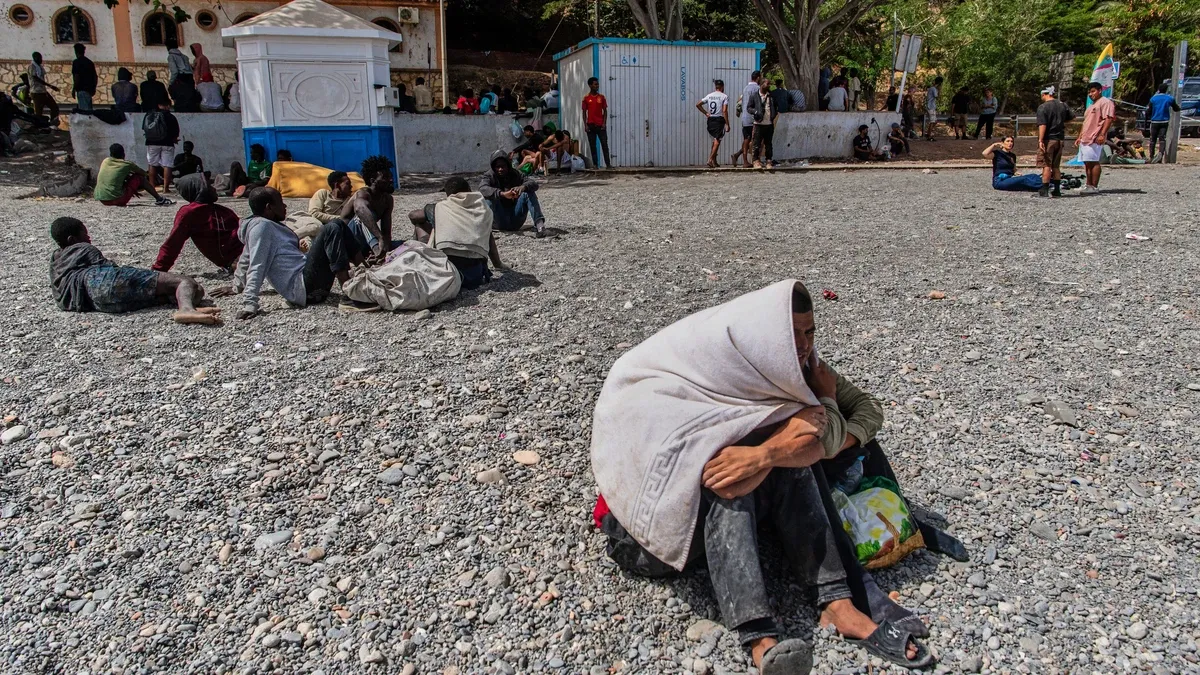

Morocco Responds to Spain Amid Migration Crisis
In a significant development, Morocco alerted Spain days prior to the recent crisis in the city of Ceuta, indicating that the decision made by the Spanish Supreme Court in early July had substantially weakened a critical aspect of migration cooperation between the two nations. A source from the Moroccan Foreign Ministry emphasized that migration management is a "shared responsibility," underscoring Morocco's commitment to addressing this pressing issue. The source asserted that Morocco is dedicated to fulfilling its responsibilities, stating, "It is a commitment, not just political rhetoric or propaganda." Furthermore, it was made clear that Morocco does not bow to pressure or engage in any form of blackmail, asserting that anyone who believes Morocco would yield to such tactics does not understand the country under King Mohammed VI.
The Moroccan official elaborated that the nation's migration policy is built on two foundational pillars: a preventive component, which relies heavily on security measures, and a deterrent element that they claim has been compromised following the Supreme Court's ruling. This decision, according to the source, has impeded the process of deportations, leading to a paradigm shift in how migration is managed. The repercussions of this judicial decision, they argue, have been exacerbated by social media and human trafficking networks. The Moroccan government expressed disappointment over the reactions and comments from certain Spanish politicians, accusing them of exploiting the crisis for electoral gain.
Financial and Strategic Considerations in Migration Management
Despite the challenges, the Moroccan source maintained that coordination with the Spanish government remains "perfect." However, they cautioned that security measures alone will never suffice to effectively manage migration flows. The source posed a poignant question: "If you have 40,000 people, how many security forces would you need?" They highlighted the logistical challenges Morocco faces in mobilizing approximately 20,000 personnel for coastal control. Notably, the costs associated with migration control for Morocco are estimated at around 500 million euros annually, while the financial support received from the European Union is only 145 million euros. The official stressed that this is not merely a financial issue but rather a matter of strategic vision and collective responsibility.
The Moroccan government has taken four days to respond to the recent influx of migrants into Ceuta, blaming a multitude of ambiguous causes for the situation while denying any responsibility. They have firmly rejected suggestions that their actions were influenced by "pressure or blackmail" during the mass crossing of people into Ceuta and expressed disappointment at the reactions from some European political figures, whom they accused of attempting to "exploit" the migration crisis for their own electoral interests. According to Moroccan diplomatic sources, the authorities have consistently acted as a "responsible and sovereign actor" in the face of such challenges, and they have emphasized their status as a "reliable ally" of Spain.
Morocco asserts that the management of migration flows is a complex issue that can only be addressed through a framework of shared responsibility among countries, reiterating that their commitment is not mere propaganda but a tangible reality. The Moroccan authorities claim to have thwarted over 160,000 attempts at illegal migration in recent years and dismantled 632 smuggling networks. In light of the recent events in Ceuta, officials deny any "relaxation" of their border controls, affirming that anyone attempting to cross the border illegally is aware they will be returned, a commitment Morocco has upheld for years.
Government sources have expressed their disappointment regarding comments from certain Spanish and European political figures, clarifying that their remarks are not directed at the Sánchez government. They criticized the underlying "racist" sentiments in some of these comments related to migration and labeled them as a source of shame, attributing them to the internal electoral context of certain EU member states. Rachid Jalfi, spokesperson for the Moroccan Interior Ministry, pointed to the malicious use of digital spaces, the spread of misleading information, and the actions of human trafficking networks as contributing factors to the crisis, alongside misinterpretations of specific legal and administrative elements.
In conclusion, Morocco has announced an investigation into the recent migration crisis, which has resulted in over 80 fatalities, while discrepancies remain in the estimated number of migrants involved. Morocco estimates around 40,000 individuals, which is significantly lower than the 50,000 reported by the Spanish government. The ongoing situation highlights the complexities of migration management and the need for cooperative strategies between nations.
As reported by lasexta.com.