Moroccan Authorities Break Silence on the Ceuta Migrant Crisis
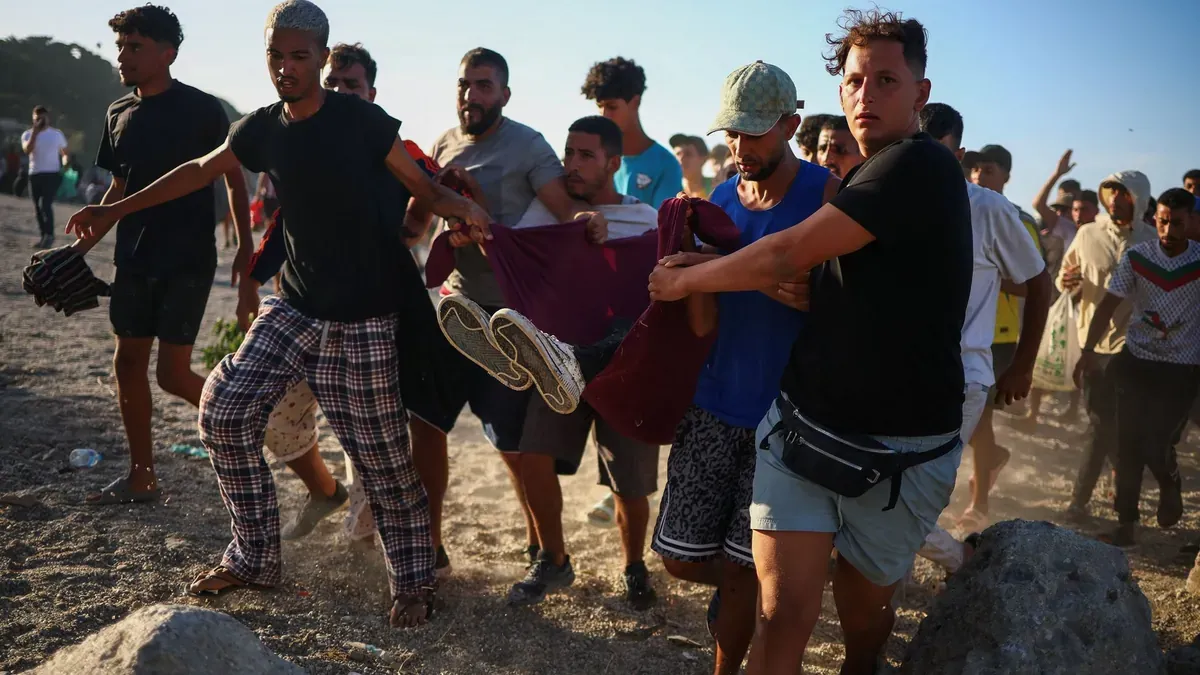
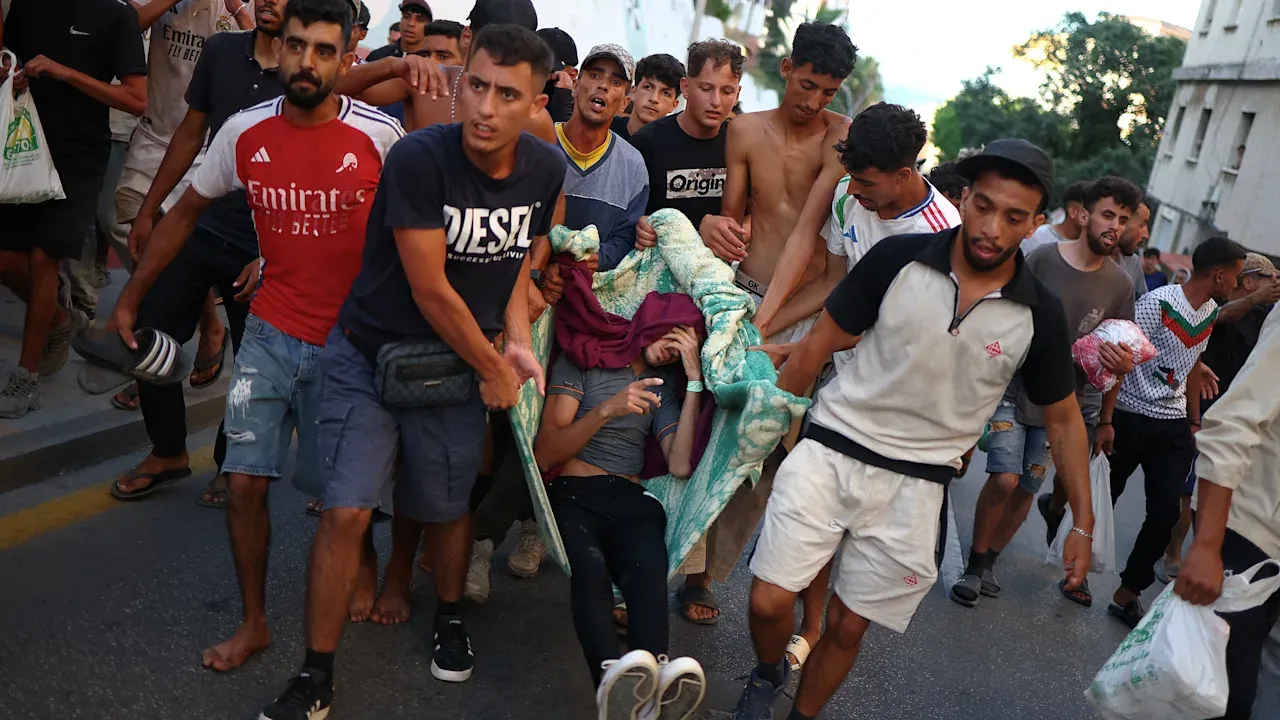
Three days after thousands of irregular migrants surged into Ceuta, seemingly unchecked by Moroccan security forces, the Moroccan government has finally addressed the situation. In an official statement, the authorities reported the recovery of 11 bodies from their waters following this significant border incident, which adds to the grim toll of 88 fatalities accumulating in the makeshift morgue of the former military hospital in the Spanish autonomous city.
Moroccan officials estimated that around 40,000 individuals crossed the border, a figure notably lower than the Spanish government’s count of over 69,000 voluntary exits through the border crossing. The Moroccan Ministry of the Interior asserted its commitment to being a “reliable and responsible partner,” emphasizing its dedication to enhancing international cooperation and coordination in the fight against irregular migration and human trafficking.
The Moroccan statement attributed the border crisis to a combination of “overlapping factors,” which included the biased exploitation of digital spaces, the promotion of misleading information, the role of human trafficking gangs, and misinterpretations of legal and administrative data that created an illusion of easy access to European territories without legal repercussions. This reference highlights recent Supreme Court rulings that prevent immediate deportations of individuals who swim into Spanish territory without breaching physical border elements.
Additionally, the Moroccan government acknowledged the tragic loss of 11 lives, with one individual reportedly falling from a rocky area adjacent to Ceuta and the remaining 10 drowning in the tumultuous waters. However, Moroccan authorities have yet to fully endorse the figures provided by their Spanish counterparts, stating they are still “verifying the authenticity of these data, the actual number of affected individuals, their identities, and nationalities.” Until yesterday’s statement, only left-wing political factions and a few progressive media outlets had dared to address the ongoing crisis.
Spain's Security Measures Amidst Ongoing Migrant Flow
In response to the crisis, Spain has completed the deployment of a floating maritime barrier intended to prevent further irregular crossings from Morocco. This structure, now operational off the Tarajal beach, was established after more than 50,000 migrants made their way to Ceuta by land and sea since Thursday, marking the largest surge recorded in recent history and representing one of the most severe border crises Spain has faced in recent years.
Authorities reported that over 48,000 individuals returned to Morocco within just 48 hours, although the situation in Ceuta has yet to return to normal. Police and military personnel remain deployed across various areas in Ceuta to identify migrants still present on the streets and initiate deportation procedures. The Spanish government representative in Ceuta, Miguel Ángel Pérez, confirmed that in addition to the deceased, over 1,000 individuals have received medical attention since the emergence of this emergency. He noted that while there has been significant improvement, work remains to fully restore the city’s regular operations.
The tragedy has also exerted considerable pressure on forensic services. Many of the bodies received by the city’s morgue correspond to individuals who perished during this crisis, while others had died in previous, smaller-scale attempts to reach Spanish territory through perilous nocturnal swims over the past two weeks. The regional government reported ongoing identification processes, with some bodies appearing more than two weeks after the surge in migration.
The circumstances surrounding these deaths underscore the perilous nature of the journey. Some migrants drowned while attempting to reach Spanish shores, while others were crushed while trying to navigate the breakwater and border fence. Many of these individuals chose to emigrate due to economic hardships and after hearing rumors circulated on social media.
Across the border in the Moroccan city of Castillejos, dozens of families were seen clinging to the fence separating the two territories, anxiously awaiting news of their children, siblings, or cousins. Many displayed photographs on their cell phones of those returning from Ceuta, hoping to find someone who had seen their loved ones. Others continued to search through lists of the deceased and missing individuals.
Among the poignant testimonies arising from this tragedy was that of Karima Abenaz, a French citizen residing in Ceuta with relatives in Morocco. "It deeply pains me that young people are dying in the sea. It is unjust that in the year 2026, women with children as young as two months old must cross the sea only to die," she expressed emotionally. She further stated, "In Morocco, there is food, there is everything we need. If we do not have decent work, we should go on strike and demand our rights from the government. We should not be dying in the sea; it is not right."
Another individual, Abdellatif, a 27-year-old agricultural laborer, traveled to Castillejos after losing contact with his 17-year-old brother. "Two friends of my brother called me on Friday to say they had left together, but he suffered a muscle tear while swimming, and they got separated," he recounted. "My fear is returning without him." Abdellatif also criticized the silence of Moroccan authorities, stating that the government should warn youth about the risks of irregular migration and the impact of rumors spread on social media that fueled false narratives of an open border.
In light of the crisis's magnitude, Spain has intensified border controls. In addition to deploying a 500-meter floating barrier, authorities have bolstered police and military patrols to prevent further irregular entries. The situation has reignited the debate over the protection of the European Union's external borders and the management of migratory flows. The response to this crisis has transcended Spanish borders, with 22 EU member states sending a letter requesting coordinated action to strengthen border controls. Meanwhile, Italy has suspended the free movement regime of the Schengen area with Spain for a month. The Spanish government has rejected claims attributing the mass arrival of migrants to its policy of regularizing undocumented individuals, maintaining that those who enter Ceuta irregularly will not be able to travel to mainland Spain or the rest of the Schengen area.
As reported by lanacion.com.ar.