

Moroccan Interior Ministry Attributes Ceuta Tragedy to Social Media Misinformation
In the wake of a tragic mass influx into the Spanish exclave of Ceuta, the Moroccan Interior Ministry has come forward with a statement attributing the calamity primarily to misinformation circulating on social media. This incident, which culminated in chaos and loss of life, has prompted serious discussions regarding the role of digital platforms in shaping migration patterns and influencing public behavior.
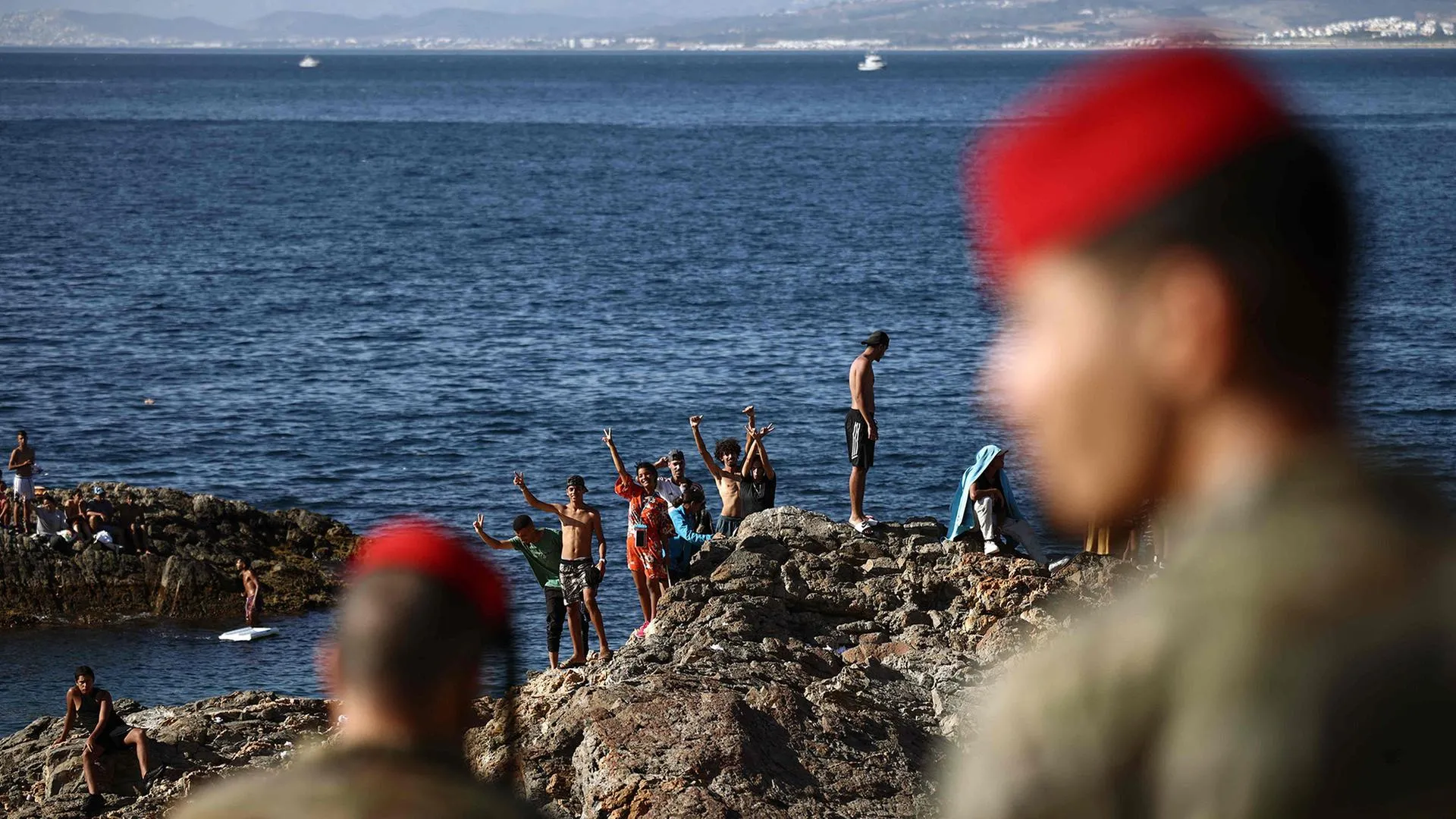
Following a harrowing experience, Mustapha Zerrouqi, a waiter who crossed from Ceuta back to his hometown of Fnideq in Morocco after just one night on European soil, recounted his journey. He had initially swum to Ceuta with his 12-year-old son, who sent a message to his daughter Oumaima, stating, "Where are you, my girl? I am in Ceuta." Compelled by a sense of urgency, Oumaima, only 16, also took the plunge, clutching her smartphone above her head to keep it dry as she swam to join her father.
The Role of Social Media in Migration Mobilization
Ahmed Biyouzan, a seasoned Moroccan journalist with decades of experience in migration issues, confirms that the mobilization of individuals leading up to the Ceuta tragedy was significantly driven by social media. He notes that nearly 800 to 1,000 people arrived in Ceuta on July 27 and 28, following campaigns on platforms like TikTok, Facebook, and Instagram that encouraged migration by portraying it as an easy endeavor. Biyouzan has not identified any links to local mafia or smuggling networks, suggesting that financial incentives for these groups were absent in this instance.
In an official statement, Rachid El Khalfi, spokesman for the Moroccan Interior Ministry, elaborated that the mass exodus was not merely a spontaneous occurrence but rather the result of multiple interconnected factors, with the malicious exploitation of digital channels and the spread of misleading information being particularly significant. He also mentioned the involvement of human traffickers and the misinterpretation of a Spanish court ruling that indicated individuals rescued at sea could not be immediately deported.
As Europe watches closely, Morocco's government has not directly addressed speculation regarding their security apparatus's inability to manage the situation effectively, instead highlighting the nation's contributions to migration management in partnership with Europe. El Khalfi reiterated the necessity of a comprehensive approach to migration that emphasizes shared responsibility, effective solidarity, and burden-sharing. This call for equitable burden-sharing suggests that Morocco may seek greater support from European nations in light of the overwhelming challenges faced during this crisis.
As reported by tagesschau.de.
