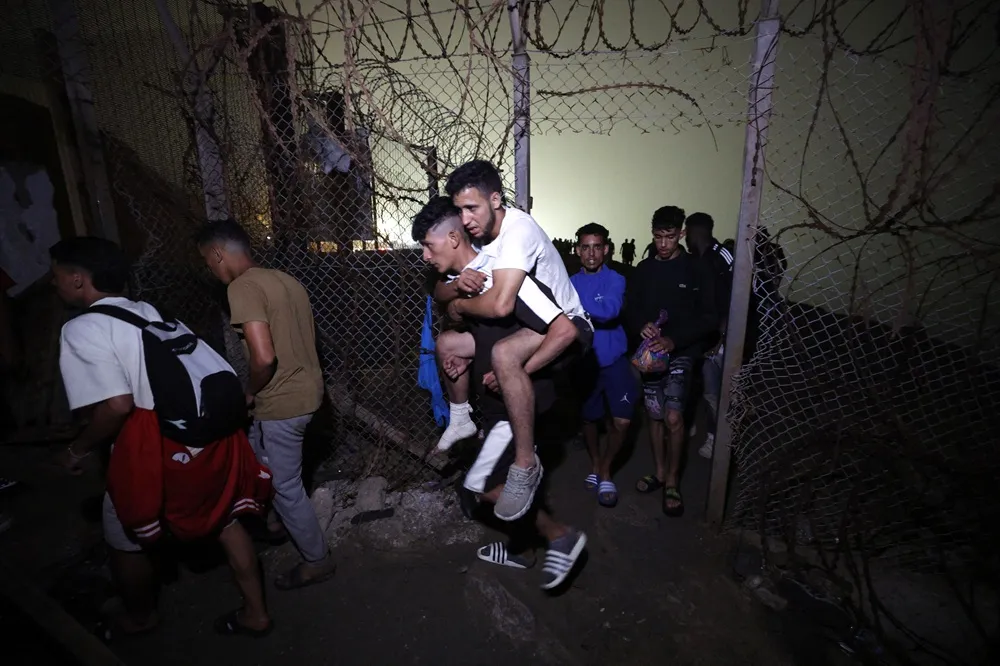
As tensions rise in Europe regarding migration issues, Italy has recently suspended the Schengen agreement with Spain, prompting calls from several EU countries for Spain to take more control over the unfolding crisis. To delve into the complexities of this situation, **LA NACION** reached out to **Steven Forti**, a prominent historian and professor at the Autonomous University of Barcelona, who has authored the book _Extrema Derecha 2.0_, published last year. Forti's insights reveal the underlying dynamics and potential implications of this crisis.
The Suspension of Schengen and Its Implications
Forti asserts that the Italian government's decision to suspend the Schengen area in relation to Spain is largely theatrical and politically motivated. He highlights that Ceuta and Melilla, Spanish territories located in North Africa, are not part of the Schengen zone due to specific exemptions in international agreements. Therefore, the notion that Spain could be overwhelmed by migrants entering through these enclaves is misleading. Individuals arriving in Ceuta or Melilla must still present passports to enter mainland Spain, thus debunking the exaggerated claims circulating in political discourse. Forti criticizes the incendiary statements from Italian officials, suggesting they capitalize on public anxiety without addressing the factual context of the situation.
The Broader Context of Migration Policies
In light of the current migration crisis, Forti notes a general tightening of immigration policies across the European Union, coinciding with a political shift towards the right within its institutions. The pressure on Spain’s Prime Minister Pedro Sánchez is intensifying, particularly as he navigates a landscape where his progressive government stands isolated amid rising right-wing sentiments and external pressures from the United States. The recent ruling by Spain's Supreme Court, which declared the illegal nature of “hot returns” of migrants, has further complicated matters, as it has sparked significant public discourse and backlash on social media.
The current situation also echoes previous crises, such as the one in May 2021, yet Forti draws attention to key differences. Previously, Morocco openly stated that its actions were politically motivated by Spain’s asylum decisions regarding the Sahrawi leader Brahim Ghali. In contrast, the Moroccan government now appears to maintain a stance of collaboration with Spain, despite underlying tensions. Forti interprets Morocco's actions as a calculated message to both Madrid and the European Union, indicating a willingness to leverage its position on immigration. He suggests that this is an assertion of power, demonstrating that Morocco could alter its cooperation regarding migrant management if pressured.
As the crisis unfolds, the political ramifications for Sánchez's government could be significant, particularly given the ongoing challenges it faces from the far right and its precarious legislative standing. Furthermore, the situation in Ceuta is likely to fuel anti-immigrant rhetoric, especially from far-right factions, which have already been propagating conspiracy theories surrounding migration. Forti emphasizes that migration is a complex issue that cannot be reduced to mere security concerns; it requires a humanitarian lens that acknowledges the root causes driving individuals to flee their home countries.
Ultimately, Forti expresses a cautious outlook regarding the resolution of the crisis in Ceuta, suggesting that while there may be temporary collaboration between Morocco and Spain, the volatility of the situation is contingent on broader geopolitical dynamics and the will of the Moroccan monarchy. He argues for a more nuanced discussion around immigration that incorporates humanitarian perspectives and acknowledges the historical context of territories like the Sahara Occidental, which remains a pressing humanitarian concern.
As reported by lanacion.com.ar.