
The Bold Declaration of War by La Codorniz
On September 9, 1956, a remarkable incident unfolded in the annals of Spanish journalism when La Codorniz, heralded as "the boldest magazine for the most intelligent reader," declared war on England. This audacious declaration led to a series of skirmishes that persisted until Christmas of that year. Notable journalist Alfonso Ussía reminisced about some of the daring military actions taken during this period. He recounted a particularly memorable afternoon when a command led by Antonio Mingote stormed the English Haberdashery on Serrano Street, instilling fear among employees and customers alike. In another instance, they encircled the El Corte Inglés building, littering the ground with leaflets proclaiming, "Those who shop at El Corte Inglés sell out Spain." Fortunately, as the sweltering August drew to a close, citizens were relieved that it hadn’t dragged on longer, as such circumstances might have prompted initiatives advocating for compulsory military service or the internment of Moroccan residents in Spain as a preventative measure against an impending armed conflict.
Shifts in Education and Perceptions of Warfare
In the 1960s, the CCC Academy emerged as a pioneer in correspondence education, founded by Víctor Zabala in 1939. During a time when Spain was a developing nation, with hundreds of thousands of citizens emigrating—some illegally—individuals sought training to acquire trades and earn a living. However, trends shift over time; the modern focus has shifted towards roles like intelligence analysts and geopolitical experts, with an increasing emphasis on sophistication and the necessity of English proficiency. Recently, I had a coffee meeting with the head of the commercial department of a company that specializes in various analyses related to misinformation. Much of what he spoke about was incomprehensible to me, filled with concepts that seemed equally perplexing to him. Nevertheless, I inquired whether they monitored disinformation campaigns originating from Russia. He affirmed this, adding that their specialist was a psychologist—an expert on Russia among other topics. This reminded me of Connie Sachs, the Soviet affairs expert in John le Carré's novels, who dedicated her life to unraveling the Kremlin's mysteries, now seemingly simplified by algorithms that analyze networks and queries posed to chatbots. Times have changed, and even purveyors of dubious solutions have adapted.
Continuing with this theme of dubious solutions, a friend recently sent me a provocative article penned by a millennial—just 31 years old—who claims to be an expert in geopolitics. He states, "While we cannot firmly assert that Morocco will attack in 2027, it is evident that we must prepare for such an eventuality. Spain cannot afford another 1898 crisis inflicted by a Third World dictatorship. If things go awry, the conflict could escalate into military engagement." Following the upcoming elections, the author anticipates a "chaotic governmental transition," which he suggests would be the perfect moment for an Alawi attack, characterized by a mix of military operations, civilian casualties, and cyberattacks. Reading such narratives reveals the disdain some hold for Spain, as they transform their sectarian fabrications into apparent facts. They suggest, "The government is incapacitated because Morocco has Sánchez's mobile phone." If this is indeed the case, who will undertake the necessary measures to thwart such an attack by the summer of 2027? If political parties, embroiled in their disputes, are willing to sell out their homeland, could the answer lie in a new Primo de Rivera? "Liberating it from the professionals of politics," justified the coup leader on September 13, 1923.
During the campaign for the 2019 General Elections, Libertad Digital interviewed Cayetana Álvarez de Toledo, where journalist Miriam Muro posed the question, "Do you have any reproach for Vox?" Cayetana replied, "Yes… I prefer to be told the truth. I don’t want to be fed fairy tales. And Vox tells fairy tales… they announce 'impenetrable' walls in Ceuta and Melilla. Those walls are also fictions. Political fiction is populist politics." On August 19, the leader of the PP announced his proposals in Ceuta post-crisis, one of which includes fortifying the border to make it "impenetrable." Life certainly takes many twists and turns.
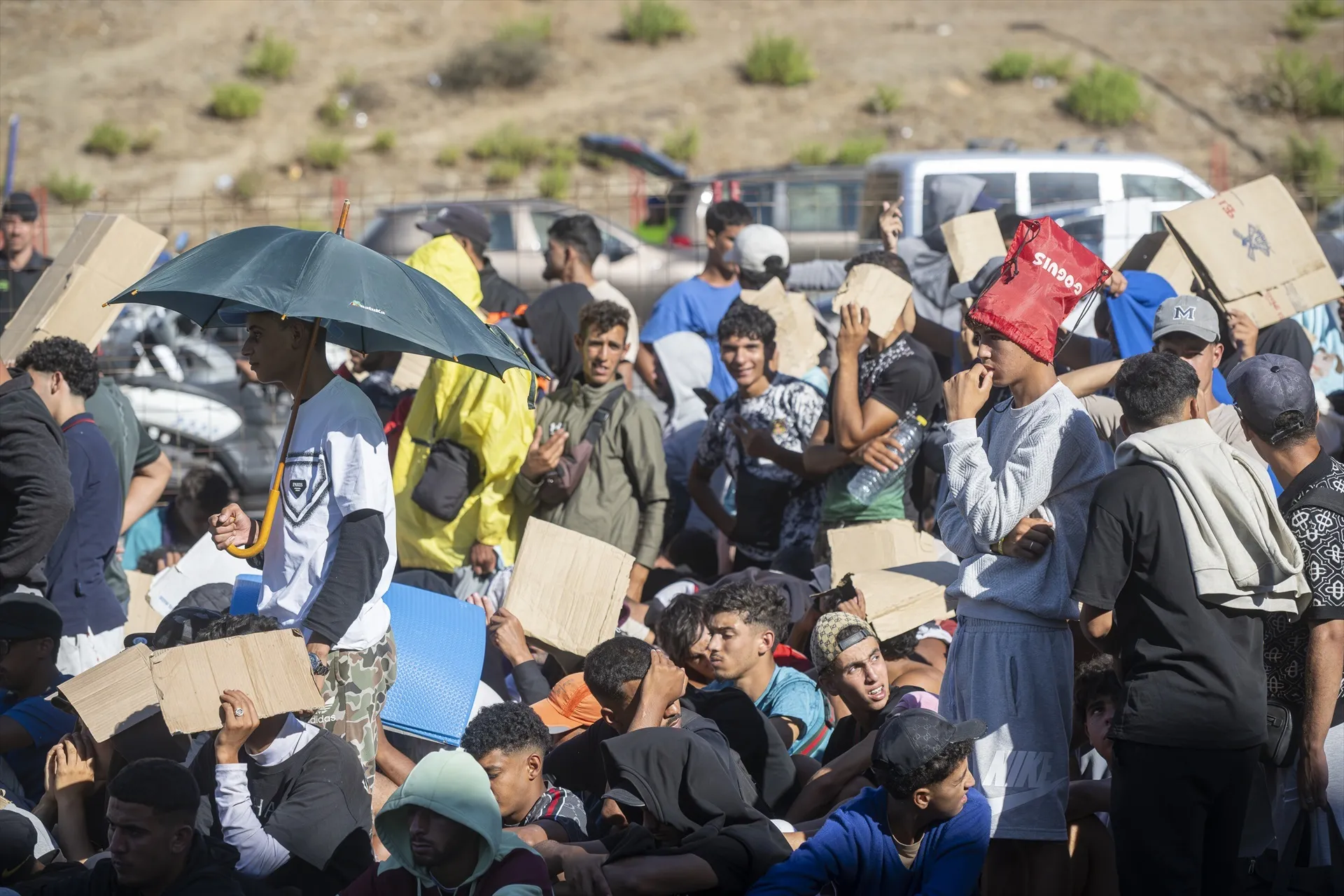
Much like in the days of His Excellency, when many compatriots received news by listening to the BBC's Spanish broadcast, in situations such as these where national strife is rampant, it is advisable to read perspectives from outside. In its August 9 edition, The Wall Street Journal recounted the events in Ceuta with context and clarity, citing that Spanish intelligence services had warned the government that a Supreme Court ruling was causing significant issues, with around 200,000 individuals actively exploring the possibility of heading to Ceuta. The newspaper stated that "the working hypothesis is that the mobilization was spontaneous and driven by social media, rather than orchestrated by Morocco or any other nation."
The Spanish officials responsible for the events in Ceuta remain in their positions, as do the Moroccans. No one has been held accountable for their negligence. The deceased are gone, and the harsh reality for the citizens of Ceuta and the ongoing immigrants in the city is that by September, they will transition from front-page news to mere footnotes.
As reported by libertaddigital.com.