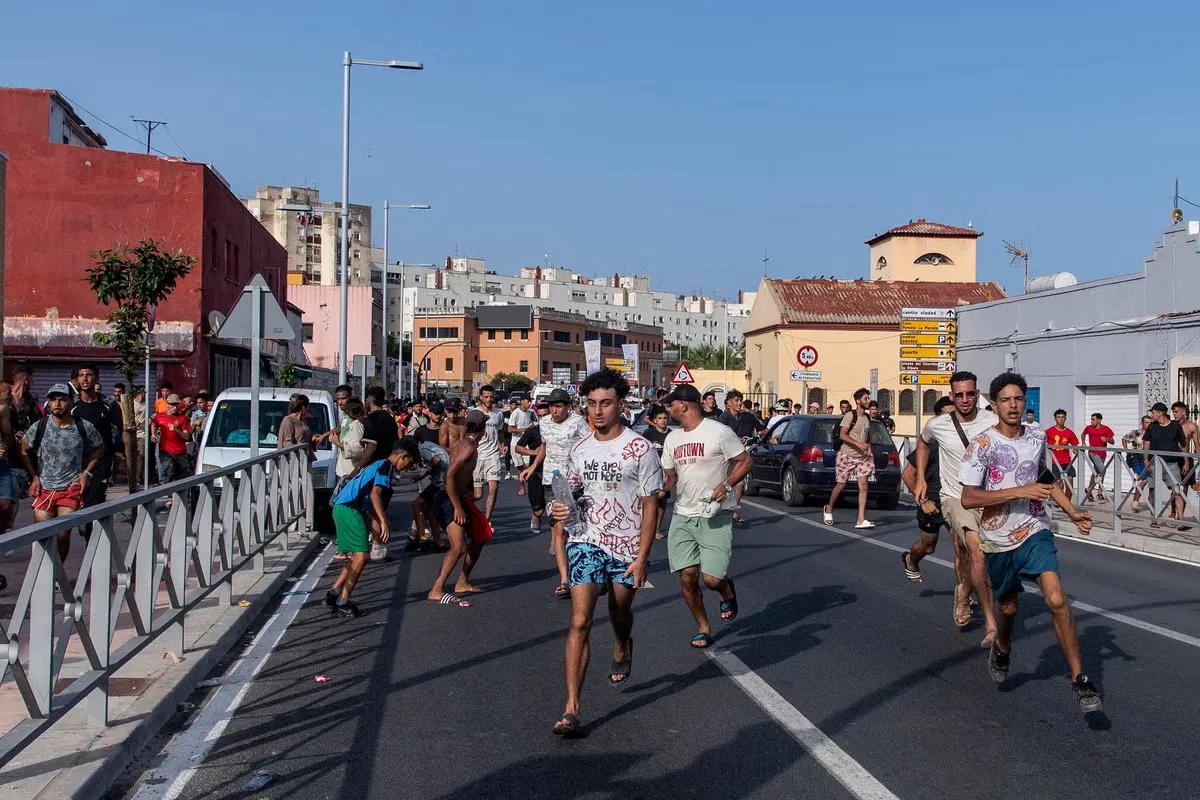

When news spread that the border had been breached, Abdulah Buji wasted no time in hopping onto his motorbike, racing from his northern Moroccan home toward Ceuta. He was among the tens of thousands trying to swim into this small Spanish enclave, fueled by the hope that this massive crossing might finally open the door to his dreams of living in Spain and starting a new life in Europe. The 21-year-old aspiring teacher expressed his longing for opportunity, stating, "Spain gives you the chance to make your future, not like Morocco. I am a talented boy. I just want a chance." However, the initial joy of reaching Spanish soil quickly faded as the harsh reality set in; the Mediterranean loomed large, separating him from mainland Europe, and Spanish authorities were ordering all new arrivals to return to Morocco or face expulsion.
Buji recounted his close call with tragedy, nearly becoming one of the over 60 individuals who perished while attempting to swim around the border fence. Though he made it across, he lost all his belongings and money in the process. Faced with the prospect of legal limbo and potential detention, he decided to turn back. Reflecting on his situation, Buji lamented, "I’ve spent perhaps 14 years studying, but there’s nothing at home, and I’d have to work 12-hour shifts for a meager wage. That’s why I came here, but I haven’t found any opportunities here either, so I have to go back." The sheer volume of individuals attempting to cross into Ceuta amounted to a staggering 70% of its resident population, prompting local Spanish authorities to request police and military assistance to restore order amidst the chaos.
The humanitarian crisis unfolding in Ceuta saw approximately 60,000 people cross the border between Thursday and Friday morning, with around 45,000 returning to Moroccan territory within hours. Many spent a night on the streets of Ceuta, surrounded by startled locals and a visible presence of armed Spanish police and soldiers. Residents of Ceuta recalled a similar, albeit smaller, migration crisis that occurred in 2021, when Morocco relaxed its border controls, allowing thousands from Morocco and sub-Saharan countries to enter. This current situation, however, has resulted in a far greater humanitarian challenge.
As images and reports of the migrant influx flooded social media, many more individuals were inspired to head north, hoping to reach European Union territory. Train stations in Morocco's major cities, including Rabat and Casablanca, were packed with people eager to make the journey to Ceuta. Local reports indicated that police were actively preventing some from boarding trains and buses. While the specific trigger for this recent surge remains unclear, social media played a significant role in mobilizing individuals, with posts circulating practical advice on how to cross the border and increase their chances of being allowed to stay in Spain. Myriam Cherti, a senior researcher at the University of Oxford's Centre on Migration, Policy and Society, noted that many migrants she interviewed had lost count of their attempts to cross the border. "They’re doing it out of despair, they’re doing it because they’ve tried other ways to build a life and failed, they’re doing it because they feel the obligation that they want to help their families and support them," she explained.
Ahmed Karim, a 33-year-old who successfully crossed into Ceuta, highlighted the struggles many Moroccans face, stating that the lack of opportunities and the challenges of traveling outside the country compound their plight. Many aspire to reach Europe or America, but the barriers they encounter are significant.
Amidst this chaos, some individuals crossed the border not with the intention of staying, but to search for lost loved ones. Ikrra Khai, a 33-year-old Moroccan woman who often secures temporary work permits to labor on Spanish farms during harvest season, was in Ceuta on Friday searching for her friend's brother. "I don’t know if he is dead or alive," she shared, holding his residency card. "But I don’t know where he is. I’m searching." This ongoing crisis serves as a stark reminder of the desperation many face as they seek a better life and the lengths to which they will go to find their loved ones amidst the turmoil.
As reported by independent.co.uk.