Morocco and Sweden Forge a Stronger Security Partnership
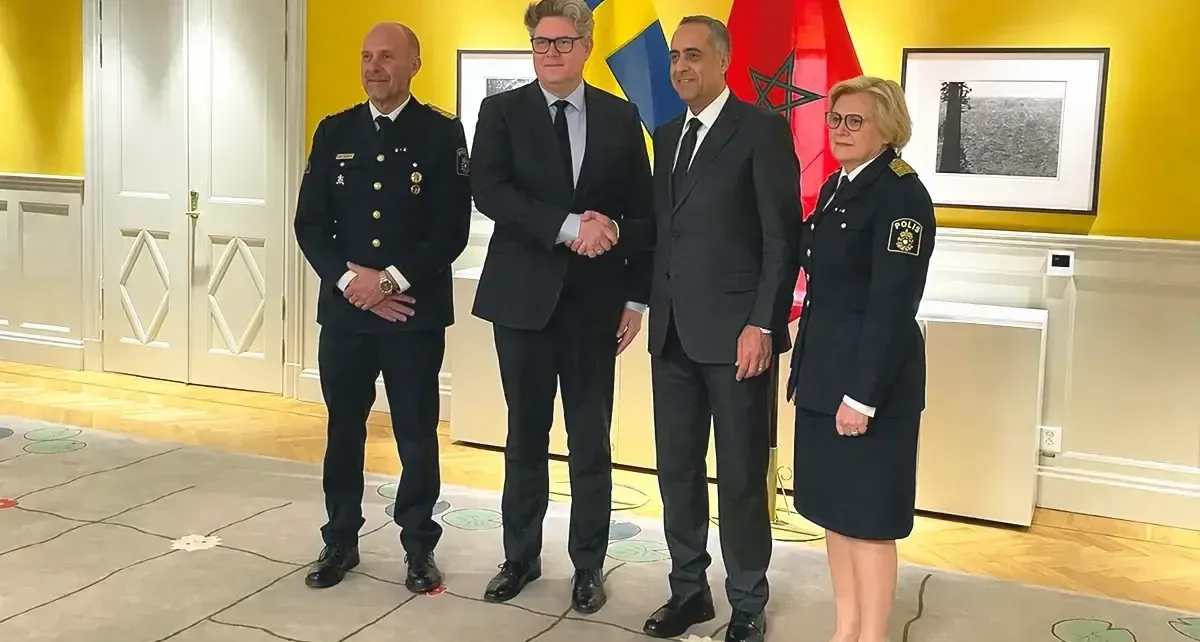
In a significant move towards bolstering bilateral relations, Morocco and Sweden have officially signed a Memorandum of Understanding (MoU) aimed at elevating their security cooperation to a sustainable partnership. This pivotal agreement was inked during the recent visit of Abdellatif Hammouchi, the Director General of National Security and Territorial Surveillance, who led a high-level security delegation to Sweden from April 20 to 21. The MoU establishes a contractual framework designed to enhance the exchange of expertise, experiences, and best practices in policing, thereby laying a foundation for more robust collaboration between the two nations.
The MoU outlines several key objectives including the consolidation of joint security training initiatives and the establishment of clear procedures for addressing information requests pertaining to bilateral cooperation. This agreement, as highlighted by the Moroccan DGSN-DGST hub, aims to streamline communication between the police and security services of both countries, particularly in critical areas such as terrorism, extremism, organized crime, drug trafficking, cybercrime, and human trafficking.
Collaborative Efforts to Combat Global Security Threats
One of the noteworthy proposals from the Swedish side includes the integration of Moroccan security services into the European Network of Fugitive Active Search Teams (ENFAST). This initiative recognizes the vital role Morocco plays in locating and apprehending internationally wanted criminals involved in cross-border crimes. Furthermore, the discussions emphasized the need to draw inspiration from Morocco's effective security model while expanding police cooperation, reaffirming Morocco's status as a valuable and reliable partner within the region.
During his visit, Hammouchi engaged in comprehensive discussions with several high-ranking Swedish officials, including Justice Minister Gunnar Strömmer and National Police Commissioner Petra Lundh. These discussions centered around mutual security interests, the coordination of efforts to address various threats, and the establishment of mechanisms to tackle emerging risks both regionally and internationally. The visit also included important dialogues with Swedish intelligence and internal security services, focusing on the challenges posed by terrorist groups in various parts of the world, particularly in the Sahel-Saharan region, the Middle East, and Europe.
In addition to strategic discussions, Hammouchi's itinerary included tours of several key Swedish security units, such as central intervention teams and cybercrime divisions. This visit not only underscores the significance of Morocco and Sweden's bilateral security cooperation but also highlights their collective commitment to enhancing security and stability on both national and international fronts. As both nations continue to strengthen their partnership, they are poised to effectively address and neutralize threats to their security.
As reported by northafricapost.com.