
Spain Affirms Sovereignty Over Ceuta and Melilla
On August 28, 2026, Jose Manuel Albares, Spain's Minister of Foreign Affairs, European Union, and Cooperation, addressed the Congressional Foreign Affairs Committee, asserting Spain's unyielding position regarding the territories of Ceuta and Melilla. He emphasized that communication with Morocco has been ongoing since the onset of a recent crisis, aimed at preventing similar situations in the future. Albares highlighted the importance of diplomatic dialogue, noting that it played a critical role in the swift return of individuals who had crossed into Spanish territory, many of whom returned within 24 hours.
In his remarks, the Minister noted that thanks to this diplomatic engagement, nearly 90% of migrants were able to return within the first 48 hours. He reinforced the idea that dialogue with Morocco is essential, given its geographical proximity to these Spanish enclaves. Despite this, Albares firmly stated, "There has never been, nor will there ever be, any discussion regarding territorial integrity concerning Ceuta and Melilla." He reiterated that these cities are an integral part of Spain and the European Union, representing not just legal sovereignty but also the spirit and identity of their inhabitants.
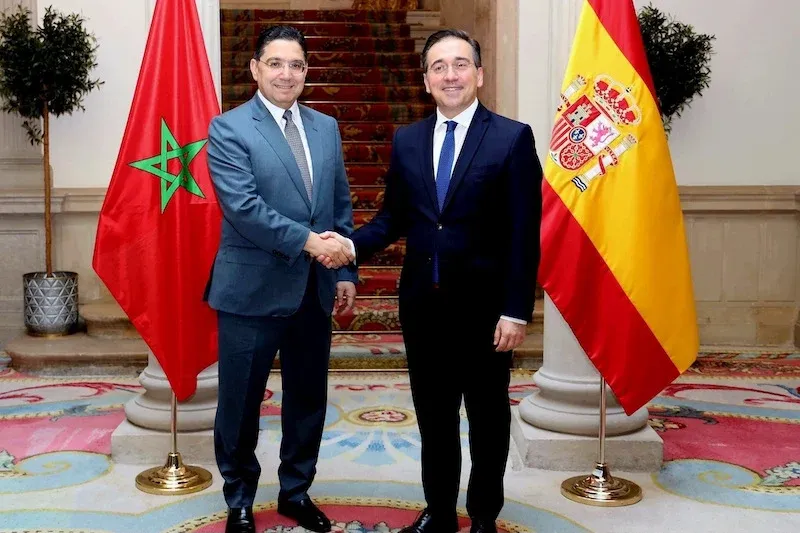
Albares addressed the notion of dialogue with his Moroccan counterpart, Nasser Bourita, clarifying that there would be no discussions concerning Ceuta and Melilla from the Spanish Foreign Ministry's side. This statement serves as a rejection of any claims regarding the two enclaves, which Albares passionately defended as part of Spain's national integrity.
Underlying Causes of Recent Tensions
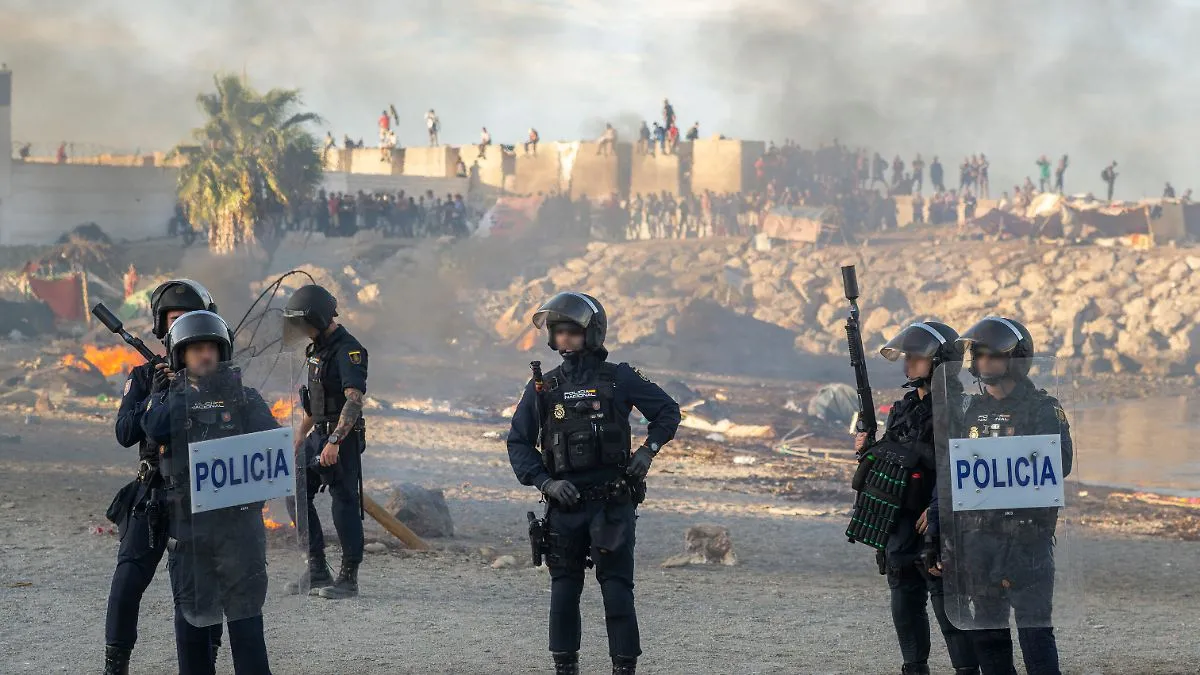
When discussing the reasons behind the recent crisis, Albares pointed to misinformation and social media as direct triggers. He acknowledged the broader context of inequality between Europe and Africa, which prompts individuals to risk their lives in search of better opportunities. The Minister characterized the events in Ceuta on July 30 and 31 as a humanitarian migration crisis exacerbated by falsehoods and a regressive political agenda aimed at destabilizing Europe.
Albares criticized certain factions within Spain that have allegedly exploited the situation for political gain at the expense of the residents of Ceuta. He expressed concern over the spread of misinformation, hate, and attacks on Spanish unity that fueled the crisis. Furthermore, he called out influential figures and platforms, including Elon Musk and Russian networks, for encouraging division among Spaniards through their social media channels. Emphasizing the lethal nature of lies, he urged for a collective response from Spain and the EU to combat these challenges.
Reflecting on the European dimension, Albares lamented the lack of solidarity from Italy and Denmark, expressing disappointment that Spain did not receive the reciprocal support it had anticipated. He condemned Italy's decision to impose travel restrictions on Spanish travelers as arbitrary and politically motivated, describing it as an unjust affront to the dignity of Spaniards and Europeans alike. The Minister concluded by asserting that the events in Ceuta pose a significant challenge to Europe as a whole, underscoring the need for unity and support among member states.
As reported by hespress.com.