
Spain's Request for Frontex Assistance
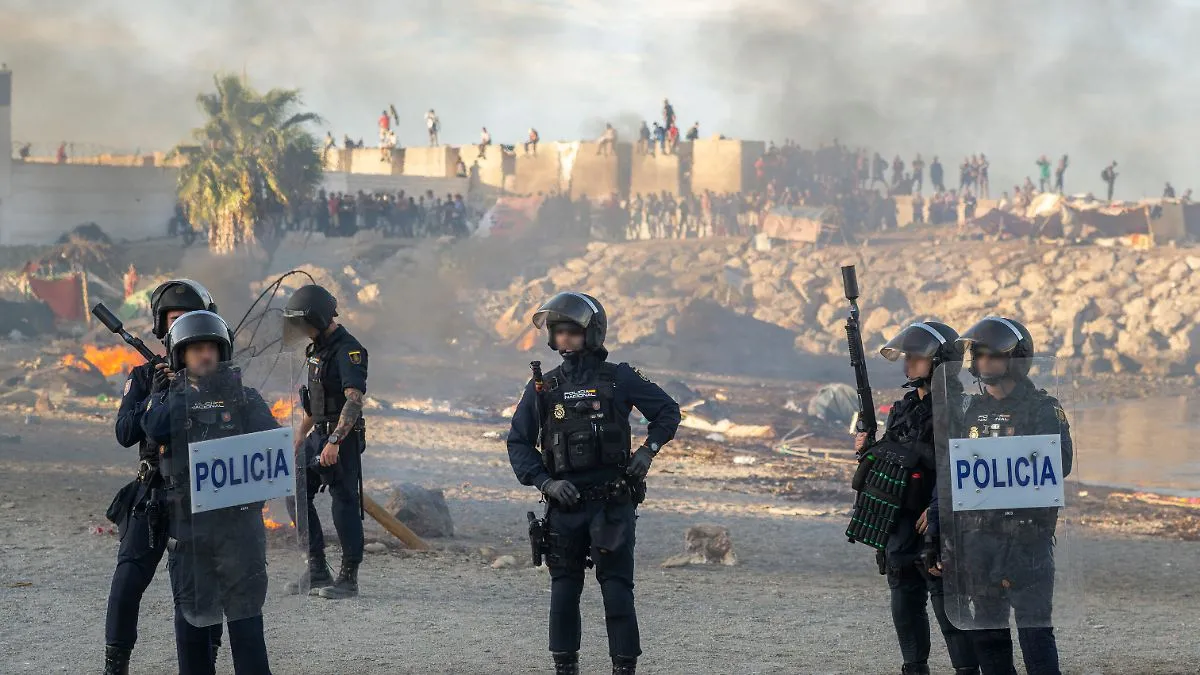
The residents of the Spanish exclave of Ceuta are increasingly resisting the presence of approximately 5,000 migrants from Morocco, leading the Spanish government to seek assistance from the European Border and Coast Guard Agency, Frontex. This request was formally made by Spain's Interior Minister, Fernando Grande-Marlaska, to Beate Gminder, the Director-General for Migration and Home Affairs at the European Commission. Gminder had already offered this assistance on August 21, indicating a proactive approach to addressing the pressing migration crisis in this North African enclave.
Local Tensions and Legal Constraints
The left-leaning Spanish government is under significant pressure following a mass influx of tens of thousands of migrants into Ceuta at the end of July. The authorities are legally barred from rapidly deporting the remaining migrants and are hesitant to transfer them to the mainland, especially as local residents begin to express their dissatisfaction through protests. According to the Interior Minister, around 72,000 migrants swam or climbed over fences into Ceuta on July 30 and 31, with most returning shortly thereafter. However, a month later, approximately 5,000 migrants remain in the area, which is smaller than Frankfurt Airport, while some of the nearly 85,000 locals are increasingly resorting to violent demonstrations against their presence.
International law and Spanish court rulings prohibit the collective return of migrants to Morocco without individual assessments. The government has also ruled out transferring migrants temporarily from Ceuta, which is outside the Schengen Zone, to mainland Spain, fearing backlash from conservative autonomous regions and renewed criticism from other EU nations. Such actions could potentially violate Schengen regulations and jeopardize Spain’s status within the borderless Schengen area. Only about 500 particularly vulnerable unaccompanied minors are expected to be allowed to move to the mainland.
In light of these challenges, the Spanish Interior Ministry has requested the involvement of ten additional Frontex officers to expedite the registration and preliminary assessment of migrants. The ministry highlighted that support from the EU Asylum Agency (EUAA) for conducting interviews and providing interpreters during this process could be extremely beneficial. Given the limited spatial capacity in Ceuta, these measures may also be conducted remotely online, facilitating a more efficient response to the ongoing crisis.
As reported by n-tv.de.