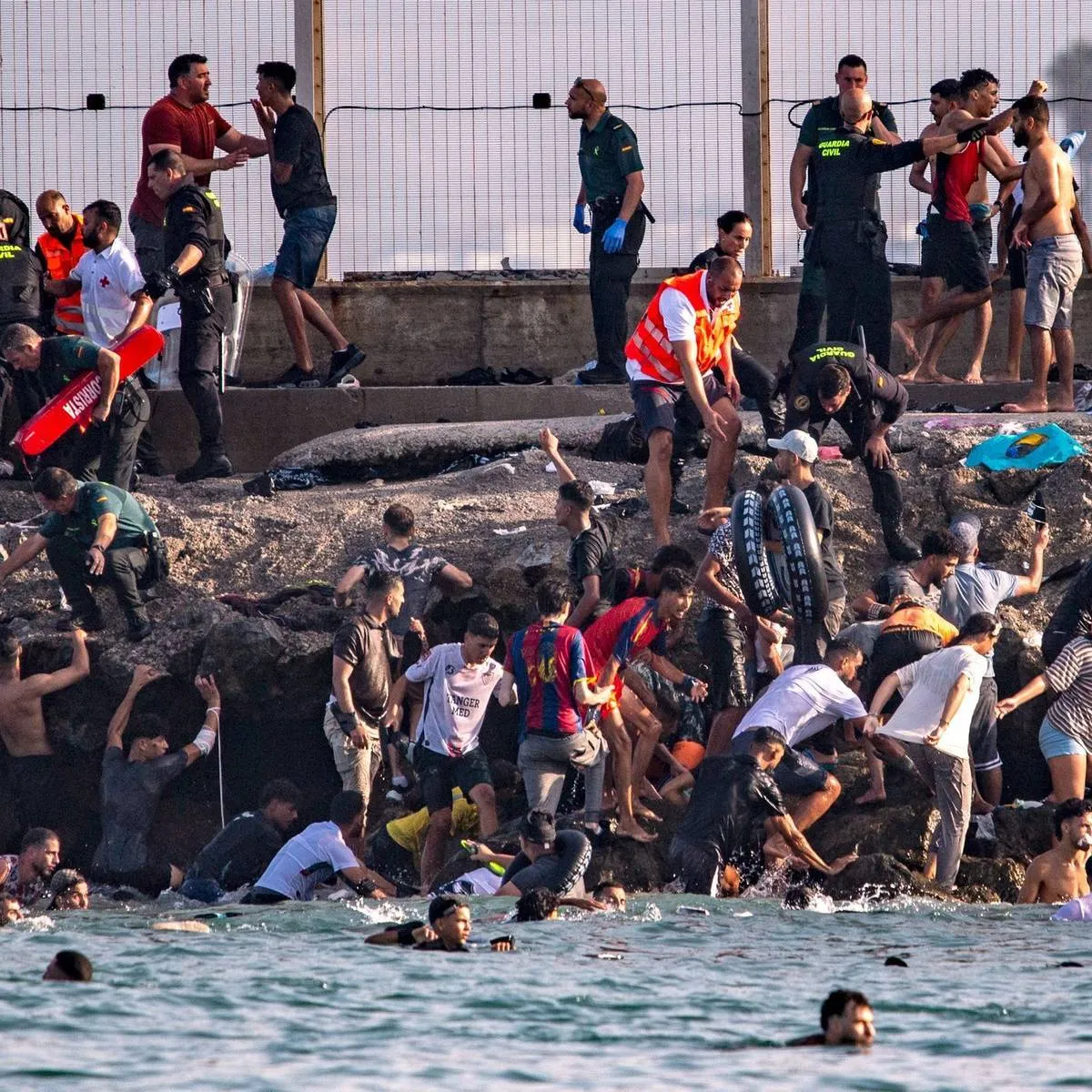
In a significant move to manage the recent surge in migrant crossings, Spain has initiated the installation of a 500-meter containment barrier along the sea border between its North African territory of Ceuta and neighboring Morocco. This decision follows a staggering influx of migrants, estimated between 50,000 and 60,000, who breached the border earlier this week. Tragically, the death toll has risen to 67, with reports indicating that several individuals drowned while others lost their lives during a chaotic stampede to cross a breakwater barrier. Spanish authorities have reported a total of 86 fatalities.
Spanish Prime Minister Pedro Sánchez has publicly criticized the response from certain European Union leaders regarding the situation in Ceuta, denouncing calls for Spain's suspension from the EU’s Schengen zone as being fueled by prejudice, misinformation, and political maneuvering. The tensions have escalated as some leaders, including Italian Premier Giorgia Meloni, threatened to suspend Italy’s open-border agreement with Spain, reinstating border controls for travelers arriving by air and sea.
Despite the overwhelming circumstances, the Spanish Interior Minister, Fernando Grande-Marlaska, reaffirmed the government's commitment to enforcing the law, emphasizing that the majority of migrants who crossed into Ceuta have returned to Morocco. He defended the collaboration between Spain and Morocco, stating that such partnerships are crucial in managing border security effectively. Marlaska insisted that Morocco should not be viewed as a threat, but rather as a reliable ally in addressing these complex migration challenges.
The leaders of 22 EU member states have called for a unified response to the crisis, urging an emergency videoconference of the bloc’s interior ministers. Their letter warns against allowing uncontrolled migrations to foster a perception that illegal entry into the EU is feasible, which could undermine confidence in the collective migration policies of the union. Sánchez echoed this sentiment, calling for a coordinated effort to address not only the immediate crisis but also to reinforce the shared responsibility of securing external borders among all member states.
As hundreds of migrants who had recently arrived in Ceuta began their return to Morocco, many recounted their experiences, describing the treatment they endured as degrading. Some expressed their decision to return voluntarily after facing harsh conditions, including lack of food and assistance. Reports indicate that many of these individuals faced physical injuries and were left to fend for themselves in the forests surrounding Ceuta.
In the aftermath of the border incident, life in Ceuta has been significantly impacted, with local authorities noting disruptions and heightened tensions. As the process of repatriation continues, both Spanish and Moroccan officials are monitoring the situation closely to prevent further unrest and to address the humanitarian needs of those affected.
As reported by nbcnews.com.