
The relationship between Morocco and the United States is currently thriving, particularly following Donald Trump's return to the White House. King Mohammed VI has successfully established himself as a natural ally for the U.S. at the gateway to Africa and the Mediterranean, a position of privilege that has, to a large extent, come at Spain's expense, relegating it to a secondary role in the region. This partnership is characterized by gestures of complicity and mutual understanding that bolster Morocco's international standing in its key conflicts, particularly in the Western Sahara, where the U.S. has legitimized Morocco's role in front of international institutions.
U.S. Support for Morocco
Recently, Morocco announced a seemingly minor initiative that, according to international analysts, could reveal a significant objective the country has pursued for years. The North-South N-1 highway, which traverses Western Sahara, is set to be transformed into a major two-lane highway and will be renamed the Donald Trump Highway. While this gesture may initially appear trivial, analyst Intissar Fakir from the Middle East Institute indicated in an interview with Al Jazeera that its implications are far more profound than they seem.
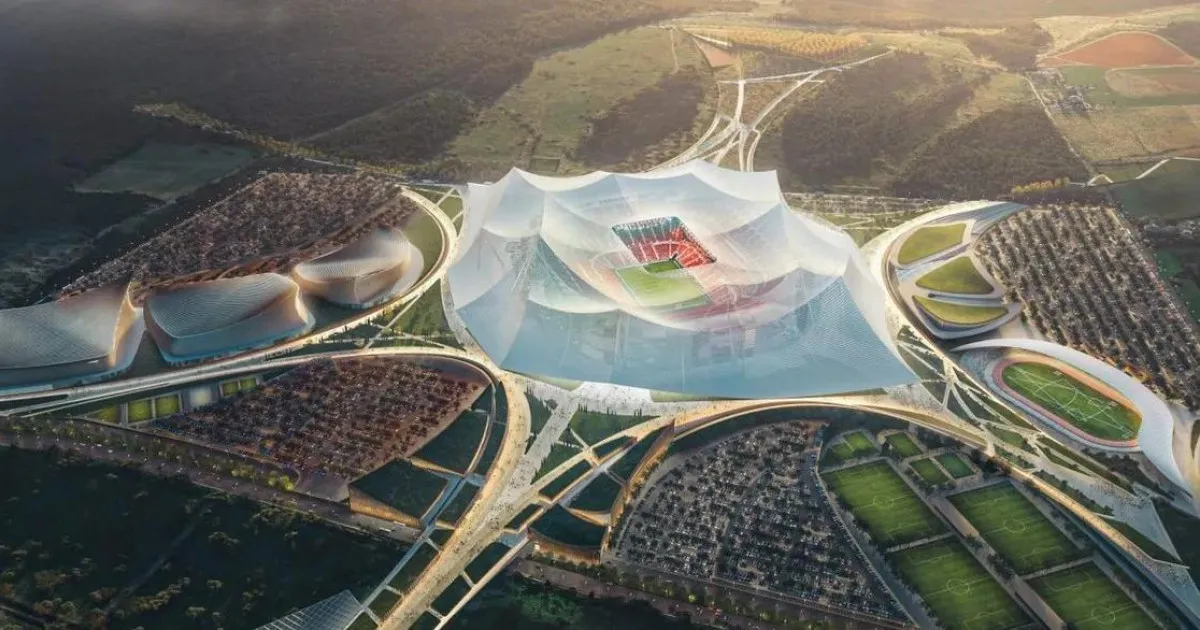
Fakir believes that Morocco has been discreetly maneuvering for several months to host the final of the 2030 World Cup at the Grand Stade in Casablanca, rather than at the Santiago Bernabéu Stadium in Madrid, as originally planned. This move could serve as a strategic threat to Spain, potentially overshadowing its role in the upcoming World Cup co-hosted by Spain, Portugal, and Morocco.
The Strategic Trump Highway
The transformation of the N-1 into the Trump Highway represents a masterstroke by King Mohammed VI, likely backed by Trump, who is known to be receptive to such symbolic gestures. Notably, the Palm Beach International Airport has been officially renamed as President Donald J. Trump International Airport, reflecting Trump's willingness to lend his name to major infrastructure projects for historical legacy.
Morocco has already begun construction to upgrade this extensive highway, which will connect the cities of Tiznit and Dakhla in the Sahara. This ambitious project spans over 1,000 kilometers and is expected to cost around 1 billion euros. It will significantly enhance Morocco's influence in the Sahara, including the development of a major port in Dakhla, which aims to become one of the largest in the western Atlantic.
For years, Morocco has been bolstering its infrastructure in a bid to emerge as Africa's industrial giant, thanks to its proximity to Europe. This strategic positioning enables Morocco to manufacture goods at lower costs and export them en masse to the European market, particularly in the automotive sector, where it produces over half a million vehicles annually, the majority of which are destined for Europe.
As reported by eldebate.com.