Harsh Sentences for Social Media Influencers in Morocco
In a stark illustration of Morocco's increasingly stringent stance towards content creators, Soukaina Glamour, a prominent influencer, was sentenced to ten months in prison along with a three-year ban from social media platforms. This ruling not only reflects the government's intensified repression of digital expression but also highlights a broader crackdown on artists, rappers, and GenZ activists, particularly following the protests that erupted in the fall of 2025. The Moroccan authorities are evidently attempting to reclaim control over a digital landscape that has become a vehicle for youth voices that they can no longer silence.
On August 17, 2026, the first-instance court in Marrakech convicted Soukaina Janah, popularly known as Soukaina Glamour, imposing a ten-month prison term and a fine of 500 Dirhams. Her arrest occurred on August 12 at Casablanca Airport due to the dissemination of videos deemed offensive to public morality. This was not her first encounter with the law; she had previously been sentenced in 2020 to two years in prison in a case related to defamation and extortion involving the scandal known as "Hamza mon bb." The Moroccan authorities argue that it is within the state's rights to prosecute sexual offenses and defamation, pointing to a wave of arrests targeting influencers accused of immoral conduct, which has, paradoxically, garnered some public support.
The punitive measures against influencers extend beyond Soukaina. For instance, on June 13, 2026, French-Algerian influencer Yass Naubelle was arrested in Marrakech after criticizing the traffic police in a video, resulting in a one-year imprisonment sentence for insult and false accusations. The political ramifications are particularly pronounced in Moroccan rap culture. In November 2025, Hamza Raid faced a one-month suspended sentence for participating in an unarmed assembly and inciting crimes electronically. Additionally, rapper Pause Flow received a three-month suspended sentence for lyrics perceived as disrespectful towards state institutions. Following this, the case of L7assal emerged in March 2026, where his songs criticized corruption and the deterioration of public services, earning him an eight-month jail term, which was upheld in an appeal on April 28.
The Rise of GenZ 212 and Its Impact on Moroccan Society
The recent surge in legal actions against content creators is intricately linked to the uprising of GenZ 212 in the fall of 2025. This movement, which gained traction on platforms like Discord, TikTok, and Instagram, allowed young people, devoid of formal political leadership, to voice their demands for healthcare, education, employment, and an end to corruption, thus entering the national discourse. In response, the state unleashed a wave of repression, with over 2,400 individuals prosecuted and about 1,500 imprisoned, as reported by the judiciary in late October 2025. While authorities highlighted violence at protests, NGOs decried arbitrary arrests and disproportionate sentences, with some individuals facing up to 15 years in prison.
As the government shifted its focus from street protests to online surveillance, the crackdown intensified. On February 12, 2026, Zineb Kharroubi, a representative of GenZ 212 living in France, was detained upon her arrival at Marrakech Airport, and on June 29, she was sentenced to six months in prison on probation. This increased control starkly contrasts with Article 25 of the Moroccan Constitution, which guarantees freedom of expression and artistic creation. Although there is no direct evidence linking King Mohammed VI to these arrests, such judicial policies cannot be fully divorced from the country's power dynamics, especially given the king's role as head of the Supreme Judicial Council.
In his address on October 10, 2025, the king acknowledged the urgent need to address social expectations regarding employment, health, and education, yet he failed to mention the protests or arrests, suggesting that social grievances are only permissible within state-sanctioned limits. Morocco appears to desire a connected youth, but only as long as they do not utilize platforms like TikTok, YouTube, or rap as instruments of protest. The case of Soukaina Glamour, while seemingly trivial compared to politically charged rap lyrics, underscores the same mechanism of discipline aimed at those who produce public content, regardless of its nature.
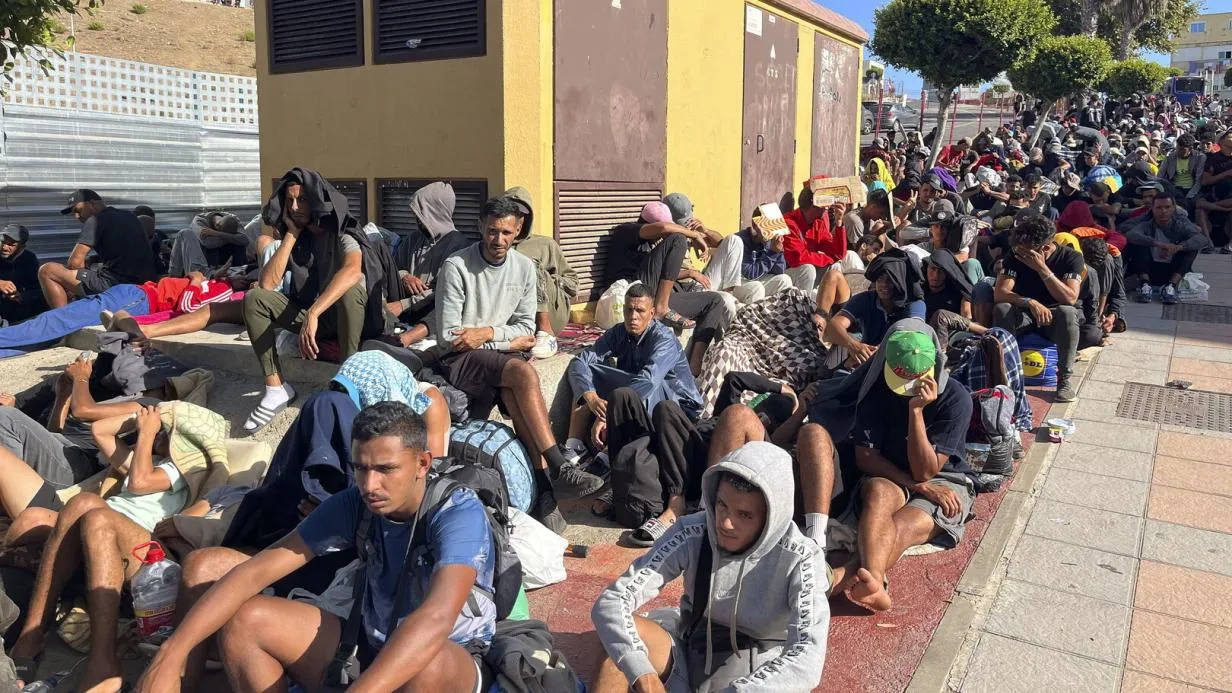
As the Moroccan government grapples with a generation inclined towards emigration, the risk lies in alienating youth further by constraining their avenues for free expression. This desire for escape became evident in late July 2026 when approximately 72,000 individuals, primarily young Moroccans, illegally crossed into the Spanish enclave of Ceuta within 48 hours, marking the largest migration surge recorded at this border. Reports from a Spanish forensic commission noted at least 80 fatalities, while NGOs cited at least 141 victims and numerous missing persons. This situation forced the state to confront its own narrative, as the Interior Ministry attributed the surge to the "exploitation of the digital space" and the "spread of misinformation." Subsequently, dozens of Moroccans were arrested for allegedly inciting further migration attempts.
The very digital space that serves as a tool for monitoring rappers and influencers has also become a means for expressing the desire to flee the country. As evidenced by the cases of Mehdi Black Wind and Zineb Kharroubi, protests continue from abroad, where Moroccan law has no jurisdiction—provided these diaspora members do not return to Morocco. As reported by africa-live.de.