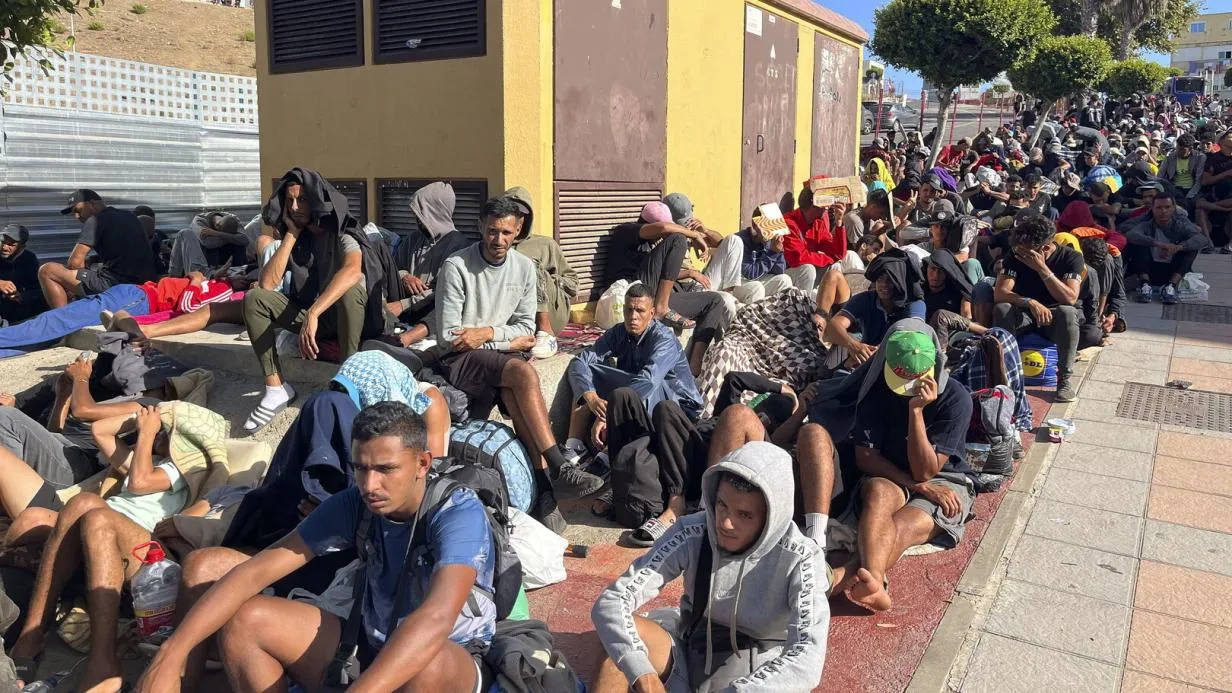

The Sidi Embarek cemetery in Ceuta offers a view stretching across the waters to Morocco, where the border town of Fnideq lies just a few kilometers away from the Spanish enclave. Younes, a young man who once called Fnideq home, tragically lost his life during a perilous journey across the sea. On July 30, he attempted to swim to Ceuta with his siblings; while his older siblings survived, Younes, just 19 years old, did not. He was laid to rest in Sidi Embarek on Wednesday, marking a somber milestone as he became one of the 82 victims whose bodies were recovered from the sea following the mass border crossing at the end of July. Despite the burial of these individuals, the crisis in Ceuta is far from resolved nearly a month after approximately 80,000 people surged into the city within just a few hours.
Unresolved Issues and Ongoing Struggles
Although the Spanish government had announced plans to swiftly deport irregular migrants who did not voluntarily leave Ceuta, thousands remain in the autonomous city, many of whom find themselves sleeping on the streets or in makeshift shelters. The exact number of these individuals, as well as the count of asylum applications and deportations, remains uncertain. The political and legal handling of the events is progressing slowly in Madrid. In response to the unfolding crisis, a central crisis command was established on Tuesday after prolonged discussions. Prime Minister Pedro Sánchez convened the National Security Council, designating the situation as a matter of national security interest. Furthermore, 25 million euros were allocated for the care of unaccompanied minors, although the exact number of affected children is still unclear, with around 1,500 officially registered so far.
Reforming Asylum Laws amidst Political Turmoil
In the first cabinet meeting following the summer recess, the left-leaning national government initiated a reform of immigration and asylum laws, aimed at aligning Spain's legislation with the European Union's Asylum and Migration Pact. In a demonstration of accountability, seven ministers are scheduled to present before Congress this week to address the causes and developments of the Ceuta crisis. However, the initial appearance of Defense Minister Margarita Robles exposed fractures within the government; she contradicted previous statements by asserting that Spanish intelligence had indeed warned of activities at the Moroccan border and the potential for mass crossings. In stark contrast, Interior Minister Fernando Grande-Marlaska quickly refuted her claim from the Moncloa Palace, stating, 'There was no report indicating that what happened on July 30 was going to occur.' Meanwhile, frustrations are mounting among the leftist coalition partner Sumar and the opposition regarding the socialists' crisis management. A spokesperson from the left-wing Podemos party remarked, 'It was evident across Spain that the president needed to cut short his vacation to address the crisis, but that did not happen.' Sánchez only returned from his summer holiday in Lanzarote on Monday, and he is set to address Congress on September 3.
In the meantime, Younes's brother is sharing their family's story with Spanish media. He revealed to the radio station Cadena Ser that his brother's body was supposed to be repatriated to their homeland, but Morocco obstructed the process. He remains in Ceuta, hiding from the authorities, illustrating the ongoing complexities and human toll of this crisis.
As reported by kurier.at.