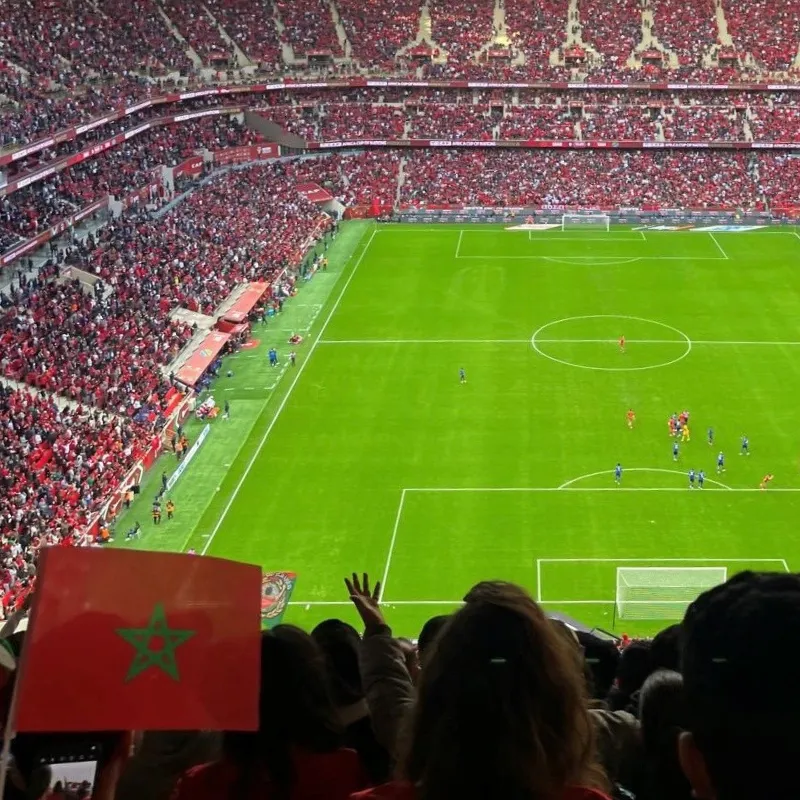
Morocco has officially unveiled its squad for the 2026 World Cup finals, igniting lively discussions over coffee and couscous throughout the nation. With 26 players now proudly representing the Atlas Lions, this selection offers a remarkable opportunity to build on the historic success achieved during the 2022 World Cup in Qatar. As the highest-ranked African team, currently positioned eighth in FIFA’s world rankings, Morocco stands ahead of traditional powerhouses like Germany, Italy, and Belgium, setting the stage for an impressive tournament.
However, the roster extends beyond mere athletic prowess; it encapsulates a rich intergenerational narrative of transnational mobility. The players represent a collective history, including parents who migrated from Morocco for work, children raised in European suburbs, and those who honed their skills in prestigious academies located in Madrid, Amsterdam, Brussels, and Lille. This evolving narrative illustrates Morocco's shift towards embracing its diaspora, recognizing that expatriate talent is integral to the national football framework rather than an afterthought.
The Evolution of Moroccan Football and Its Diaspora
Morocco's journey in international football is notable, with a legacy that transcends the recent spotlight of the 2022 World Cup. The nation was the first to qualify for the World Cup through a dedicated African campaign in 1970 and made history as the first African and Arab nation to reach the knockout stages in 1986. The pinnacle of this journey was achieved in 2022 when Morocco became the first African or Arab team to reach a World Cup semi-final. Each of these milestones has been celebrated as a national triumph, yet they also reflect a contemporary reality: a footballing identity shaped by athletes, memories, and skills developed across various homelands.
In the latest squad announcement for the 2026 World Cup, a significant 19 out of the 26 players were born outside Morocco, reflecting a continued trend of diaspora representation. This shift can be traced back to the previous World Cup squad, where 14 players were born abroad, and even in the African Cup of Nations (AFCON) 2025, the squad was evenly split between Moroccan-born and diaspora players. This data indicates that rather than moving away from diaspora talent, Morocco is actively pursuing an integrated approach, scouting young Moroccans abroad while simultaneously investing in the domestic football infrastructure.
This trend is not exclusive to Morocco; it mirrors broader patterns observed in international football, where many African nations are increasingly fielding foreign-born players. Approximately 30% of participants in AFCON 2025 were born outside the continent, with France emerging as a prominent birthplace. The dynamics of sporting citizenship are complex, as players with dual nationality navigate their identities and professional opportunities, considering factors such as family expectations and the strategies employed by national football federations.
A Comprehensive Strategy for Success
Morocco's approach to footballing success is far from serendipitous; it is rooted in a deliberate and forward-thinking strategy that melds domestic investment with diaspora outreach, emotional connection, and professional credibility. The nation has not solely relied on European-born players but has significantly invested in its domestic football infrastructure. Key initiatives such as the Mohammed VI Football Academy and improved federation systems reflect Morocco’s commitment to nurturing talent at home while scouting for players of Moroccan descent abroad before they align with other nations.
For many dual-nationality players, the decision to represent a country is laden with personal and political implications, prompting them to contemplate their heritage and the sacrifices made by their families. For instance, Brahim Diaz, a player developed through the ranks of major clubs like Manchester City and AC Milan, made headlines by choosing to represent Morocco despite his strong ties to Spain. His choice underscores that such decisions are not necessarily a rejection of one identity in favor of another but rather a complex negotiation of belonging.
As Morocco prepares for the upcoming World Cup, the inclusion of players like Ayyoub Bouaddi—who was persuaded to represent the Atlas Lions over France—illustrates the ongoing competition for talent at a young age. This strategic recruitment is indicative of Morocco's proactive stance in securing future stars before they establish their senior international identities.
The intricate relationships fostered between Morocco and its diaspora reveal a nuanced understanding of identity. The statistics show that many players have opted for Morocco from the onset of their careers, debunking the narrative that the country merely imports talent. Instead, Morocco is cultivating a transnational football identity, deeply rooted in its history of migration and familial connections.
Morocco's commitment to developing its football infrastructure alongside engaging its diaspora is crucial. The integration of external talent complements local pathways and enhances the national team without overshadowing it. Ultimately, the 2026 World Cup squad signifies a pivotal moment in Morocco’s footballing evolution, highlighting a national project that harmonizes the contributions of local academies, diaspora players, and domestic clubs into a cohesive pipeline.
As Morocco continues to navigate the complexities of migration and integration, the future of its national team may very well include players from diverse backgrounds, including those from sub-Saharan Africa who are born or raised in Morocco. If the Mohammed VI Football Academy and other initiatives support young talents regardless of their lineage, the next generations of Atlas Lions may reflect a rich tapestry of identities encompassing various regions of the globe.
In conclusion, Morocco's World Cup squad is not just a compilation of names; it symbolizes the profound changes migration has brought to the nation and hints at the transformations yet to come. The Atlas Lions' selection exemplifies a collaborative football initiative that transcends borders, weaving together domestic frameworks, diaspora ties, and professional aspirations—an inspiring narrative that will unfold on the world stage.
As reported by compas.ox.ac.uk.