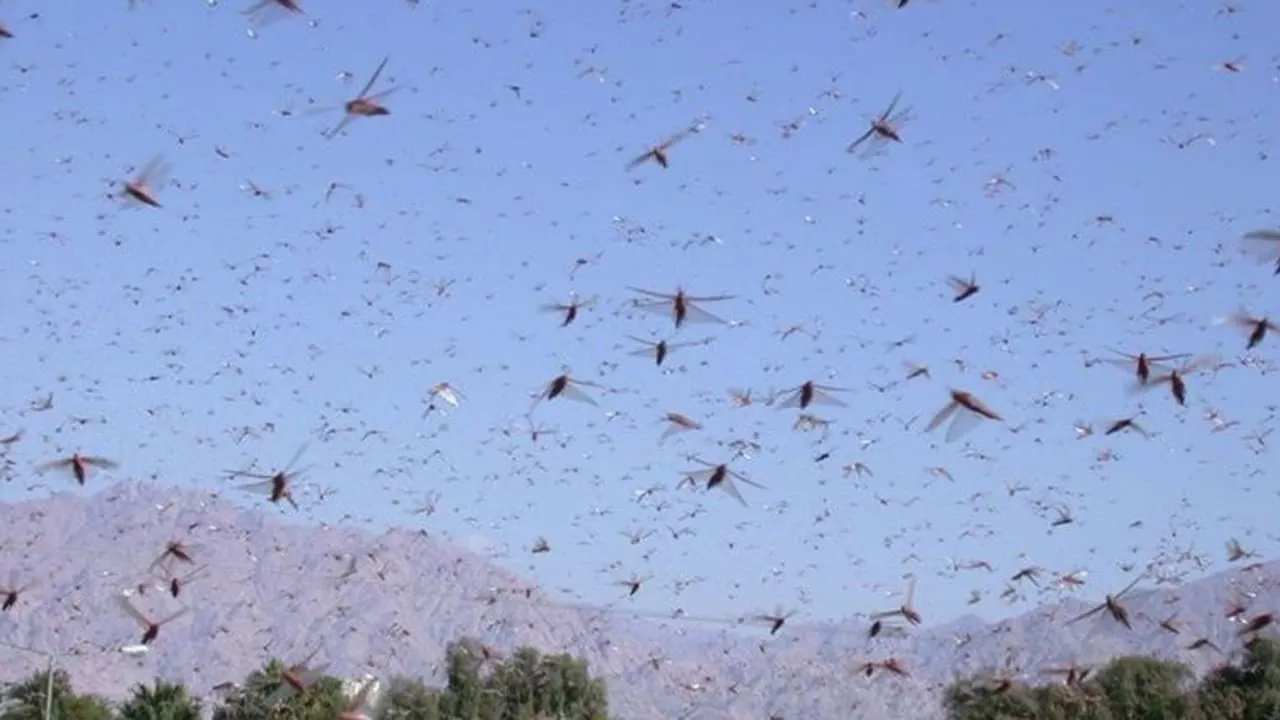
Moroccan Locust Invasion Disrupts Eastern Iran's Agricultural Landscape
A significant swarm of Moroccan locusts is wreaking havoc on the agricultural sector in eastern Iran, as reported by various Iranian media sources alongside alarming footage that captures the vast numbers of these insects descending upon affected regions. According to statements made to the semi-official Mehr News Agency, medical officials have reassured the public that these insects do not pose any direct health risks. Nonetheless, the Tasnim News Agency has highlighted the severity of the situation, indicating that the locust invasion threatens the livelihoods of thousands of households dependent on agriculture.
The Moroccan locust, scientifically referred to as Dociostaurus maroccanus, is known for its capability of rapid reproduction. Females of this species can lay between two to four egg pods throughout their lifespan, with each pod containing approximately 30 eggs. These pests primarily feed on a variety of crops, including grain, date palms, citrus fruits, fruit trees, olives, and figs. The Food and Agriculture Organization (FAO) of the United Nations has classified this species as one of the most serious threats to numerous cultivated plants.
In addition to the devastating impact on food crops, Moroccan locusts can deplete extensive amounts of rangeland vegetation, leading to potential shortages of feed for livestock. In response to the crisis, authorities have initiated widespread pesticide spraying across affected areas and have advised farmers to delay harvesting their crops to minimize the risk of chemical contamination.
The recent surge in Moroccan locust populations has been linked to shifting weather patterns and ongoing drought conditions. Iran is currently facing its sixth consecutive year of water shortages, a situation exacerbated by years of ineffective water management. Following the abandonment of the traditional qanat aquifer system, authorities opted to construct dams in a bid to enhance agricultural output, a short-term measure that has only further aggravated the drying of rivers, a situation worsened by the effects of global warming.
Moreover, numerous international news outlets have correlated the worsening drought conditions with the civil unrest that erupted in January, during which regime authorities violently suppressed protests triggered by the nation’s declining economic circumstances.
As reported by jpost.com.