Perceptions of Global Threats Among Spaniards
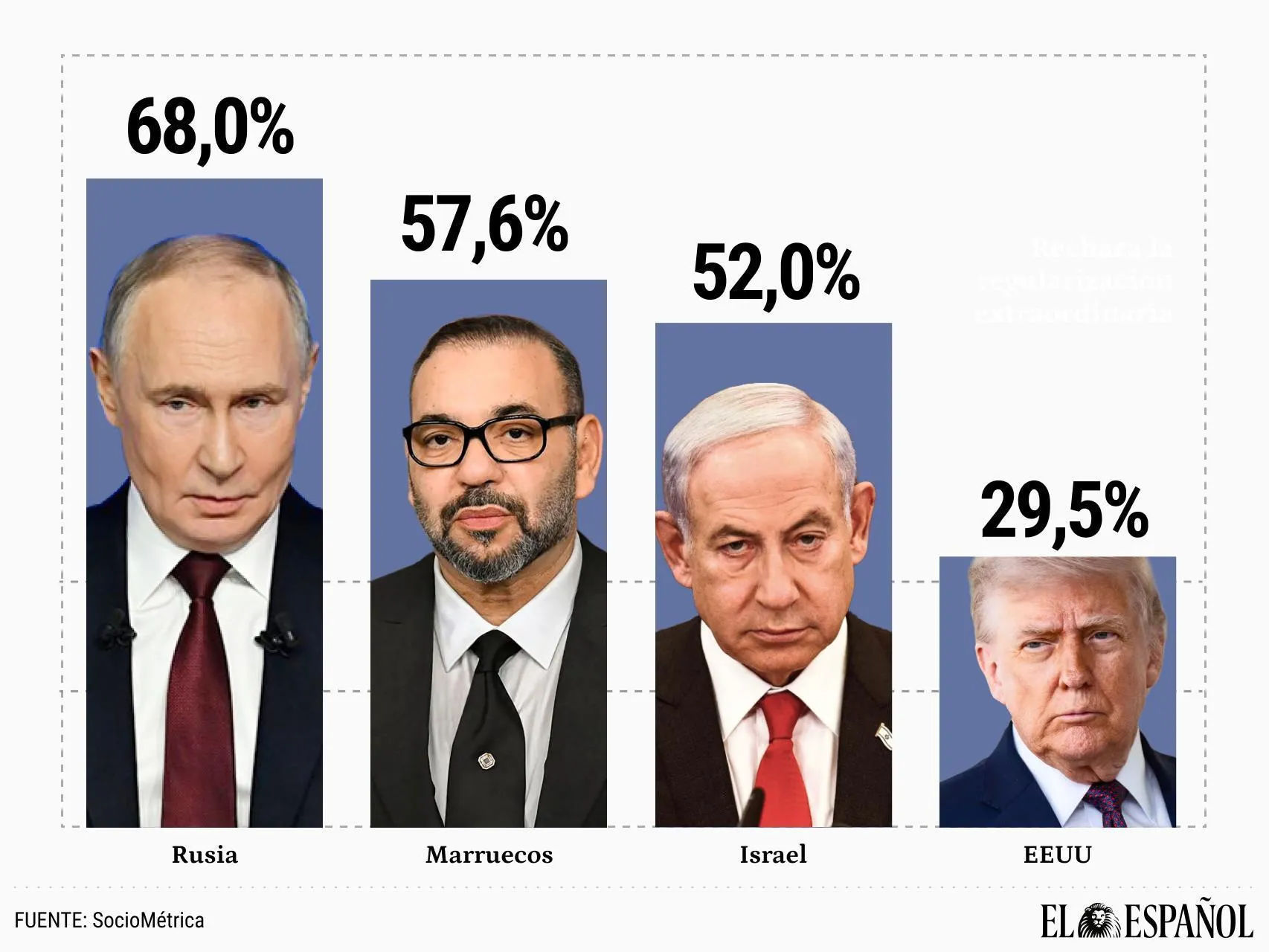
A recent survey conducted by SocioMétrica reveals that a significant 68% of Spaniards perceive Russia, under the leadership of Vladimir Putin, as a military threat to Spain. This perception is largely fueled by Russia's ongoing conflict with Ukraine, which has unfolded on European soil for over four years. In addition, 57.6% of respondents regard Morocco as another military threat, particularly due to its ongoing sovereignty claims over Ceuta and Melilla. The survey indicates a growing concern among the Spanish populace regarding the nation’s security landscape, emphasizing the perceived risks posed by these neighboring countries.
Furthermore, the survey highlights that a substantial 61.7% of Spaniards believe that Spain should strengthen its ties with the United States, while only 29.5% view the U.S. as a potential military threat. This reflects a clear inclination towards aligning with traditional allies, despite the current political climate. Moreover, 52% of the population considers Israel a military threat, with a notable 48% advocating for a distancing from the Israeli government. This sentiment underscores the complexities of Spain's foreign relations and the impact of recent diplomatic maneuvers by the current administration.
Shifts in Spain's Foreign Policy Under Pedro Sánchez
President Pedro Sánchez has made significant shifts in Spain's international alliances, often without the backing of the legislature or consensus with the opposition party. His administration has distanced itself from long-standing allies such as the U.S. and Israel while seeking closer relationships with nations like China. This pivot has not only altered Spain's diplomatic landscape but has also raised eyebrows regarding its implications on national security. In a notable instance, Sánchez restricted U.S. military access to Spanish bases amid escalating tensions in the Middle East, a move that sparked debate regarding its potential ramifications for Spain's defense posture.
Despite the clear division in opinions regarding foreign threats, the survey indicates that 61.4% of Spaniards believe Spain should distance itself from Morocco. This sentiment is echoed across various political affiliations, with 97.3% of Popular Party (PP) voters and 92.2% of Vox voters viewing Morocco as a military threat. Conversely, a large portion of left-leaning voters, particularly those from Podemos and Sumar, do not share this perception. The survey also reveals a significant discrepancy among Socialist Party voters, who are split in their views on whether to approach or distance Spain from Morocco, highlighting the internal divisions within the party regarding foreign policy.
Overall, the survey results reflect a growing apprehension among Spaniards about their national security, particularly regarding relations with Russia, Morocco, and Israel. As Spain navigates its foreign policy under Sánchez's leadership, the implications of these perceptions will likely shape future diplomatic strategies. The survey was conducted between April 15 and 18, 2026, involving 1,712 Spanish voters, and the results underline the critical need for a cohesive and well-informed foreign policy that considers the perspectives of the Spanish populace.
As reported by elespanol.com.