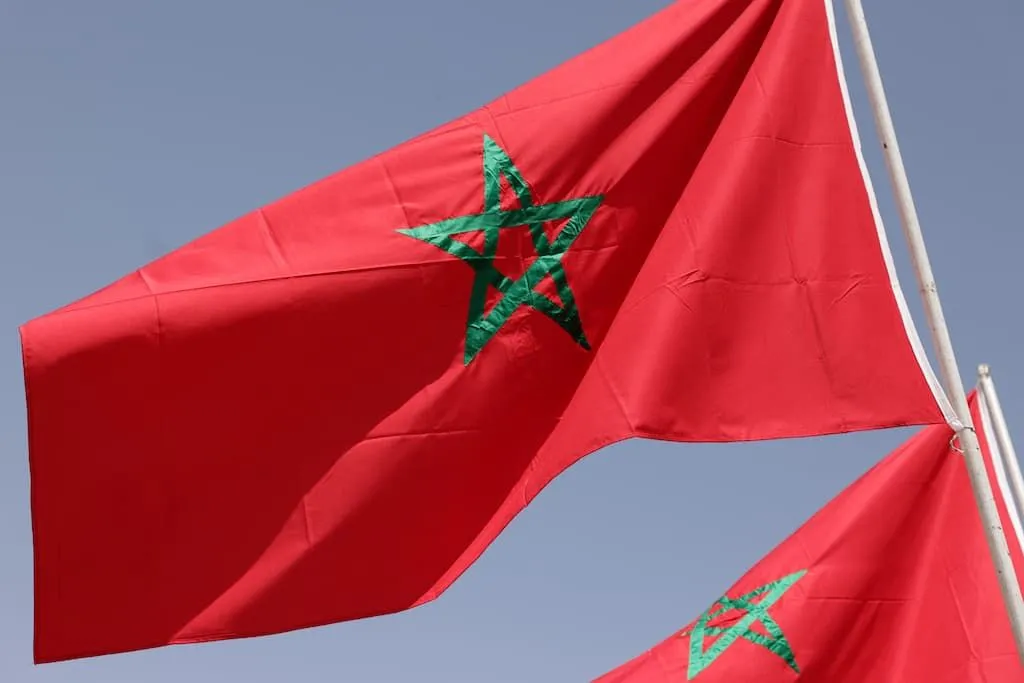
Casablanca, the largest city in Morocco and a vital economic engine of the kingdom, lies nearly 7,000 kilometers away from Toronto, nestled on the Atlantic coast of North Africa. At a glance, these two cities may appear to be worlds apart; one is caressed by the Atlantic winds while the other hugs the shores of Lake Ontario. However, upon closer examination, it becomes evident that Casablanca and Toronto share numerous commonalities that transcend their geographical distance.
For many Casablanca natives who choose to settle in Ontario, this familiarity greatly eases their integration into Canadian society. Selma, a Moroccan immigrant, expresses this sentiment well: “Toronto reminds me of Casablanca in many ways. There’s the same energy, the same diversity, and that feeling that everyone can find their place here. Even with the distance, I don’t feel completely out of place.” This sense of connection is further reinforced within the Moroccan community in the Greater Toronto Area, where it is estimated that between 25% and 30% of Moroccan immigrants hail from the Casablanca metropolitan region. Mohamed Benjelloun, president of the Moroccan Association of Toronto, emphasizes this strong link between the two cities.
Two Economic Powerhouses
Beyond personal anecdotes, various indicators illustrate the similarities between Casablanca and Toronto. Both cities boast populations exceeding three million, making them pivotal metropolises in their respective countries. Regionally, Casablanca-Settat and the Greater Toronto Area encompass over seven million residents combined. Economically, they play a crucial role in wealth creation and the concentration of financial, commercial, and service activities. Toronto is recognized as Canada’s primary economic driver, while Casablanca, affectionately known as “Casa,” serves as the economic heartbeat of Morocco.
Moreover, their influence extends beyond mere economics. Toronto is home to communities from all corners of the globe, while Casablanca has long welcomed populations from various regions within Morocco, as well as from Europe, Sub-Saharan Africa, and the Middle East. The city’s proximity to Europe and Morocco’s connections with numerous African nations contribute to its status as a significant hub for exchange and mobility.
Transportation is another common thread linking these two vibrant cities. Both Casablanca and Toronto are experiencing sustained growth and a continually evolving population, prompting them to address the mobility needs of millions of residents. The Toronto transit systems, including the TTC and GO Transit, recorded over 800 million trips collectively in 2024. In Casablanca, the tramway and Busway facilitate the movement of over 54 million passengers each year. Beyond public transport, both cities are strategically positioned within extensive road networks. Toronto is crisscrossed by Highway 401, one of North America’s busiest roads, while Casablanca relies on a comprehensive network of urban highways and expressways that facilitate movement within the city and to its various economic hubs.
Additionally, a direct flight connection established by Royal Air Maroc links Toronto and Casablanca, operating three times a week since December 2024. This new route not only strengthens ties between the two metropolises but also opens the door for further collaboration.
Bridging Cultures and Opportunities
The tourism potential between Casablanca and Toronto is also noteworthy. Souriya Otmani, Morocco’s ambassador to Canada, highlights the opportunities that a closer relationship could present, stating, “Strengthening ties between Casablanca and Toronto would provide an excellent opportunity to introduce the Canadian public to the White City and Morocco’s rich cultural heritage.” The ambassador notes a growing interest among Canadians in Moroccan destinations, citing a remarkable increase in Canadian tourists to Morocco, with 258,000 visitors recorded in 2025, marking a 29% rise from the previous year.
Furthermore, Faouzi Metouilli, president of the Morocco-Canada Economic Chamber, emphasizes that both cities already possess several advantages conducive to closer ties. He states, “Casablanca and Toronto are both global metropolises: economic hubs, migration nodes, and spaces where diversity, innovation, and constant change coexist. An economic partnership could help solidify the existing bridges between them.”
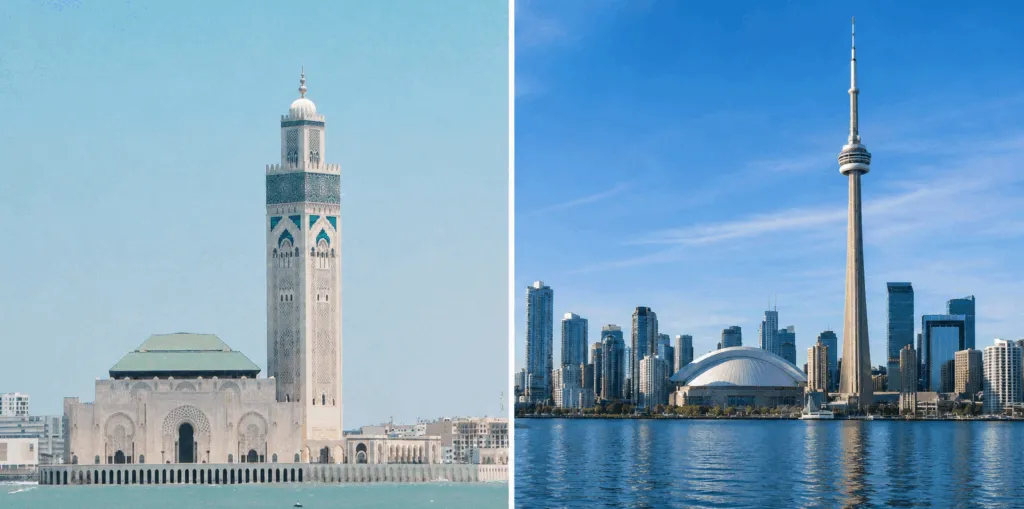
The urban landscapes of both cities also reflect interesting parallels. The Hassan II Mosque stands tall against the sky and the Atlantic in Casablanca, while the CN Tower marks Toronto’s skyline with equal prominence. These landmarks exemplify the cultural identity of their respective cities. The waterfront areas, such as Casablanca’s Corniche and Toronto’s waterfront district, serve as popular meeting spots, providing a blend of leisure, culture, dining, and public spaces.
In terms of sports, both cities share a love for their local teams. In Toronto, teams like the Maple Leafs, Raptors, Toronto FC, and Blue Jays unite generations of fans, while Casablanca thrives with the fervor of the Wydad and Raja clubs, which are central to the city’s sporting identity. The historic rivalry between these two football giants culminates in the Casablanca derby, drawing significant attention from sports enthusiasts across the continent.
While there are currently no plans for an official twinning between Casablanca and Toronto, the shared characteristics between these two metropolises raise intriguing questions about the potential for future collaboration and connection.
As reported by l-express.ca.