
Shifting Political Dynamics in Agadir Ida-Outanane
In a remarkable turn of events over a single legislative term, the Agadir Ida-Outanane constituency has witnessed one of the most significant electoral upheavals in the country. Once a stronghold for the Justice and Development Party (PJD) in 2016, the constituency transitioned five years later into a fragmented political landscape where four different parties shared the four available seats. As the legislative elections of 2026 approach, the major political parties are re-entering the arena with aspirations to either solidify their gains or reclaim lost ground.
As the capital of Souss and the principal urban center in the Souss-Massa region, Agadir Ida-Outanane is one of the most closely monitored constituencies in the upcoming elections. The four seats allocated to the House of Representatives make it a testing ground for the shifting party dynamics that are currently reshaping the Moroccan political landscape.
The Decline of PJD and the Rise of New Forces
The electoral event of September 8, 2021, dramatically reshaped the local electoral map. The National Rally of Independents (RNI) emerged as the frontrunner with 50,829 votes, far ahead of the Authenticity and Modernity Party (PAM), which garnered 14,136 votes. The Istiqlal Party came in third with 8,175 votes, followed closely by the Party of Progress and Socialism (PPS) with 7,103 votes. This new configuration allowed Karim Achengli (RNI), Hamid Ouahbi (PAM), Jamal Diouani (Istiqlal), and Hassan Oumribet (PPS) to claim the four available seats in the constituency.
The Socialist Union of Popular Forces (USFP) narrowly missed out on parliamentary representation, finishing with 7,091 votes, just twelve votes shy of the PPS, highlighting the fierce competition for the last seat. In stark contrast, the PJD received only 5,390 votes, landing in sixth place—a significant drop from their previous dominance.
In the elections of October 7, 2016, the PJD had showcased a commanding presence, winning 36,504 votes, which represented nearly half of the cast ballots. This success enabled them to secure two seats through Saleh El Mallouki and Ismaïl Choukri. The PAM followed as a distant second with 15,011 votes, earning one seat through Hamid Ouahbi, while the RNI came in third with 7,804 votes and claimed the fourth seat via Abdellah El Massoudi. Other parties trailed significantly behind, with USFP, Alliance of the Left Federation, PPS, and Istiqlal each receiving modest support.
The comparison between these two electoral events starkly illustrates the dramatic transformations that have occurred within the constituency. The PJD's decline is particularly notable, plummeting from 36,504 votes in 2016 to just 5,390 in 2021—a staggering loss of approximately 85% of its local voter base. Conversely, the RNI experienced exceptional growth, with its votes surging from 7,804 to 50,829, representing a remarkable increase of 43,025 votes and a sixfold multiplication of its electoral capital.
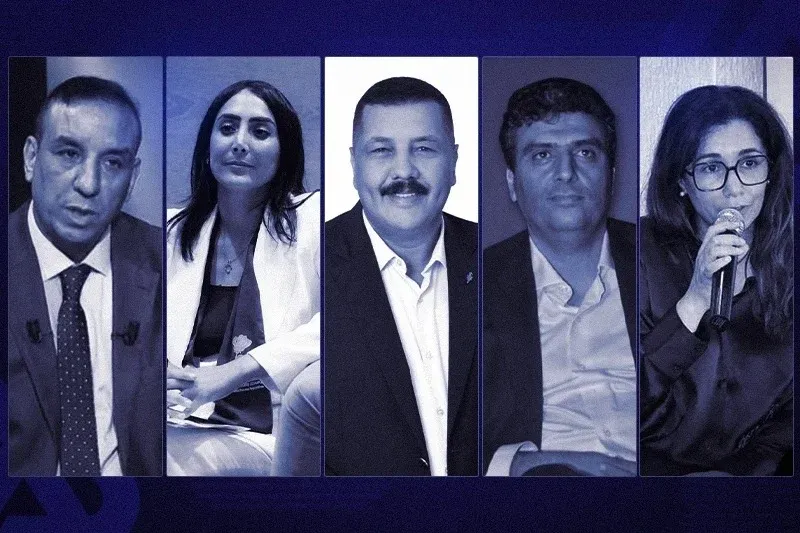
As the political landscape shifts in anticipation of the 2026 elections, the major parties are gearing up for an intense competition. The RNI has nominated Zina Idhali, who was elected in 2021 on the women's regional list, to lead their local campaign. Meanwhile, the PAM has retained Hamid Ouahbi, who previously won the party's seat, and the Istiqlal has reaffirmed its support for incumbent Jamal Diouani. The PJD has once again put forward Mohammed Bakiri as its candidate, while the PPS maintains Hassan Oumribet, who narrowly won the fourth seat in the last election. The USFP has appointed Rajaa Massou, a local council member, and Mohammed Oublouch will head the Alliance of the Left's list.
As the campaign unfolds, it will operate in the shadow of the electoral earthquake witnessed between 2016 and 2021. While three of the four parties that secured seats in the previous election are sticking with their leaders, the RNI is opting for a new face. However, the recent history of the constituency serves as a cautionary tale; in just five years, Agadir Ida-Outanane went from nearly exclusive PJD dominance to a distribution of seats among four distinct parties. The narrow margins seen in the 2021 elections remind us that a handful of votes can dramatically alter the parliamentary representation.
In this emblematic constituency of Souss, the 2026 elections could either reaffirm the balances established in 2021, make slight corrections, or, as seen in the previous legislative term, completely reshuffle the political cards.
As reported by fr.hespress.com.