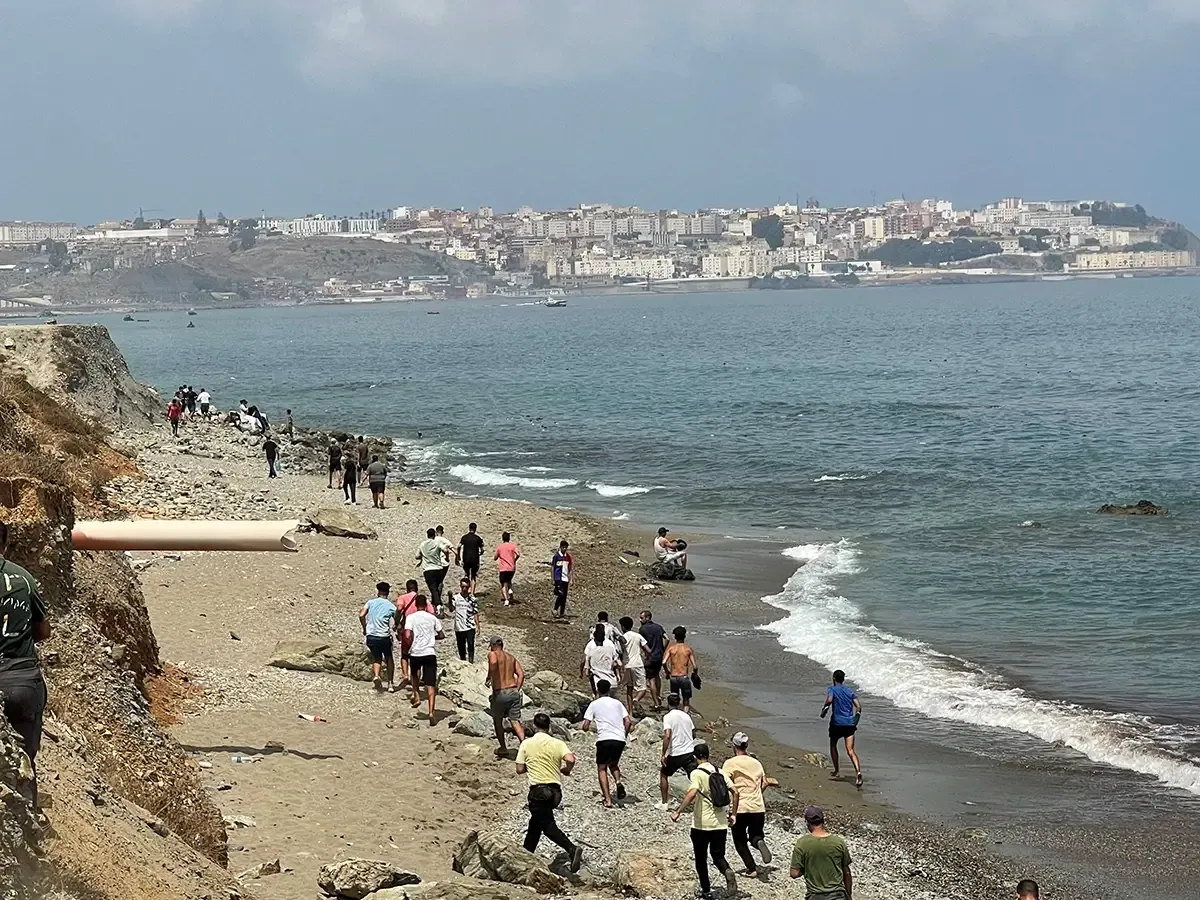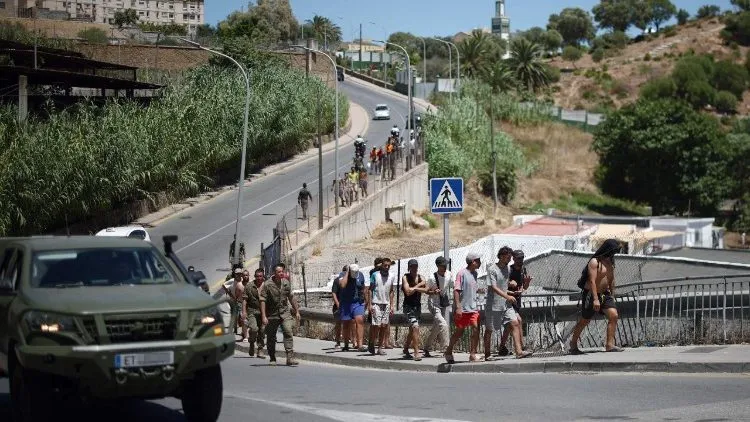

The situation at the Spanish enclave of Ceuta has seemingly returned to a state of calm following the arrival of approximately 60,000 migrants from Morocco. While Spanish authorities assert that all these individuals seeking exile have returned to their home country, numerous Moroccan families remain in distress, uncertain about the fates of their loved ones, some of whom may have tragically lost their lives during the perilous crossing. At the Moroccan side of the border, the local Church is mobilizing efforts to provide assistance, as outlined by Archbishop Emilio Rocha Grande of Tangier in an interview.
Days after the mass influx of migrants, the border between Morocco and Ceuta is gradually stabilizing. According to Spanish officials, nearly 60,000 individuals crossed into Ceuta, predominantly swimming around the border checkpoint at Bab Sebta. However, the vast majority of these individuals have since returned to Morocco, as clarified by Moroccan authorities. There are discrepancies between Madrid and Rabat regarding the numbers of migrants involved and the casualties, but this crossing has resulted in the loss of many lives. Spanish authorities report at least 67 fatalities, while the Moroccan Ministry of the Interior has confirmed 11 identified deaths.
In a conversation with Vatican media, Archbishop Emilio Rocha Grande, O.F.M., highlighted that the returning migrants are often exhausted and hungry. The local Catholic Church, which has been aiding sub-Saharan migrants for years, is now grappling with a significant "migrant crisis" and is striving to assist those who have returned home. In his words, the situation has transformed, as the majority of those who crossed over have willingly returned to Morocco, resulting in a much calmer atmosphere. However, the tragedy persists, with reports of around a hundred deaths. This unexpected crisis overwhelmed the local Church's capacity to respond adequately, as thousands arrived suddenly, seeking to cross rather than stay. Basic assistance such as food and water was provided, but only within the limits of available resources.
Even now, many families are gathering in Fnideq, waiting at the border with Ceuta, anxious for news of their relatives returning from the crossing. Some families are left in the dark, uncertain whether their loved ones are alive or deceased. The Church is extending its support to these families as they navigate this difficult ordeal, but the rapid onset of the crisis has limited the resources they can offer. There is a community of Xaverian missionaries on the ground, though they lack a stable parish, as there is no established Christian community in the area. These missionaries are doing their utmost to assist while also contending with their precarious situation.
The recent wave of departures raises critical questions about the despair felt by a segment of Moroccan youth. It is essential to recognize that Morocco is not a poor country in the traditional sense; it is experiencing growth. However, this economic advancement does not benefit everyone equally, especially the youth. With a predominantly young population, the job market cannot accommodate everyone, leading to frustration among many young people. The media often portrays Europe as a paradise, tempting them with the idea that all their problems would be solved upon arrival, leading to a strong desire to emigrate.
The Church in Morocco has been an unwavering presence among sub-Saharan migrants and others facing precarious situations. For many years, it has worked diligently to assist migrants attempting to enter Europe, with the Diocese of Tangier serving as the final passage point due to its proximity to the Mediterranean. The diocesan delegation for immigration has been active in providing medical, social, legal, and emergency assistance. Additionally, the Church engages significantly with the local Moroccan population in need, implementing targeted projects such as providing shelter for street children in Tangier.
During a recent Sunday Angelus prayer, Pope Leo XIV expressed deep concern over the plight of the thousands of migrants attempting to reach Spain from Morocco and called for solutions that embody peace, stability, and justice in Ceuta. Archbishop Rocha Grande received the Pope's words as prophetic, presenting a challenge both to the Church and to political figures with the capacity to enact change. He emphasized the need for action that respects human dignity, recognizing that migrants should not be treated as political or ideological pawns.
In addressing the high population of youth in Morocco, there is a pressing need to invest in their training so they can enter Europe legally and contribute to society. This investment would allow Moroccan youth to enrich the social fabric of the nations they join. The integration of these individuals is crucial to avoiding the creation of ghettos and fostering a peaceful coexistence with local populations. The Church acknowledges its role in this integration process, engaging in dialogue with both European and Moroccan authorities to encourage more reasonable human mobility.
In conclusion, the Church urges Moroccan youth to recognize the possibilities within their own country. Morocco is a place where they can live and work, and they should not be swayed by the misleading narratives propagated by the media. By understanding their needs and viewing individuals as unique human beings rather than mere statistics, a constructive dialogue can commence with the European Union and other nations to foster mutual understanding and partnership. The Church, with its extensive experience working with migrants, stands ready to engage in this dialogue, focusing on the human aspect of the issue.
As reported by vaticannews.va.