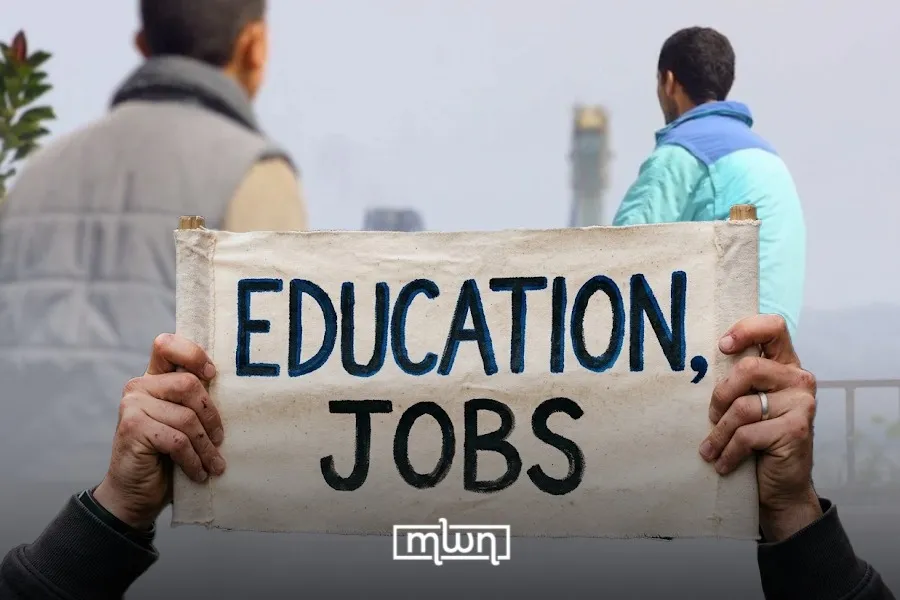
Alarming NEET Statistics Highlight Youth Crisis in Morocco
Morocco is currently grappling with a significant and troubling crisis affecting its youth demographic, as new data reveals a concerning trend of young individuals being disconnected from both the workforce and the educational system. According to a comprehensive report conducted by the High Commission for Planning (HCP) in collaboration with the International Labour Organization (ILO) and the European Union (EU), it is estimated that in 2023, approximately 2.9 million Moroccans aged between 15 and 29 are classified as NEET, an acronym for 'Not in Employment, Education, or Training.' This alarming statistic indicates that around 33.6% of this age group—roughly one in three young individuals—find themselves in this precarious situation. Furthermore, this figure has remained relatively stagnant over the years, with a slight reduction post-COVID-19 being followed by a stabilization that points to a more profound structural issue rather than a fleeting crisis.
The implications of this crisis extend further, as an estimated 1.5 million individuals aged 15 to 24 are also categorized as NEET, which accounts for 25.6% of that particular age bracket. This trend is reflective of broader societal challenges, as factors such as gender, age, and geographic location significantly influence the likelihood of youth disengagement from the economic and educational landscape.
Gender and Geographic Disparities in Youth Employment
The report highlights a stark gender disparity within the NEET population, with women comprising over 72% of those affected. A significant number of these young women are not actively seeking employment, largely due to various social and familial obligations that restrict their participation in the labor market. A staggering 70% of NEET youth fall into the inactive category, with many young women remaining at home, thereby forming the largest demographic group within this classification. Age further exacerbates the situation, as the transition to NEET status becomes notably pronounced after the age of 24. The risk escalates dramatically for those aged 25 to 29, a group that alone accounts for nearly half of the NEET population.
While one might assume that higher education would serve as a protective factor against inactivity, the reality is more complex. Graduates often find themselves facing prolonged periods of unemployment, caught in a challenging limbo where their qualifications exceed the demands of the labor market. Compounding these issues are significant territorial disparities; rural areas exhibit NEET rates of approximately 35.4%, compared to 32.6% in urban zones, highlighting the inequalities in access to employment opportunities, training programs, and essential infrastructure. Alarmingly, around 76% of NEET youth lack any formal diploma, further diminishing their prospects for meaningful integration into the workforce.
While the Moroccan government has acknowledged the severity of this issue and has introduced various initiatives aimed at enhancing youth employment and inclusion—such as vocational training reforms, entrepreneurship schemes, and the promotion of digitalization—the effectiveness of these programs has yet to yield substantial results. Despite the existence of frameworks aimed at bridging the gap between education and employment, the data indicates that these measures are not scaling rapidly enough to combat the growing crisis.
In light of the ongoing stagnation, the report advocates for a paradigm shift in policy-making, urging targeted strategies that cater specifically to the needs of inactive women, discouraged youth, and unemployed graduates. The year 2024 witnessed a surge in protests, primarily led by unemployed graduates and contract workers, gathering in major cities like Rabat to voice their frustrations. The youth unemployment rate soared to 36.7%, while the overall unemployment rate reached 13.3%, impacting approximately 1.63 million individuals. This situation was particularly dire for degree holders, many of whom struggled to find jobs commensurate with their educational background.
By 2025, protest movements became larger and more organized, indicating a broader discontent among youth that transcended previous frustrations. Social media played a pivotal role in amplifying these voices, with groups of young activists demanding jobs, dignity, and access to fundamental public services. These demonstrations brought attention to the plight of a generation that feels marginalized, composed of the 2.9 million young people classified as NEET in 2023, who find themselves trapped in an oversaturated labor market with limited options for re-entering education or training.
Experts warn that the consequences of prolonged exclusion from the economic and educational realms extend beyond individual challenges; they threaten to deepen social inequality and erode trust in governmental institutions. The data suggests that Morocco is not merely experiencing a temporary dip in youth employment; rather, it is confronting a fundamental disconnection between educational opportunities, labor market demands, and the harsh realities faced by its youth. Addressing this multifaceted crisis will require comprehensive and innovative solutions that are both sustainable and inclusive.
As reported by moroccoworldnews.com.