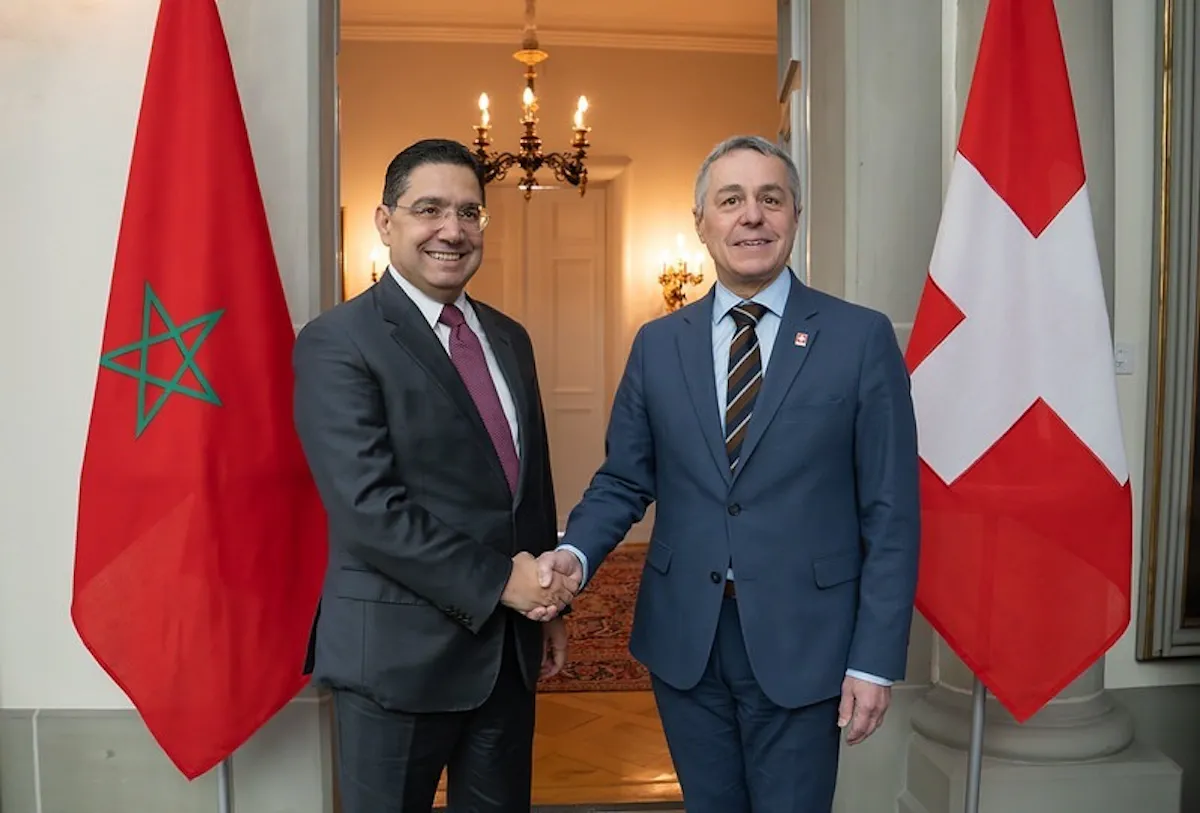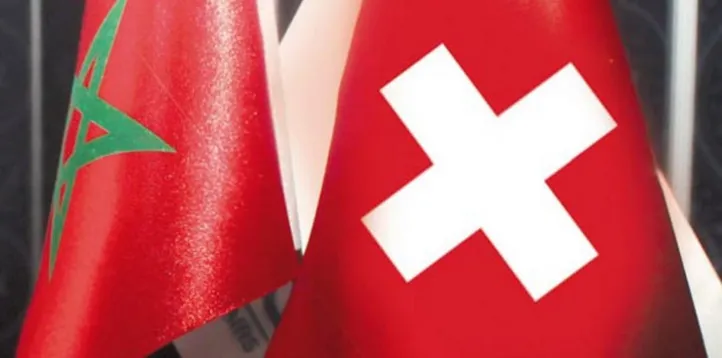
Switzerland has recently joined the international chorus advocating for Morocco's autonomy initiative regarding the Sahara, positioning itself alongside a growing number of European nations that have backed this initiative since the United Nations Security Council adopted its resolution. This significant endorsement was articulated in a joint statement made by Ignazio Cassis, the Federal Councilor and Vice-President of the Swiss Confederation, alongside Nasser Bourita, Morocco’s Minister of Foreign Affairs, during Bourita's working visit to Bern.
In the joint communication, Switzerland expressed its appreciation for the adoption of UN Security Council Resolution 2797, emphasizing that a 'genuine autonomy under Moroccan sovereignty could constitute one of the most realistic solutions' to the ongoing regional dispute. This statement indicates that Bern is aligning itself with an increasing number of capitals that regard Morocco's autonomy proposal as a viable framework for achieving a lasting political resolution to the Sahara conflict.
The Swiss position reflects a broader diplomatic trend that has gained momentum following the Security Council's November 2025 resolution, which called for realism, compromise, and pragmatism to address the Sahara issue while acknowledging Morocco's sovereignty. Since this pivotal moment, the European Union, along with several member states and nations from Africa, the Americas, and the Middle East, have publicly voiced their support for Morocco's autonomy plan as a credible pathway to peace.
Simultaneously, Switzerland reiterated its commitment to the United Nations' vital role in this process, reaffirming its support for the ongoing endeavors of the UN Secretary-General and his Personal Envoy, who are tasked with facilitating a mutually agreeable political solution. The joint communication highlighted the importance of continuing international engagement within the UN framework.
Furthermore, during the 59th session of the UN Human Rights Council held in Geneva, forty countries reiterated their unwavering support for Morocco's complete sovereignty over its entire Saharan territory. This joint statement, presented during the Geneva meeting, praised Morocco's proactive and cooperative engagement with the UN human rights system.
In a related development, an institute dedicated to tourism and hospitality training was inaugurated in Dakhla, covering an area of 20,000 square meters with a construction cost of $4.78 million. This institute aims to enhance the vocational training system in the Dakhla Oued Eddahab Region and tailor the training offerings to meet local demand.
Moreover, the UN Security Council has overwhelmingly endorsed a resolution that clearly supports Morocco's autonomy plan for the Sahara under the Kingdom's sovereignty, marking it as a credible basis for negotiations. This landmark resolution, which extends the mandate of MINURSO for another year, was approved with 11 votes in favor and none against, with three abstentions from China, Pakistan, and another country.
In a separate but concerning matter, Algerian authorities have sentenced the French-Algerian writer Kamel Daoud to three years in prison in absentia and imposed a fine of €35,000. This ruling has drawn criticism and is seen as part of a broader campaign by the regime to stifle debate regarding the nation's civil war. Daoud, who was awarded the 2024 Prix Goncourt for his novel 'Houris,' announced this verdict on his social media.
As reported by northafricapost.com.