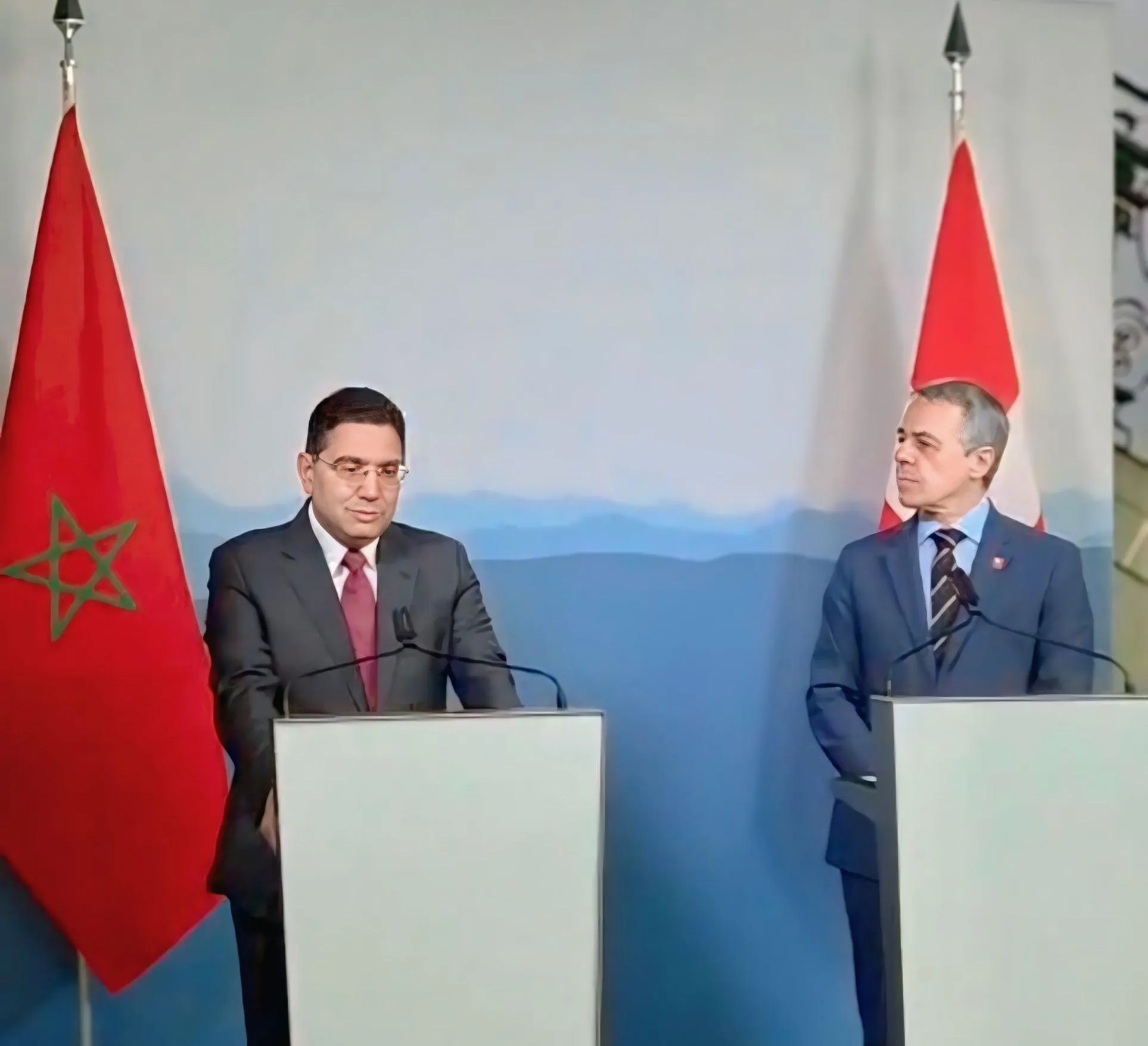
The French Development Agency (AFD) has recently granted a substantial loan of 350 million euros to the Moroccan Office Cherifien des Phosphates (OCP), amidst rising consumer skepticism in France regarding the cadmium content in Moroccan fertilizers. This financial support comes at a time when the health risks associated with cadmium are being scrutinized more than ever, raising questions about the potential motivations behind the burgeoning ties between Paris and Rabat.
According to a report by France Agricole dated April 23, it was highlighted that Morocco, through its public company OCP, supplies approximately 50% of the mineral phosphate fertilizers consumed in France. This assertion is reinforced by professionals in the field who indicate that the concentration of cadmium in the rocks being mined in Morocco is significantly higher than that found in Russia. The loan agreement, signed on May 9, 2025, aims to facilitate the industrial decarbonization of OCP and to reduce its greenhouse gas emissions. This deal stands as one of the largest non-sovereign loans in AFD's history, intended for the production of sustainably sourced 'green fertilizers.'
However, the situation took a grave turn when, at the end of March 2026, a report from the French National Agency for Food, Environmental and Occupational Health Safety (Anses) revealed alarming levels of cadmium exposure among French consumers. The weekly publication Politis referred to it as a 'health bomb,' while a network of physicians had previously warned in June 2025 about a 'real public health plague,' urging the French government to take decisive action.
On April 21, investigative media outlet Médiapart published a report indicating that the AFD had disregarded these health warnings. This revelation has sparked controversy regarding AFD's actions, especially since cadmium is a carcinogenic substance present in the phosphate fertilizers sourced from Moroccan deposits. Benoît Biteau, a deputy and co-author of a legislative proposal, has called for a ban on fertilizers containing such heavy metals. He noted that the cadmium exposure rate in France is 'two to three times higher' compared to neighboring countries, highlighting France's dependency on Moroccan phosphate fertilizers.
Biteau cautioned about the detrimental effects of cadmium exposure, pointing out its carcinogenic nature, its role as an endocrine disruptor, and its association with cardiovascular diseases and osteoporosis. He also emphasized its involvement in particularly severe cancers, such as pancreatic cancer, which has seen survival rates plummet to around 5%. Alarmingly, Anses data indicates that cases of this cancer have quadrupled over the past thirty years.
While France primarily sources these fertilizers from sedimentary deposits in Morocco and the occupied Western Sahara, some European countries have opted for less contaminated volcanic sources found in Finland, Norway, or Russia's Kola Peninsula. In January 2025, French television channel M6 drew attention to cadmium in its program 'Zone Interdite,' labeling it 'this unsuspected poison on our plates,' which did not go unnoticed by the public.
The Moroccan phosphate sector, a crucial source of foreign currency with exports reaching 100 billion dirhams in 2025 (approximately 10 billion euros, nearly 30% of Morocco's total exports), reacted strongly to the coverage, accusing it of being biased and propagating mere allegations. Some media outlets in Morocco suggested that the issue was a mix of misinformation and lobby pressures.
Nevertheless, the Western Sahara Resource Watch highlighted discrepancies in cadmium levels, noting the OCP reports cadmium levels between '29.5 to 72.7 mg of cadmium/kg,' while a European Parliament commission cited levels ranging from '38 to 200 mg/kg of P2O5.'
In mid-April 2026, the French government platform Rappel Conso called for the withdrawal of a batch of avocados from Morocco due to exceeding the maximum permissible limit for cadmium contamination.
AFD's Loan for Sustainable Fertilizers: A Controversy
The AFD loan aims to enable OCP to produce 1 million tons of superphosphates annually. However, Médiapart noted that the details of the investments have not been publicly disclosed. Early in April, French ecology media outlet Vert expressed surprise at the size of the loan, as Morocco is not prioritized in French development aid yet has long been a primary partner for AFD. This situation underscores the unique relationship between France and Morocco.
Médiapart's investigation revealed that despite official statements, there were internal debates within AFD regarding the legitimacy of OCP's claims concerning 'green fertilizers.' The concerns raised about cadmium were seemingly overlooked, with the AFD's sustainable development commission expressing a 'reserved' opinion during a December 2024 board meeting about a project touted as ecologically sound. The pollution of soils with cadmium and the increase in greenhouse gases resulting from doubling OCP's fertilizer production at its Jorf Sfar site were significant concerns.
Critics within AFD, including deputy Frédéric Petit, defended the loan by asserting that OCP aims for carbon neutrality, yet they did not address the cadmium risk. Financial experts from AFD's risk department have voiced concerns that the agency's exposure in Morocco is disproportionately high, given that the country has become one of its main clients worldwide.
Amid these controversies, Médiapart reported that staff raising concerns within AFD about the project were met with dismissive responses, and as of February 2026, the agency's ethics advisor issued further warnings without any acknowledgment from management. This silence coincides with the transition of leadership at AFD, with the former director Rémy Rioux passing the baton to his successor Christophe Lecourtier, currently the French ambassador to Morocco.
Furthermore, the close ties between France and Morocco, particularly in the context of diplomatic reconciliations, have led some to speculate that the AFD loan serves not only as a development tool but also as a geopolitical instrument. The strategic significance of Moroccan phosphate fertilizers, despite their high cadmium levels, remains a contentious point in this intricate relationship.
OCP claims its fertilizers are certified as Low Cadmium, with levels below 20 mg/kg, while the current regulatory limit in Europe is set at 60 mg/kg. Médiapart sought confirmation of these claims but found it challenging to obtain clear responses. Anses appears content with OCP's assertions, stating that Moroccan fertilizers fall below the current regulatory threshold. However, the French health ministry deferred inquiries to the agriculture ministry, which in turn claimed no responsibility for verifying the cadmium levels of private operators.
On the Moroccan side, OCP declined to respond to Médiapart's requests for clarification.
Concerns remain regarding the veracity of OCP's Low Cadmium certification. While the company has implemented decadmium techniques, the question remains whether these processes apply to its entire production. OCP has invested millions in decadmium technologies, claiming to have reduced cadmium levels by half within a year. Nevertheless, only a small fraction of the total fertilizer produced is subject to these techniques, raising alarms particularly among its African clientele, where acidic soils exacerbate cadmium absorption by plants.
Since February 2025, all fertilizers exported by OCP Nutricrops to France and the European Union reportedly contain less than 20 mg/kg of P2O5, a claim OCP uses to reassure concerned parties. However, experts like Diane Robert, who researched OCP's repositioning in 2026, note that the high cadmium levels demand costly decadmium operations primarily targeting the European market, while OCP focuses on expanding its presence in Africa.
Furthermore, the cadmium scandal comes at a precarious time for OCP, which has already been impacted by the crisis in the Strait of Hormuz, affecting sulfur imports for TSP production and ammonia for Di-Ammonium Phosphate. To mitigate the situation, OCP has temporarily halted operations at its Jorf Asfar complex for maintenance, which was initially scheduled for the third quarter of the year. The widespread contamination of French soils, enriched for decades with Moroccan phosphate fertilizers high in cadmium, remains a pressing concern for health authorities and consumers alike.
As reported by tsa-algerie.com.