Unpacking the Aviation Exploitation of Senegal
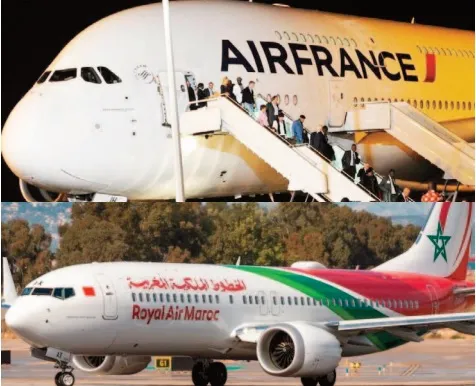
In recent discussions, the focus has primarily been on the plundering of Senegal's aquatic resources by foreign vessels. However, what is emerging as an even more alarming concern is the exploitation of Senegal's air traffic through service agreements that appear to be far worse than fishing licenses. For instance, Air France operates 12 flights weekly between Dakar and Paris, complemented by its subsidiary Transavia with another 9 flights per week. Royal Air Maroc boasts 21 flights weekly on the Dakar-Casablanca route, while Iberia and TAP Air Portugal contribute 7 and 5 flights respectively. Collectively, these foreign airlines are raking in over 500 billion CFA annually at the Dakar-Diass airport. In stark contrast, Air Sénégal, the national carrier, is limited to just 7 flights per week to Paris and 3 to Casablanca, with a notable lack of frequency to other European capitals. This disparity highlights the struggles faced by Air Sénégal, which is unable to expand its fleet or pay off its debts. An investigation by "Le Témoin" reveals that the reality of the situation is far more dire than previously understood.
Since gaining independence, various members of the Senegalese government have profited from the allocation of fishing licenses, resulting in the continuous depletion of our marine resources by foreign fleets. Yet, the fiscal "pollution" is even more evident in the airline sector than it is beneath our territorial waters. This is evidenced by the frequency agreements signed between Senegal and multinational corporations that dominate global air transport. The Dakar-Diass airport serves as a pivotal hub in West Africa, strategically connecting Europe, America, and the Middle East. While it is an honor to accommodate these international airlines, the unfortunate reality is that they are predominantly exploiting Senegal's air traffic.
The Unbalanced Air Transport Market
Two prime examples illustrate this concerning trend: Air France and Transavia together conduct 21 flights weekly between Dakar and Paris, with additional routes to major French cities such as Marseille, Nice, Nancy, Lyon, Bordeaux, and Lille. During peak seasons, this number can rise to 26 flights, particularly around school holidays and the end-of-year festivities, often at steep prices. Meanwhile, Air Sénégal can only offer 7 flights to Paris, constrained by a limited fleet and operational challenges. Royal Air Maroc, on the other hand, is permitted to operate 21 flights weekly on the Dakar-Casablanca route, while Air Sénégal only manages 3 flights per week to Casablanca. Furthermore, other airlines, including Iberia and TAP Air Portugal, are competing fiercely for the Senegalese market, transporting millions of passengers each year.
According to a former advisor from the Senegalese Ministry of Air Transport, foreign airlines generate over 500 billion CFA annually at the Dakar-Diass airport. For instance, Air France has reported significant profits from its Dakar-Paris and Abidjan-Paris routes, with the latter yielding a net income of 62 billion CFA from 16 flights per week in 2025. The disparities evident in these air service agreements raise serious concerns about their negotiation and execution, often favoring foreign entities over the national carrier. Experts suggest that if these agreements cannot be rectified, the Senegalese government should impose taxes of 25 to 50 euros (15,000 to 35,000 CFA) on passengers flying with Air France, RAM, Delta Airlines, and Brussels Airlines, directing those funds to support Air Sénégal's financial recovery.
Such imbalances, if allowed to persist, can become accepted as "normal," when in reality, these frequency agreements disproportionately benefit foreign airlines while undermining the national carrier, Air Sénégal, and its ability to compete effectively in the aviation market.
This situation raises critical questions about the sovereignty of Senegal's air transport. Since the end of World War II, international air transport has operated on a fundamental principle: state sovereignty. Despite the facade of multilateralism, the reality is clear: each air transport relationship is fundamentally bilateral, necessitating the balancing of national interests between two states. The agreements governing these air transport routes are not mere technical documents but strategic instruments of national aeropolitics, dictating who flies where, at what frequency, at what price, and under what conditions. Unfortunately, it appears that Senegal has progressively relinquished its leverage in this arena, leading to a profoundly unbalanced situation that largely favors foreign airlines, especially Air France and Royal Air Maroc.
Today, the market landscape is unmistakably skewed. France boasts two powerful operators, Air France and Transavia, which are well-coordinated and capable of serving all segments of the market, from premium passengers to budget travelers. In contrast, Senegal relies solely on Air Sénégal. Similarly, Morocco's Royal Air Maroc captures a significant share of Senegalese passengers heading to France, Spain, Italy, Portugal, and beyond. The frequency agreement between the Moroccan government and Senegal is merely a facade, as the overwhelming majority of RAM passengers are merely transiting through Casablanca on their way to Europe and Asia.
This structural disparity means that more than 80% of the air traffic towards France and other parts of Europe is escaping Air Sénégal. Air France, in particular, captures high-value traffic, including business travelers and international connections, while its subsidiary, Transavia, aggressively targets the leisure and diaspora markets. This leaves Air Sénégal in a precarious position, unable to compete effectively on both price and connectivity.
In a balanced bilateral system, flight frequencies and available seats should reflect some level of reciprocity. However, in practice, Air France and Transavia frequently receive permission for increased frequencies, particularly during peak seasons. Just last week, Air France requested additional flights from the National Civil Aviation and Meteorology Agency (ANACIM) in anticipation of high passenger demand, while Air Sénégal struggles to maintain its margins. This strategy has severe economic consequences, forcing Air Sénégal to lower its prices, which diminishes its revenue per seat and jeopardizes the profitability of its crucial Dakar-Paris route. Ultimately, this situation compels Air Sénégal to rely on a smaller, less stable, and less profitable passenger base.
The scandal surrounding these air agreements parallels the problematic allocation of fishing licenses to foreign vessels, which has also led to significant tax evasion. There is a real risk of substantial currency outflows from some airlines through parallel payment or placement methods. What seems to be overlooked by our current authorities is that Air Sénégal, much like Air France and Royal Air Maroc, symbolizes Senegal's air transport sector. Thus, the national airline is not merely a means of transportation; it represents a cornerstone of Senegal's economic and political sovereignty. In essence, it serves as an instrument of power, connectivity, and development. If we were to draw a military analogy, one could argue that our air battalion, Air Sénégal, is being outmaneuvered by foreign fighter jets.
As reported by seneplus.com.