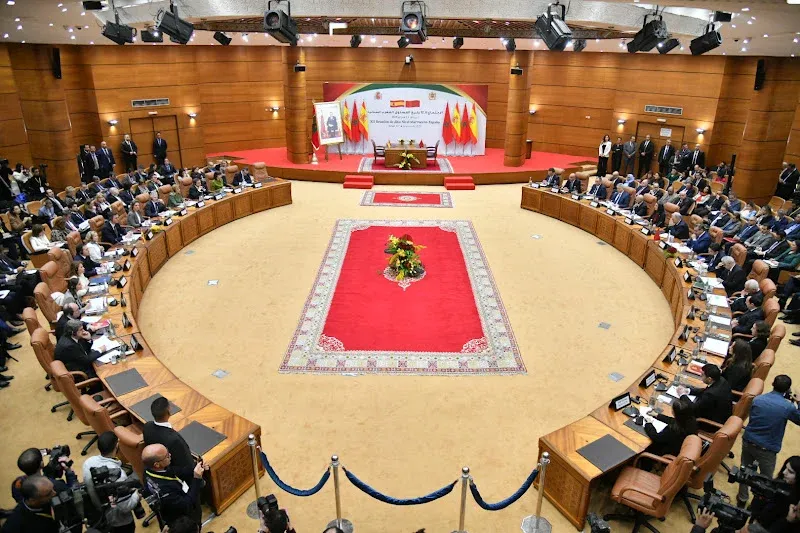

The commercial and economic relations between Morocco and Spain have experienced significant growth in recent years. This positive trajectory was notably influenced by Spain's support for Morocco's stance on the Western Sahara issue, which has led to a remarkable increase in trade volume, exceeding 22 billion euros last year. In the first half of the current year, Spanish exports to Morocco rose by 3.5%, amounting to more than 6.4 billion euros. Meanwhile, imports from Morocco to Spain also witnessed an increase of approximately 4.1%, reaching over 5.7 billion euros.
In a related context, data from a study by the Spanish Institute for Trade and Investment revealed that Morocco's total imports last year surpassed 88 billion US dollars, with 14% originating from Spain. Furthermore, Moroccan exports exceeded 50 billion dollars, with about 22% directed towards the Spanish market.
The Automotive Sector: A Model of Industrial Interdependence
To truly grasp the nature and significance of the trade relations between these neighboring countries, it is essential to examine key sectoral figures, particularly those pertaining to the automotive industry. Recent data from the Official Spanish Association of Suppliers and Manufacturers of Automotive Components indicate that Morocco imported automotive components from Spain valued at 1.038 billion euros last year. This positioned Morocco as the second-largest destination for the Spanish automotive industry outside the European Union, following the United Kingdom.
A document issued by the economic and commercial office of the Spanish embassy in Rabat confirmed that Morocco's automotive manufacturing and export sector generated revenues of approximately 15 billion euros by the end of 2025, with Spain accounting for 20% of Moroccan exports in this domain. These figures reveal that the economic relations between Rabat and Madrid have transcended traditional trade exchanges, evolving into a genuine intertwining of value chains. Notably, although Moroccan imports of automotive components from Spain, exceeding one billion euros, represent a moderate percentage of Morocco's overall components bill distributed among various other suppliers, this is part of a clearly outlined Moroccan strategy in recent years aimed at diversifying trade portfolios, sources of supply, and export destinations. This strategic approach ensures a balanced partnership with Spain, allowing Morocco to engage from a position of equality rather than dependency.
Conversely, the export of 20% of Morocco's automotive production to the Spanish market enhances Morocco's negotiating power, as it constitutes a significant portion of Spain's needs for affordable mid-range vehicles. Additionally, the presence of numerous Spanish companies relied upon by Morocco for local automotive manufacturing underscores a horizontal integration, making these companies invested in the continued success of the Moroccan industry. A decline in Moroccan production would not only affect Morocco but would also eliminate a key customer for their components.
A Resilient Partnership Amidst Challenges
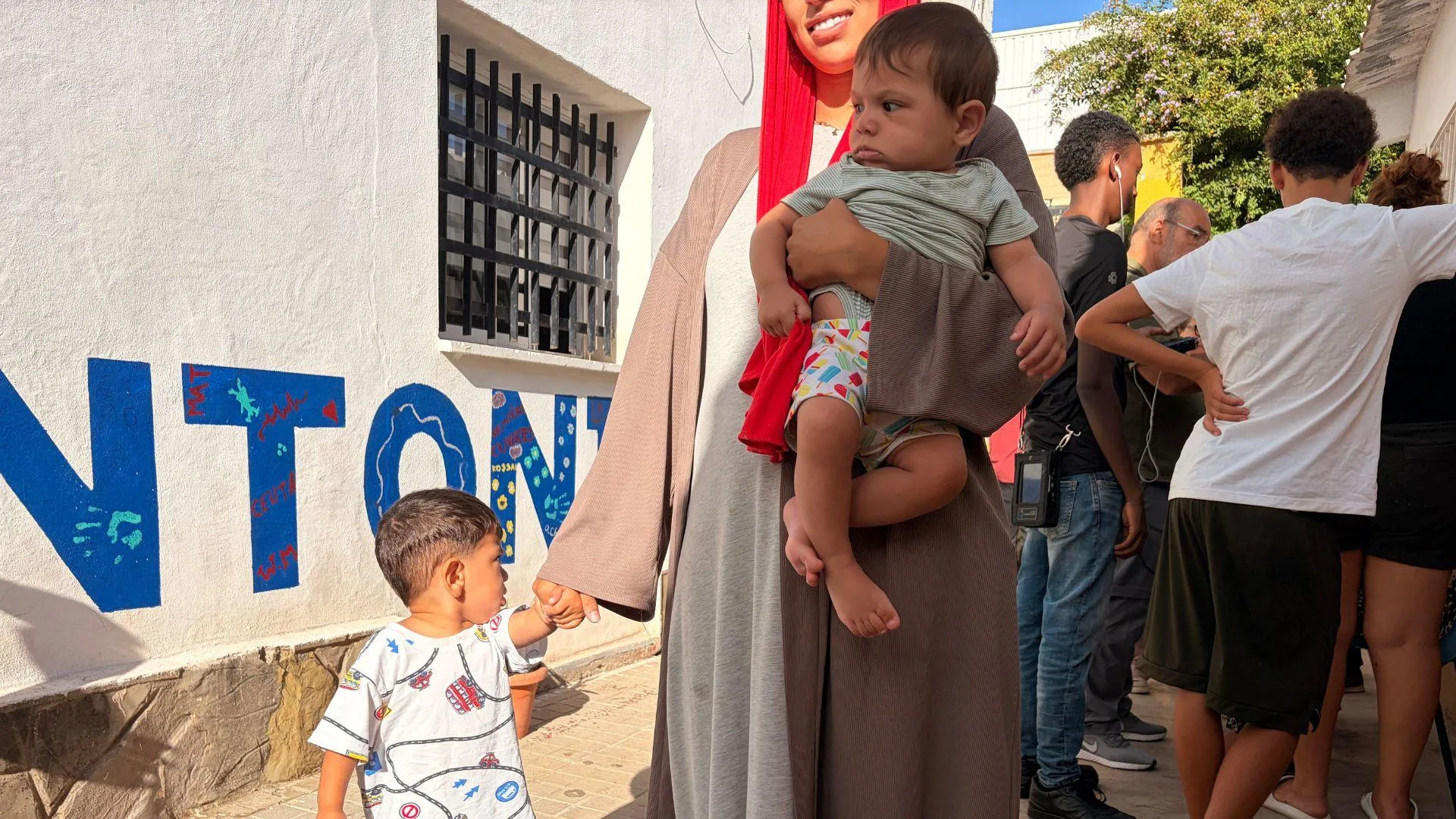
This intersection of interests is precisely what sustains the partnership between Rabat and Madrid, rooted in mutual dependence. Neither party can impose conditions on the other without jeopardizing its own interests, even during crises and amidst sensitive issues, such as the situation regarding the occupied territories of Ceuta and Melilla. The nature of the Moroccan-Spanish partnership was revisited following the mass migration events in Ceuta in late July, which sparked calls within certain political and media circles in Spain to reassess this partnership and even to economically 'punish' Morocco. However, such calls are met with the undeniable economic reality that the relationship with Rabat has long surpassed colonial logic and evolved into an essential comprehensive partnership for Spain in the Mediterranean basin. Any harm to Moroccan economic interests would effectively be a blow to the Spanish economy itself, particularly in the context of a complex economic and international landscape.
The importance of relations with Morocco is not only evident in the numbers but is also echoed in the statements of Spanish political elites and economic stakeholders. Antonio Garamendi, President of the Spanish Confederation of Business Organizations (CEOE), emphasized during the opening of the 'Investment in Morocco' forum in Madrid in May 2023 that 'Morocco represents Spain's main gateway to Africa, just as Spain serves as a direct platform for Morocco towards Europe and Latin America.' Additionally, José Luis Bonet, President of the Spanish Chamber of Commerce, noted that 'Morocco is the top destination for Spanish exports and investments, with Spanish companies operating there demonstrating a high level of commitment to the country.' Therefore, professional organizations representing businessmen are fully convinced of the importance of leveraging integration around a shared agenda that is digital, green, and inclusive, with preparations to engage more companies, particularly small and medium-sized enterprises.
The mutual economic dependence between the two countries is further strengthened by the presence of several Spanish companies operating in Morocco, such as Gestamp and Antolin, which specialize in automotive components, as well as Inditex in the textile sector, alongside other firms like Romo, Recarioun, and Boluda Corporación Marítima and Expo Logistics.
In this context, Manuel Antonio Fernández-Viaqueñas, an economic analyst at EAE Business School, explained to the EFE agency that 'Morocco has largely relied on its industrial growth through integration with Europe via Spain.' He asserted that 'a disruption in trade relations would incur costs for both parties; Spain would lose an important market for its exporters, although it possesses a significantly larger capacity for absorption due to its size and geographic diversity. In contrast, Morocco would face more structural impacts on industrial employment and its perception as a manufacturing platform aimed at the European market.'
As reported by hespress.com.