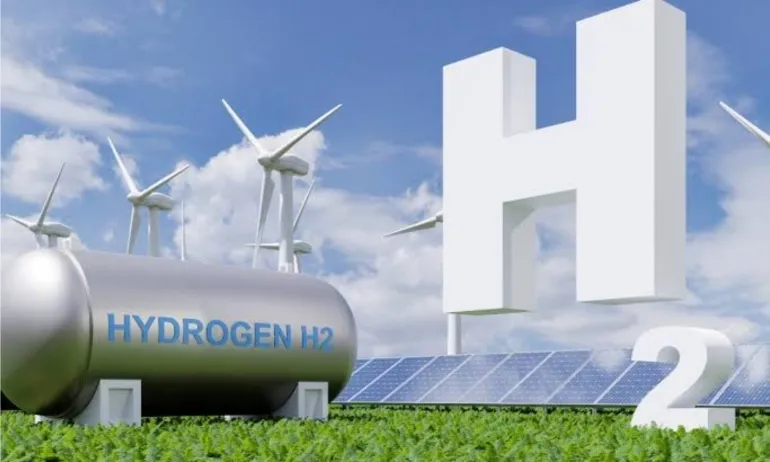

The landscape of energy resources is evolving significantly, as countries are no longer measured solely by their oil and gas reserves but increasingly by their ability to produce and transport clean energy at competitive costs. In this dynamic transition, North Africa stands at a unique crossroads, endowed with abundant solar resources, suitable land for project development, geographic proximity to Europe, and energy networks ripe for expansion to foster a new economy. Tunisia emerges prominently on this map, not only due to its resource potential relative to its neighbors but also because of its Mediterranean location and promising direct connection to the European market.
However, the pathway from potential to prosperity is fraught with challenges. The green hydrogen market is still in its formative stages, with announced investments far exceeding the number of projects that have reached the implementation phase. Thus, the real economic gamble lies not in who can produce the most hydrogen but in who can finance it, market it, transport it, and crucially, transform it into a value-adding local industry.
The Global Hydrogen Market: Beyond 100 Million Tons
Recent data from the International Energy Agency reveals that global demand for hydrogen is set to surpass 100 million tons by 2025, primarily driven by refining, chemical industries, and traditional applications. New applications related to the energy transition still account for a minimal share of the market. Correspondingly, low-emission hydrogen production is projected to increase by approximately 20% by 2025, nearing one million tons, which is expected to exceed 1% of global production by 2026. These figures highlight a fundamental paradox: while the market is vast, green hydrogen has yet to evolve into a widely traded global commodity. The barriers to scale production include high costs, unclear demand, insufficient infrastructure, and complex regulatory and financing challenges that impede the movement from announced projects to actual industrial investment. Furthermore, new contracts for purchasing low-emission hydrogen did not exceed 1.7 million tons annually by 2025, with only about one-fifth of these supported by firm contractual commitments.
Europe's Quest for Clean Energy
For Europe, hydrogen represents a critical component of a broader strategy to decarbonize industries that are difficult to electrify directly, notably heavy industries, chemicals, and certain transportation activities. The European Union has set an ambitious plan to produce 10 million tons of renewable hydrogen domestically while also importing an additional 10 million tons annually by 2030. However, the gap between this target and reality remains substantial. The European market requires long-term purchase agreements and financing solutions to bridge the cost differential between renewable hydrogen and hydrogen produced from fossil fuels. Consequently, fostering demand has become an integral part of European energy policy rather than a mere byproduct of production developments.
In this context, North Africa holds particular significance. Its geographical proximity could reduce transportation costs compared to distant suppliers, and the region's location allows for the establishment of energy corridors linking southern resources with northern industrial and consumption centers. Currently, hydrogen consumption in Africa reached 3.1 million tons in 2024, representing about 3% of global demand, concentrated primarily in Egypt, Algeria, Nigeria, South Africa, Libya, and Equatorial Guinea. Ammonia alone accounts for nearly three-quarters of Africa's hydrogen demand. However, low-emission hydrogen production is still in its infancy, with the continent currently producing only about 6,000 tons, all sourced from renewables. There are 31 projects in the pipeline through 2030 that could ramp up production to around 1.2 million tons, yet only one project has thus far achieved a final investment decision. This statistic is more telling than the volume of announced projects, as it underscores a critical reality: North Africa needs not only natural resources but also an environment capable of translating projects from paper into operating factories.
In Tunisia, the strongest asset may not be the targeted production volume but rather its geography. The country's location across from Italy positions it within the European vision for future hydrogen transport corridors from North Africa to Central Europe. This geographical advantage offers Tunisia the opportunity to connect its potential production to a vast European demand network, yet it simultaneously necessitates advancements in electricity, ports, storage, transport, and industrial capabilities. Geographical location can only become an economic advantage when supported by adequate infrastructure that can leverage it.
Behind the allure of large-scale projects lies a more complex equation. Green hydrogen production requires substantial amounts of renewable electricity, water for electrolysis, and networks capable of transporting energy from production sites to electrolyzer units. This poses a unique challenge for North Africa, where the energy transition intersects with water stress. Therefore, building a sustainable hydrogen economy cannot come at the expense of local water resources. Water desalination and reuse projects, when necessary, will be integral to the economic equation, alongside the expansion of solar and wind energy and upgrades to electricity networks.
Moreover, capital costs represent a critical challenge. The International Energy Agency emphasizes that high financing costs are one of the most significant barriers to hydrogen projects in Africa, making blended financing, guarantees, and long-term purchase agreements essential components to catalyze investment.
While exporting hydrogen to Europe may seem like a natural goal, it is not necessarily the most economically viable option in the long term. Greater value can be generated when hydrogen is converted into marketable industrial products within the region. Green ammonia is a clear example, especially since fertilizer production currently constitutes the largest share of hydrogen utilization in Africa. Additionally, hydrogen can pave the way for low-emission iron, renewable methanol, and sustainable fuels for aviation and shipping. The International Energy Agency notes that over 80% of iron production energy in Africa relies on direct reduction, providing an industrial base that could benefit from the gradual integration of hydrogen.
In this context, hydrogen transitions from an energy project to an industrial policy. Every ton converted locally into an industrial product signifies investment, jobs, technology, services, and supply chains, rather than merely exporting the raw material.
As reported by ar.lemaghreb.tn.