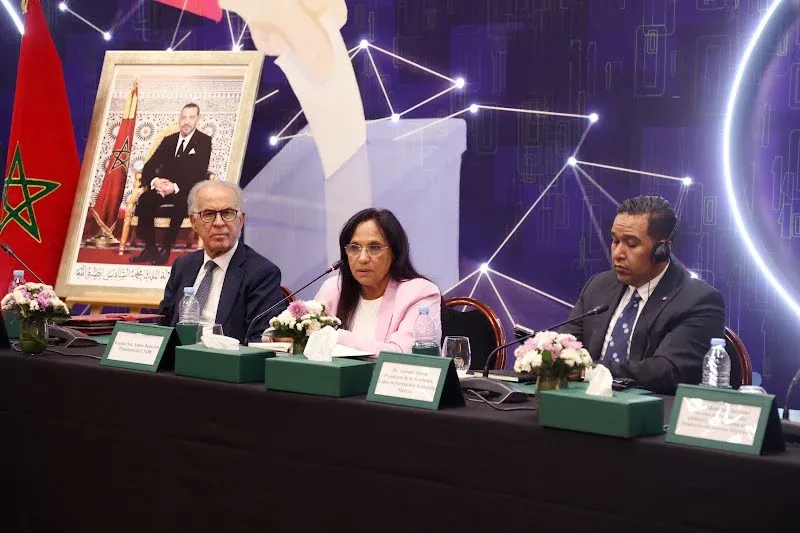
Understanding Elections as a Fundamental Right
Amine Bouayach, the President of the National Human Rights Council, emphasized the notion that elections are not merely procedural mechanisms for the transfer of power or participation in public affairs; rather, they constitute a constitutional and universal right intricately linked to fundamental human rights. These rights encompass individual voting and candidacy, absolute freedom of opinion and choice, freedom of expression, participation in public management, and equality in access to public spaces and information. In her speech at the opening of the tenth conference on human rights and electoral laws held in Marrakech, Bouayach articulated the critical role that elections play in the democratic process, framing them as foundational elements that uphold individual liberties and civic engagement.
Challenges and Opportunities in the Age of Digital Transformation
During her address, Bouayach reflected on the transformative changes brought about by rapid advancements in technology and artificial intelligence, urging a re-evaluation of how these developments reshape public discourse and citizen engagement. She raised pertinent questions regarding the protection of fundamental rights and the safeguarding of democratic electoral processes in a digital era where technology can influence public opinion and alter the relationship between citizens and information. The ongoing digitization presents both profound challenges and unprecedented opportunities, particularly concerning the integrity of public discourse and the preservation of trust within democratic societies. Notably, she highlighted the emergence of misinformation and deceptive narratives as critical threats to the essence of electoral processes and individual choice, emphasizing the need for collective responsibility to mitigate these risks.
Furthermore, Bouayach underscored the importance of harnessing technology to enhance public freedoms and improve service accessibility. She pointed out that the digital realm has evolved from mere communication spaces to essential public arenas where collective opinions and choices are formed. This evolution necessitates a thoughtful approach to governance that prioritizes human rights within the framework of technological advancements. The National Human Rights Council is actively engaged in understanding these transformations and integrating them into a coherent rights-based institutional vision. Bouayach noted the significance of the 2021 electoral process as a pivotal moment in this journey, focusing on digital discourse analysis, information dissemination dynamics, and social media interactions.
Concluding her remarks, Bouayach proposed that the conference culminate in a final document serving as a reference point for establishing a structured dialogue and exchange of experiences among stakeholders from various global southern nations. This collaborative effort aims to foster a shared understanding of the rapid technological shifts from a human rights perspective, ultimately enhancing participation, freedom, and justice. As technological transformations continue to unfold, the collective responsibility remains to ensure that human rights, transparency, and accountability are upheld in the public domain, regardless of evolving tools and platforms.
As reported by hespress.com.