Significant Advancements in the LGV Kénitra–Marrakech Project
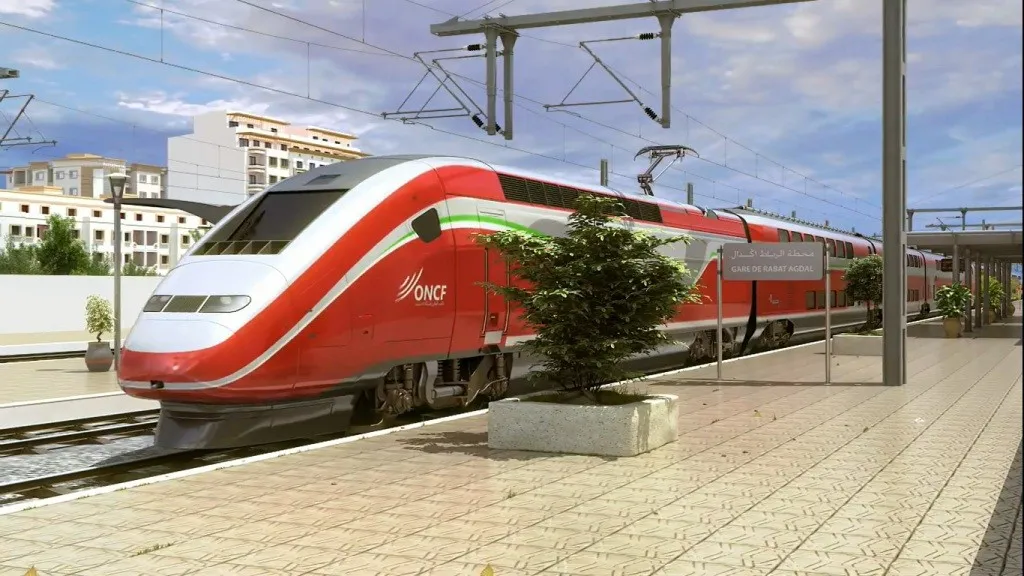
One year after the launch of the high-speed rail line (LGV) connecting Kénitra to Marrakech by King Mohammed VI, the National Office of Railways (ONCF) has reported tangible progress. Following an initial announcement, the construction is now firmly in an accelerated execution phase, with performance indicators reflecting a significant ramp-up in operations.
This ambitious project is part of a larger national railway program, backed by a total investment of 96 billion dirhams. Specifically, 53 billion dirhams have been earmarked for the construction of the new Kénitra–Marrakech LGV and its associated infrastructure. Furthermore, 29 billion dirhams will be allocated for the acquisition of 168 new trains to enhance and modernize the national fleet, while 14 billion dirhams will support the maintenance of the existing network. This strategic investment architecture signifies a transformative vision aimed at overhauling Morocco's railway system.
On the ground, the indicators are promising. The 430 km-long line has reached a pivotal milestone: land acquisition operations are now complete, and nearly all necessary sites have been cleared. This aspect, often a critical hurdle in large-scale projects, has been effectively managed here.
In terms of construction, civil engineering work is advancing steadily across the entire route. To date, approximately 20 million cubic meters of earthworks have been completed. Additionally, the construction of 15 viaducts is underway, along with three covered trenches located near the Casablanca airport, Zenata, and Aïn Atiq, totaling 1.5 km in length. Complementing this effort, 92 structures associated with rail and road bridges are already in progress.
The supply of railway materials is also keeping pace with the project's demands. The ONCF has reported that nearly 2.5 million tons of ballast, 800,000 tons of sleepers, over 100,000 tons of rails, and 220 track switches have been procured to support construction progress. Concurrently, work on existing tracks has commenced on several segments, with track laying operations currently in progress. The signaling systems are also in the preparatory phase for timely deployment.
Another critical element of the project involves the passenger stations, for which the architectural concepts have been finalized. Construction is organized in a cascading phase: the first phase commenced in early 2026, with all stations expected to be under construction by July of the same year.
Beyond infrastructure development, the project serves as a genuine economic catalyst. Approximately 150 companies are currently engaged in various aspects of the program, with nearly two-thirds being national firms. This strong involvement signals positive momentum in the local industrial landscape, fostering skill development and enhancing Moroccan expertise.
Ultimately, the Kénitra–Marrakech LGV project is not only a continuation of the modernization efforts for the national railway network but also represents a significant shift in scale. It embodies a broader ambition for sustainable, efficient mobility that aligns with the competitive and attractiveness goals for the regions involved. One year after its initiation, the project is evolving from a mere vision into a tangible reality under construction.
As reported by fnh.ma.