Morocco's Cinematic Revival at the Shanghai International Film Festival
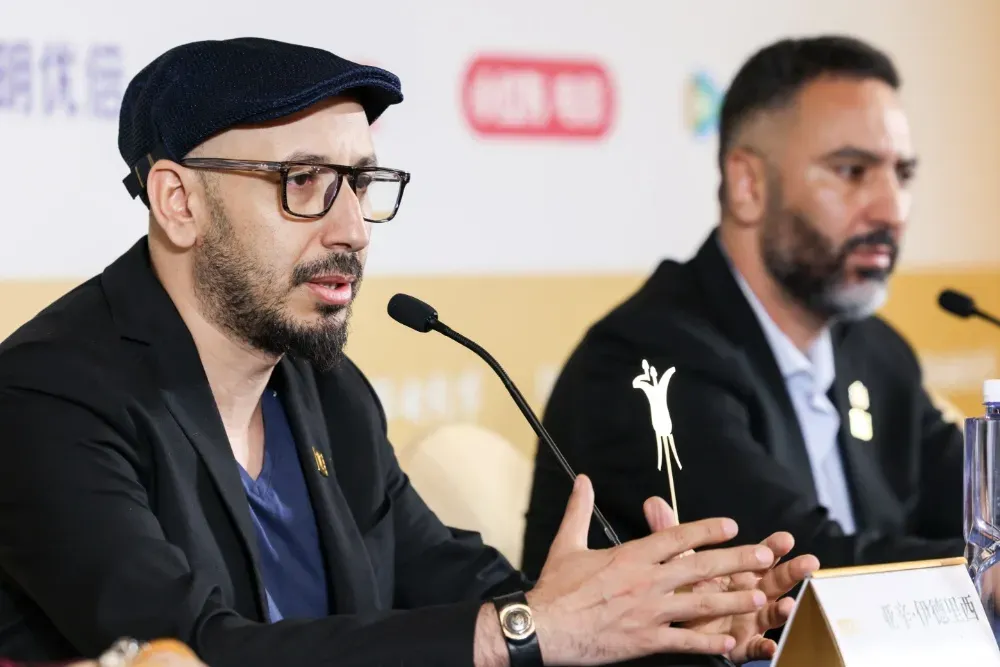
Yassine El Idrissi's poignant drama, "Halima," has made a significant impact at the 28th Shanghai International Film Festival by entering the prestigious Golden Goblet Awards Main Competition, where it celebrated its world premiere in advance of a press conference. This selection is particularly noteworthy as it signifies Morocco's return to this esteemed category after a lengthy absence of 27 years. The last Moroccan film to compete at such a high level was Saad Chraibi's "Women … and Women" during the festival's fourth edition in 1999.
A Tale of Confrontation and Redemption
The narrative of "Halima" centers around an elderly woman who leads a serene life by the sea, only to have her world disrupted by an unexpected phone call. This call prompts her to confront a past she has long buried, one intertwined with her involvement in the illegal cannabis trade. The film artfully transitions between the present and poignant memories from five years prior, creating a rich tapestry of emotion and storytelling.
El Idrissi, who not only directed but also produced and penned the film, attributes its inspiration to his experiences as a photojournalist traversing Morocco. He remarked, "Before I started working in cinema many years ago, I was a photojournalist, and that allowed me to travel across Morocco and meet all kinds of people. Among them were many individuals on the margins of society, just like our protagonist Halima." This exploration of character depth is further enhanced by the film's authentic approach; El Idrissi opted for natural lighting and ambient sound rather than heavy visual effects, incorporating a guitar piece from a renowned Moroccan song that addresses poverty and hardship in the Rif Mountains, used with the original singer’s permission.
Halima herself is a composite character, reflecting the many individuals El Idrissi encountered during his journalistic career, including elements reminiscent of his own grandmother who shares her name. He expressed his desire to showcase the resilience of Moroccan women, stating, "I want to make a film where I show the women I know, the strong Moroccan women who are fighting the hardship of life." This dedication to authentic representation is echoed in his praise for lead actress Khadija, a Moroccan performer with a wealth of experience in smaller roles but who had not previously taken the lead in a feature film. El Idrissi's commitment to finding the right talent involved traveling to her city and conducting extensive auditions, ultimately leading him to select her for the pivotal role. He expressed pride in her performance, stating, "She carried the film and I’m really proud of her, I’m proud of discovering her and of her discovering me."
Co-star Rabii El Fakih also emphasized the film's unique position within the Moroccan cinematic landscape, noting, "The subject matter of this film is not common in Morocco, but I personally find it very compelling. It is rich in emotion and conveys a strong sense of positive energy." El Idrissi further reflected on the challenges that Moroccan cinema faces, pointing out that the country produces roughly 26 films annually, a number he believes falls short of its true potential, especially considering Morocco's role as a cultural bridge between Africa and Europe.
This year’s Golden Goblet competition is notable for featuring 49 films from 34 different countries and regions, with a groundbreaking aspect being that all entries in both the main competition and documentary categories are world premieres.
As reported by variety.com.