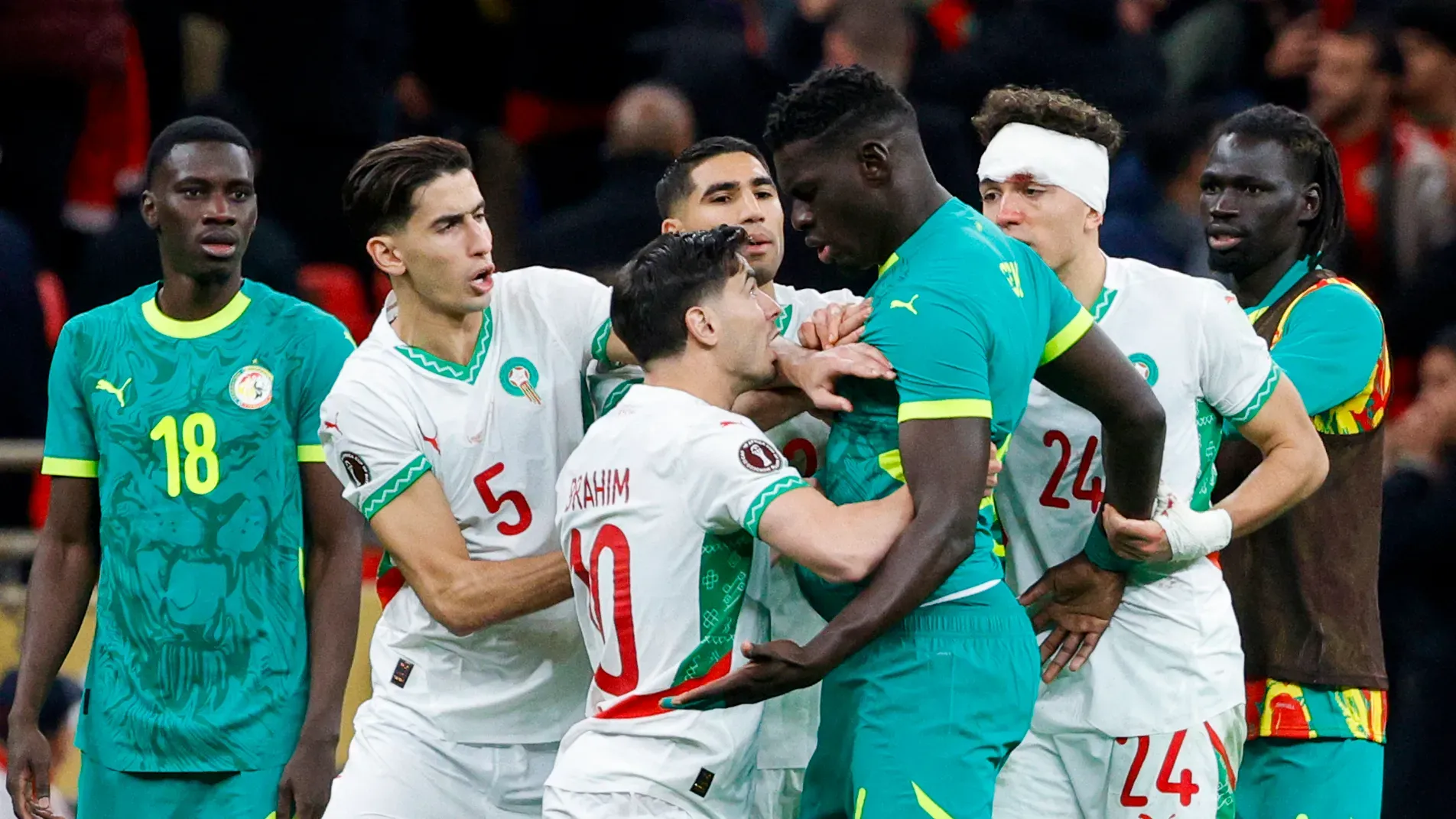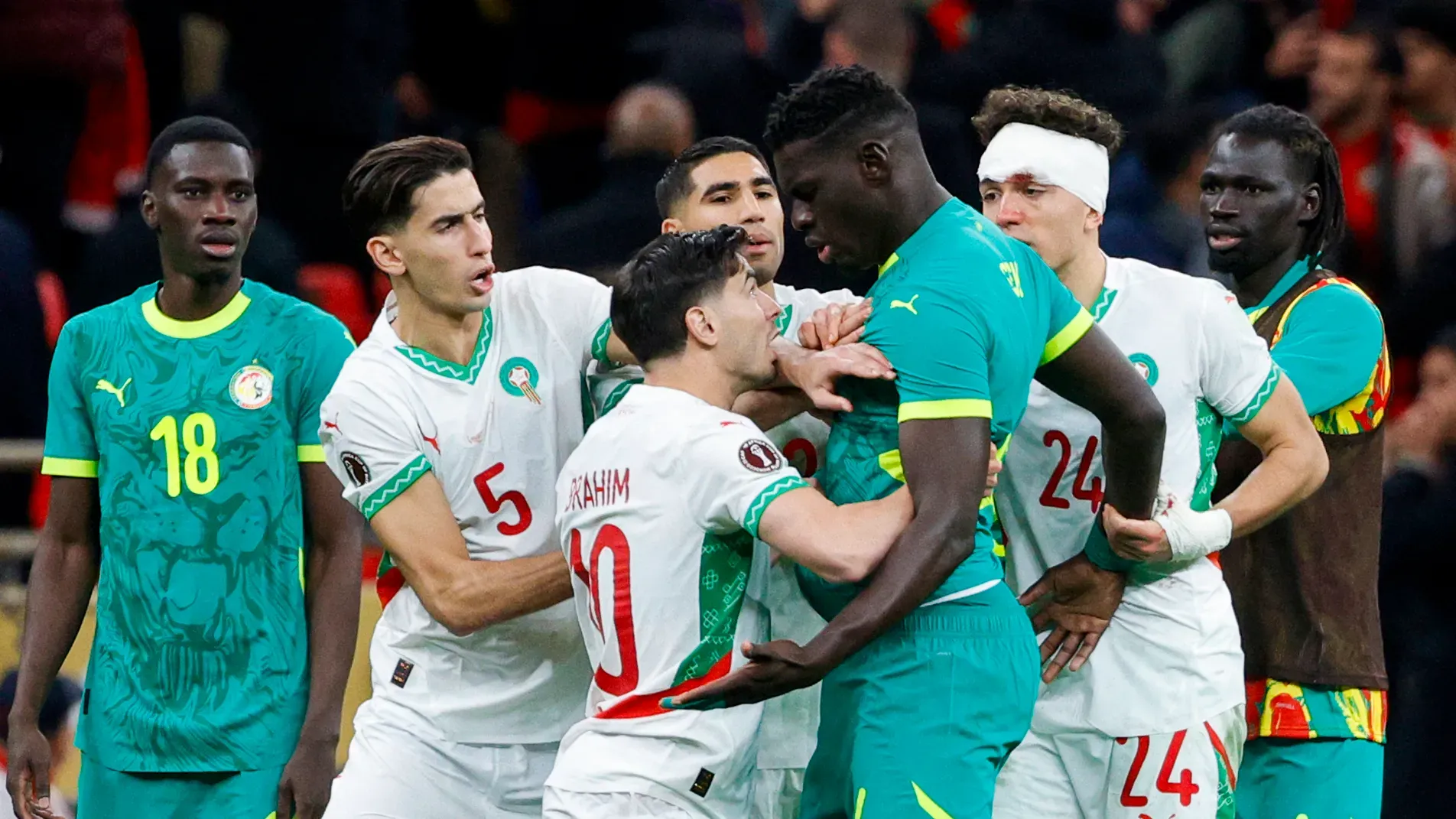

Attention will be focused on Lausanne, Switzerland, this Thursday as the Court of Arbitration for Sport (CAS) convenes to address the ongoing dispute surrounding the final of the Africa Cup of Nations (AFCON) 2025 between Morocco and Senegal. This case, which has remained open for several months, continues to evoke significant interest due to the contentious events that unfolded during the match.
The upcoming session holds immense importance for both parties involved, particularly in light of the appeal lodged by the Senegalese Football Federation against the ruling made by the Confederation of African Football (CAF) Appeals Committee. This ruling stripped Senegal of the championship title and awarded the victory to Morocco, effective from March 2026.
What Happened in the Final on January 18?
The AFCON final, held on January 18 in Rabat, ended in chaos as several Senegalese players temporarily left the pitch in protest against a referee's decision. The turmoil erupted after a Senegal goal was disallowed, followed by a controversial penalty awarded to Morocco during stoppage time in the second half, leading to protests and disorder on the field.
This state of confusion lasted approximately 15 minutes before the Senegalese players returned to the field, while the chaos spread to the stands, where some Senegalese fans threw objects and attempted to invade the pitch. Amid these events, Moroccan player Ibrahim Diaz missed the penalty that ignited the crisis, before Bamba Dieng secured the win for Senegal with a goal during extra time.
What to Expect from the Court Session?
The significance of this case has prompted CAS to appoint three arbitrators for the proceedings. The session will be presided over by French arbitrator Professor Gérald Simon, assisted by Italian professors Luigi Fumagalli and Ulrich Haas. All parties have agreed to conduct the proceedings in French.
The session is scheduled to commence at 09:30 AM Swiss time (10:30 AM in Mecca, 07:30 AM in Rabat) and is expected to last several hours, ideally not concluding before 4:00 PM Swiss time (5:00 PM in Mecca, 2:00 PM in Rabat). However, a decision is not anticipated on the same day, as CAS has indicated that a resolution may take several days or even weeks before the final ruling is announced.
Proceedings will be held behind closed doors, with all parties officially prohibited from disclosing the details discussed within. The only public statement will be made by the CAS director general, who will announce the start of the session, while all involved hope for a prompt resolution.
The case includes three primary parties: the Senegalese Football Federation, the Royal Moroccan Football Federation, and the Confederation of African Football. Senegal was the party that appealed to CAS against the CAF Appeals Committee’s decision. However, tomorrow’s session is not the beginning of the case; it follows a lengthy period of correspondence and legal exchanges among the parties.
In preparation for the court session, the Moroccan Football Federation has enlisted a team of local and international lawyers. Internal sources indicate that the interest in the case has waned compared to the aftermath of the final, with preparations for the session proceeding normally without exaggeration of its significance. The legal team representing Morocco has compiled a substantial file of documents and arguments to be presented during the session, amidst expectations of vigorous discussions between the parties.
Conversely, the Senegalese Football Federation was highly visible in the media during the initial weeks following the CAF disciplinary committee's decision. Officials conducted media interviews and held major press conferences in Dakar and Paris to emphasize their objection to the CAF Appeals Committee's ruling. However, after several weeks of intense media presence, the legal team appointed by Senegal took over, shifting focus to the legal aspects to overturn the CAF Appeals Committee's decision from March.
CAS has several options regarding the ruling. It could uphold the CAF Appeals Committee's decision, thereby affirming Morocco's title as AFCON 2025 champion. Alternatively, the court could annul the March decision, potentially awarding the title to Senegal or returning the case to the previous authority for reevaluation, among other decisions deemed appropriate based on the events of the match.
Should one party be dissatisfied with the CAS ruling, they may appeal to the Swiss Federal Court, which represents the highest judicial authority in Switzerland. However, the grounds for such an appeal remain limited to specific circumstances, such as issues with the appointment of arbitrators or the arbitration panel's jurisdiction. Furthermore, an appeal may be lodged if the arbitration panel exceeds its authority or fails to address a request, or if principles of equality and fair hearing are violated.
One of the pivotal points in this case appears to be the referee's decision during the final, according to a report by [RMC](https://rmcsport.bfmtv.com/football/coupe-d-afrique-des-nations/qui-a-finalement-gagne-la-can-2025-pour-la-finale-polemique-maroc-senegal-l-heure-de-l-audience-a-sonne_AV-202610070534.html). Observers and experts familiar with the workings of CAS suggest that the Congolese referee's decisions during the match are central to the case. The referee allowed play to resume amid the unfolding events before ultimately signaling the end of the match and accepting the result. In essence, the match result was officially recognized by the referee despite the chaotic circumstances surrounding the final minutes of play.
Following tomorrow’s session, the crucial question remains: who will be recognized as the legitimate champion of AFCON 2025—Morocco or Senegal?
As reported by kooora.com.