Strengthening Defense Alliances: The U.S. and Morocco's New Strategic Roadmap
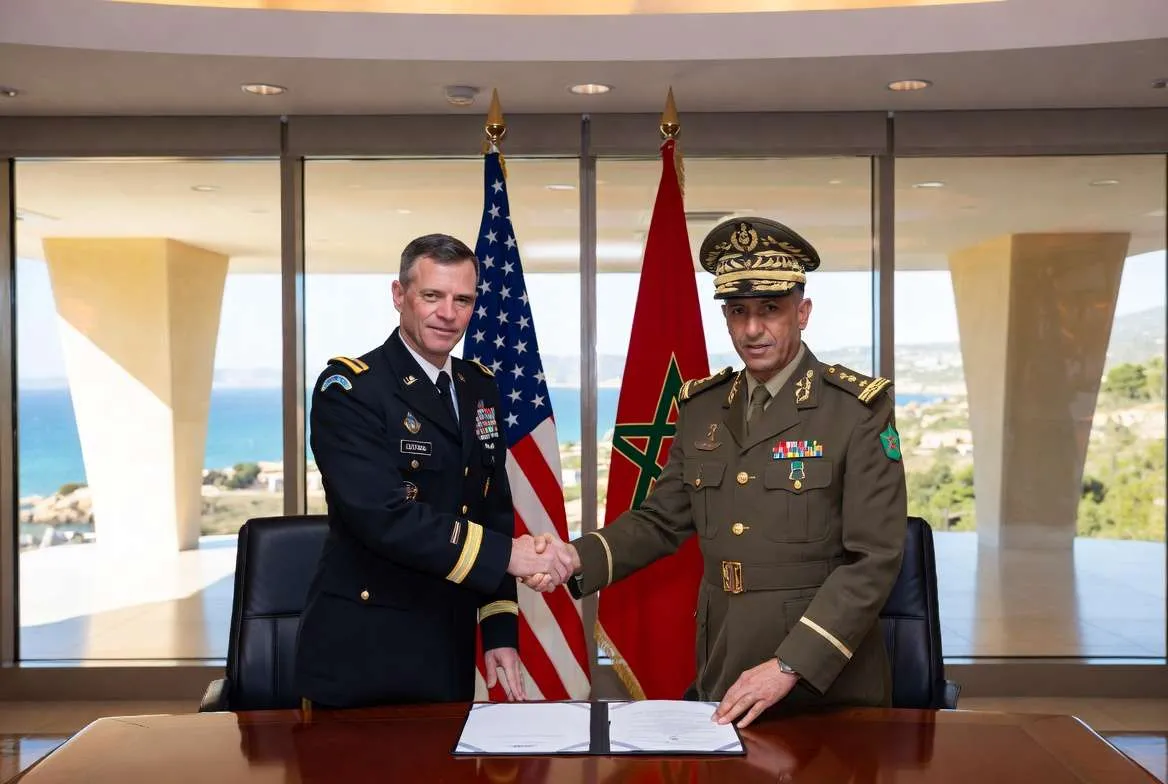
The recently established strategic roadmap between the United States and Morocco signifies a pivotal shift in defense collaborations, particularly in the context of the geopolitical landscape. This comprehensive framework serves as a blueprint for medium- and long-term military planning, detailing how the U.S. and Morocco will enhance their military and security capabilities in response to evolving global threats. This roadmap encompasses not only military strategies but also addresses political, technological, industrial, and geostrategic elements that are crucial for both nations in navigating the complexities of contemporary security challenges.
In an era marked by a re-evaluation of international alliances, particularly during the Trump administration, the United States is strategically positioning itself to cultivate reliable partnerships in North Africa and the Mediterranean. This initiative begins with an in-depth analysis of the current global order, characterized by power competition and an increasing multipolarity, alongside emerging threats such as cyberattacks, terrorism, and hybrid warfare. Moreover, the roadmap identifies critical regional conflicts, particularly in the Mediterranean and the Sahel, while also considering the disruptive impacts of technologies like artificial intelligence, drones, and advancements in space warfare. NATO, for instance, has already revised its strategic framework to incorporate responses to hybrid threats and bolster cyber defense capabilities.
Goals and Implications of the U.S.-Morocco Partnership
The agreement highlights the need to safeguard vital interests abroad, including trade and maritime routes, while pinpointing potential threats and scenarios that could arise, such as conventional warfare and information warfare, as well as humanitarian crises that may compromise security. To transform strategic interests into actionable objectives, the roadmap emphasizes the importance of deterrence, rapid response capabilities, and enhancing strategic autonomy. This entails significant investments in modernizing armed forces, advancing technologies in AI and cyber defense, and improving intelligence and surveillance mechanisms. Morocco's partnership with the U.S. mirrors efforts made by European nations, which are enhancing their collective defense capabilities through initiatives like the European Defense Fund.
Central to Morocco's strategic sovereignty is the support for its national defense industry and collaboration on arms with key partners, notably the U.S. and Israel. Recognizing that no nation operates in isolation, the U.S. aims to facilitate Morocco's participation in multilateral organizations, bilateral defense agreements, and joint military operations, while providing essential resources and funding to ensure economic sustainability and a robust defense budget. This agreement not only reinforces a longstanding bilateral relationship but also establishes Morocco as a critical ally on NATO's southern flank, significantly impacting stability in the Mediterranean and the Sahel regions. The designation of Morocco as a Major Non-NATO Ally (MNNA) further enhances military cooperation and operational capabilities between the two nations.
This strategic partnership seeks to bolster regional stability, counter extremism, secure essential maritime routes, and assert influence against global competitors such as China and Russia. The U.S. views Morocco as a more dependable ally compared to other nations, including Spain, which has traditionally held a significant position in the region. The objectives of this partnership are multifaceted, focusing on enhancing military cooperation through joint exercises, modernizing military capabilities via advanced technology transfers, reinforcing regional security through intelligence sharing, and optimizing logistics and infrastructure to support military operations.
As this military collaboration strengthens, it also elevates Morocco's political and diplomatic stature, fostering high-level bilateral dialogues and aiding internal stability amid potential succession challenges. Moreover, the management of the Western Sahara issue emerges as a pivotal factor in maintaining regional stability. The U.S. aims to counterbalance the growing presence of China and Russia in Africa by positioning Morocco as a strategic hub for U.S. interests in the region. This new strategic roadmap does not merely focus on defending Morocco but envisions using the partnership as a cornerstone of the U.S. security architecture across Africa and the Mediterranean, embodying a strategy of influence and stabilization.
For Morocco, this partnership solidifies its status as a dominant military power in the western Maghreb, which simultaneously presents challenges for Spain by introducing strategic risks alongside opportunities for cooperation. As the dynamics of military capabilities shift, the U.S.-Morocco relationship may create indirect pressures on sensitive areas such as Ceuta and Melilla, leading to a structural asymmetry in the region. While Spain remains a vital ally on NATO's southern flank, the diversification of U.S. support, which now includes Morocco, diminishes Spain's historical strategic advantage in North Africa.
The critical question moving forward lies in how Spain will respond to these developments. In recent years, Spain has often appeared reactive, trailing Morocco in diplomatic engagement. Should Spain adapt its strategies effectively and maintain its alliances, it can preserve its relevance and contribute to regional stability. Conversely, failing to respond adequately may allow Morocco to cement its dominant position along the Maghreb-Atlantic axis.
As reported by escudodigital.com.