
Analyzing the Current Migration Crisis Compared to 2021
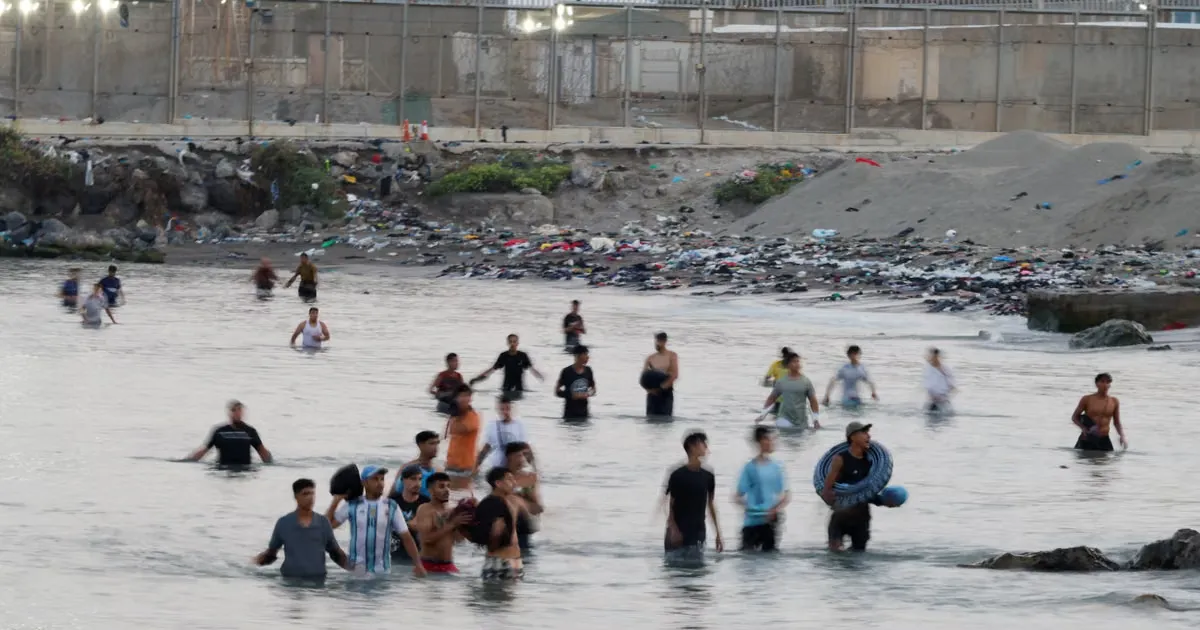
Víctor Amado, a contemporary history professor at the University of the Basque Country (EHU) and an expert on the Arab world and the Maghreb, has expressed his astonishment regarding the migration crisis unfolding in Ceuta while on vacation with his family in Poland. He remarks, "The echoes of this crisis have reached here, with a very strong far-right presence." Amado contrasts the present crisis with that of 2021, where approximately 8,000 individuals entered Ceuta within just 48 hours. He emphasizes that, while the numbers have surged to between 60,000 and 70,000 now, the nature of these crises differs significantly. The 2021 crisis had a clear catalyst: Spain's decision to hospitalize Brahim Ghali, the leader of the Polisario Front, during the pandemic, which prompted Morocco to destabilize the border in retaliation. In contrast, the current crisis lacks a singular trigger; instead, it stems from various factors, including a judicial ruling, calls for mobilization, and a noticeable relaxation of Moroccan security forces along their border. However, both situations underline Spain's considerable reliance on Morocco, particularly in terms of migration and counter-terrorism cooperation.
Political Dynamics and the Role of Migration
When questioned about Morocco's reliability as a neighbor, Amado asserts that it cannot be entirely trusted, nor can it be expected to be. He elaborates on what he describes as an asymmetric relationship between the two nations, highlighting the stark political realities at play. Spain, as a consolidated democracy with strong institutions and a separation of powers, cannot afford the kind of border openings that may be permissible in Morocco, where decision-making is more concentrated and influenced by specific political will. This disparity is not merely a question of trust but rather one of structural asymmetry, as a democratic state must respond to pressures that may not even be recognized or questioned in Morocco.
Amado confirms that migration is indeed used as a tool for political leverage, noting that while the cause-and-effect relationship was clear in 2021, it is less defined in the current crisis. Nevertheless, the strategic use of migration as a pressure point is apparent. Alarmingly, Morocco faces no political cost for its actions, despite the tragic loss of young lives and the impending deportation of thousands. In contrast, such negligence in Spain or any EU country would be inconceivable without repercussions.
The political ramifications for Spanish Prime Minister Pedro Sánchez are also significant. While criticisms from European partners may seem valid, Amado believes they are more reflective of internal political consumption than genuine community-wide repercussions. He points out that even Ursula von der Leyen, the President of the European Commission, initially deemed the situation unacceptable but later acknowledged the Spanish government's efforts, framing it as a European border issue that requires Moroccan accountability. The underlying motives of political opportunism and the need to undermine Sánchez's leadership, particularly as elections approach in many European nations, cannot be overlooked.
Ultimately, Amado concludes that conflict with Morocco is inevitable, and the key lies in managing it with minimal intensity while occasionally establishing clear limits. The extreme precedent of the Perejil Island incident in 2002 serves as a reminder of the complexities involved, highlighting the necessity of international mediation rather than bilateral solutions. As some diplomats have noted, the relationship with Morocco is characterized by continuous negotiations aimed at minimizing losses until the next crisis arises.
As reported by diariovasco.com.