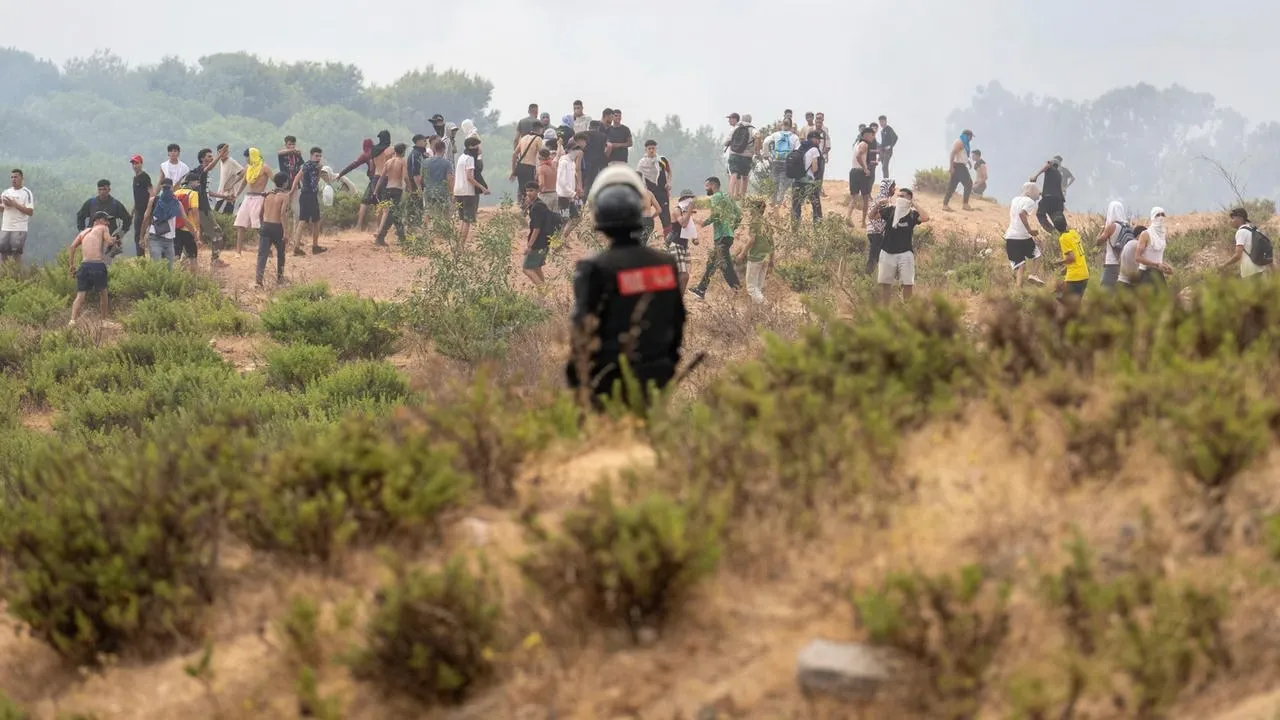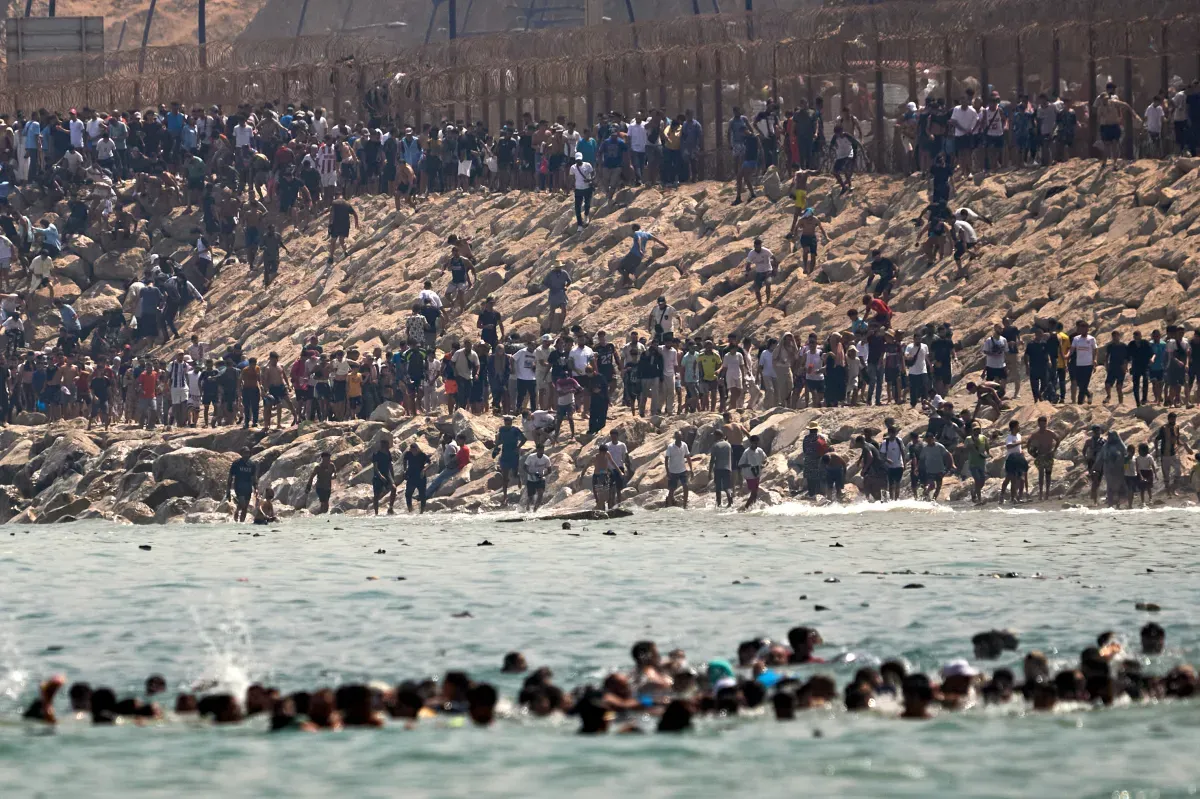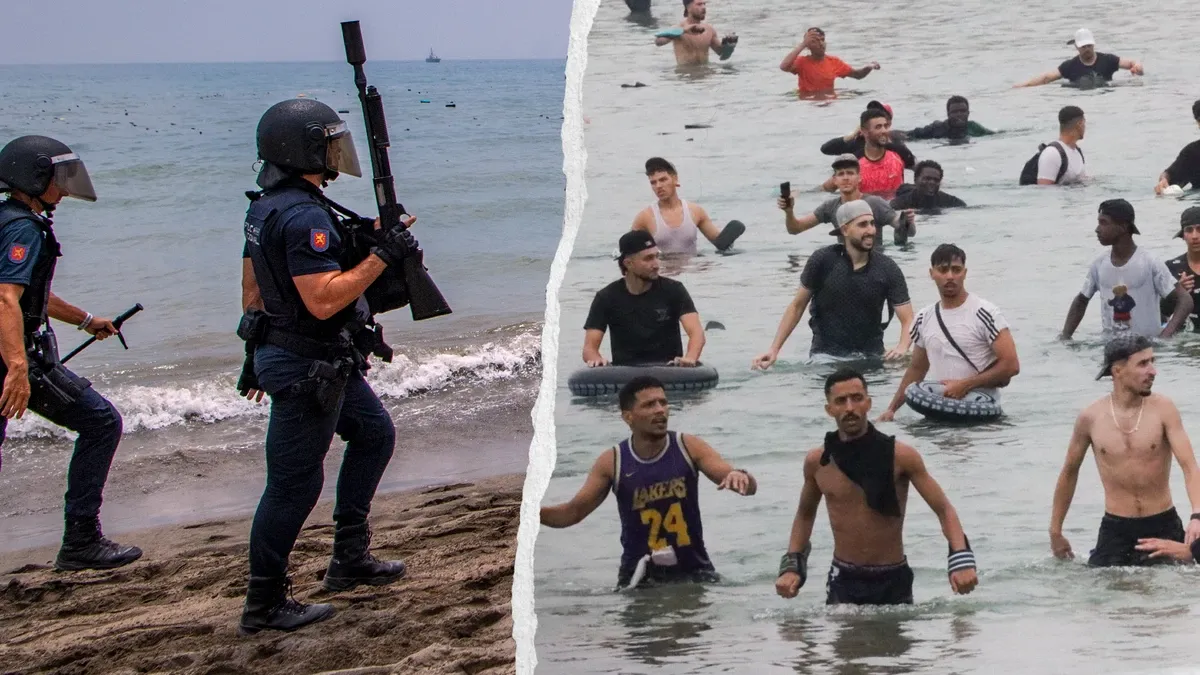
In a recent discussion with a resident of Casablanca, a 30-year-old man named Karim shared his perspective on the ongoing crisis involving Moroccan migrants in Ceuta, a Spanish enclave. According to Karim, there is a prevailing sentiment in Morocco that the significant influx of migrants—estimated between 40,000 and 60,000—was not an unforeseen event for the Moroccan government. He asserts that the country's intelligence agency, the General Directorate of Territorial Surveillance, is well-aware of such movements. This assertion underscores the complex dynamics surrounding migration in the region, where many individuals have made perilous sea journeys, leading to tragic fatalities, with current reports indicating at least 34 deaths due to drowning.
Karim speculates that the choice to embark on dangerous maritime routes instead of traditional land crossings may have been influenced by a recent ruling from Spain's Supreme Court. This ruling determined that individuals arriving by sea cannot be immediately deported without their residency requests being reviewed, in contrast to those entering through land borders. Furthermore, Karim points out that the timing of the migration coincided with Morocco's Throne Day celebrations, during which favorable marine conditions may have prompted many to attempt the crossing.
As Karim elaborates, there is widespread speculation in Morocco regarding the government's role in this surge of migration. Some believe that the Moroccan authorities might have intentionally relaxed their control over migration flows as a form of reprisal against Spain for its Prime Minister Pedro Sanchez's visit to Algeria on July 20. This visit was notable given the longstanding tensions between Morocco and Algeria over Western Sahara, a dispute exacerbated by Spain's recognition of Moroccan sovereignty over the territory in 2022, which led to subsequent agreements aimed at curbing migration toward Ceuta and Melilla.
Karim provides insights into the demographics of those attempting to leave Morocco, highlighting that many are young unmarried men, including a significant number of minors, alongside families with children. Most hail from impoverished areas such as Errahma in Casablanca, a neighborhood that has seen residents displaced from demolished shantytowns. They embark on this journey with hopes of a better life in Europe, often under the misconception that relatives residing legally in Spain, France, or Italy will assist them upon arrival. However, the reality can be starkly different, as many find themselves facing rejection from family members who may not be able to help due to their own struggles.
Despite the severity of the situation, coverage in Moroccan media has been limited, with some outlets prioritizing coverage of King Mohammed VI's speech during the Throne Day festivities over the migrant crisis. Karim notes that the lack of independent journalism in Morocco contributes to this silence, leaving many citizens uninformed about the ongoing challenges faced by their compatriots in Ceuta. As a result of an agreement between Madrid and Rabat, those stranded in Ceuta are being repatriated to Morocco, with some already returning disillusioned by their experiences of closed doors and racism. This has prompted a mix of reactions, as some express loyalty to the Moroccan monarchy amidst their hardships.
As reported by watson.ch.