Thousands Seek a New Life in Ceuta
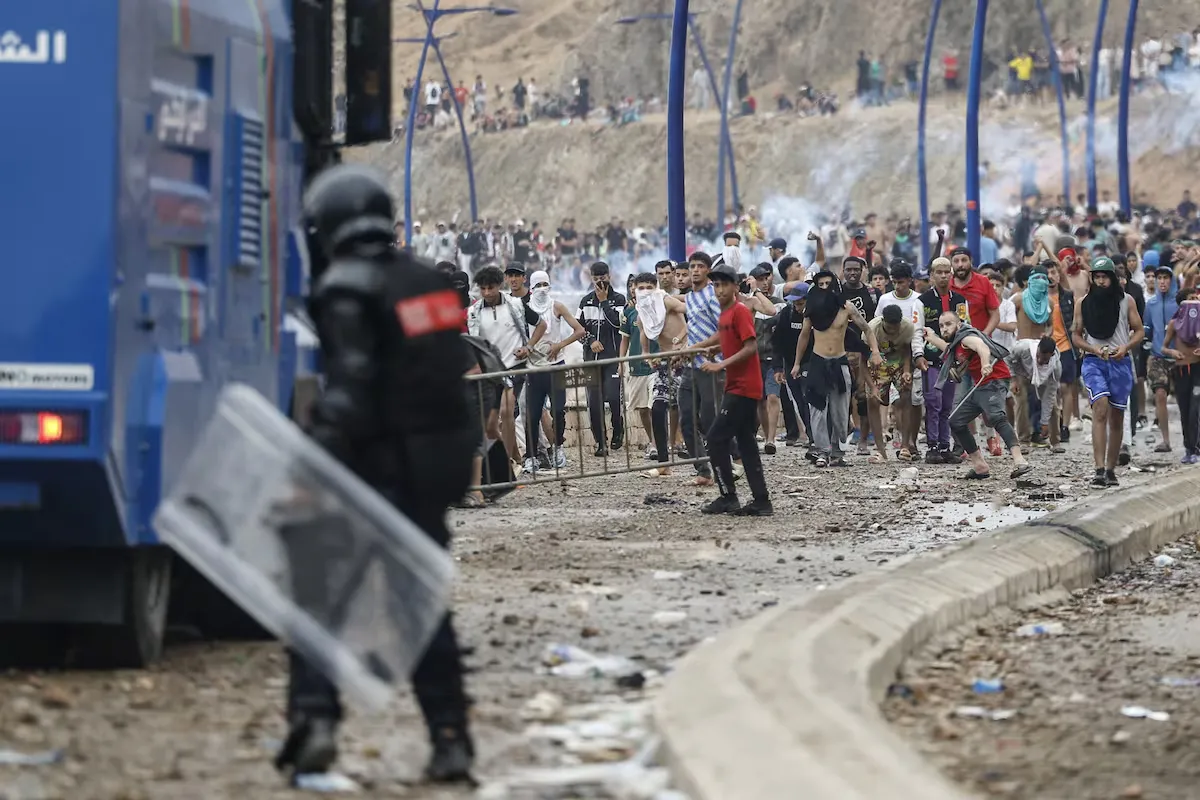
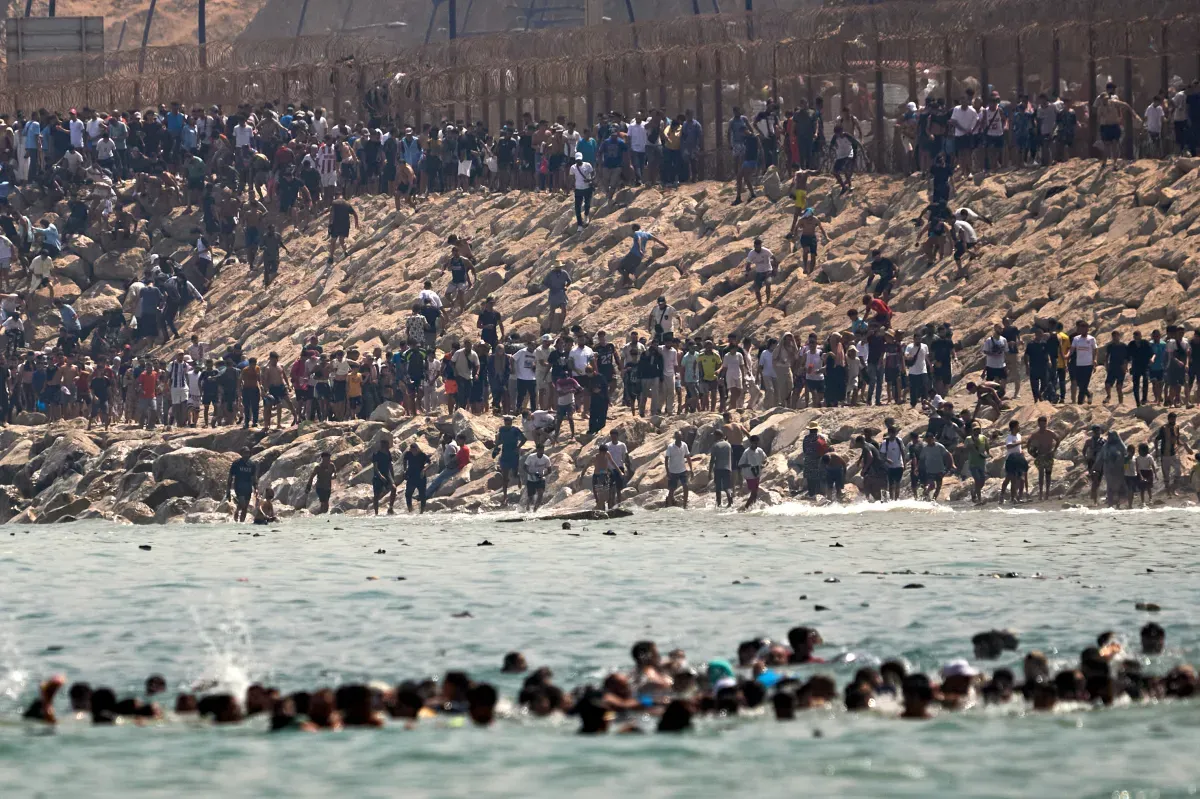
On Thursday, a significant influx of migrants crossed from Morocco to Ceuta, Spain, with many risking their lives by swimming across the treacherous waters. Initial estimates indicated that between 2,000 and 3,000 individuals made the perilous journey, although authorities have yet to confirm exact numbers. In response to this crisis, Spain has deployed police and military personnel to reinforce its border, while Morocco has employed agents and water cannons in an attempt to deter further crossings. This latest migration surge has overwhelmed the reception centers in Ceuta, a Spanish city located in North Africa, and has raised pressing questions about the motivations behind these dangerous crossings.
Among those arriving in Ceuta, the majority are believed to be young Moroccans, although families with children and individuals from other countries have also been observed. Visuals from the scene depict groups of migrants surrounding border piers, swimming, using flotation devices, or attempting to cross through terrestrial routes that were temporarily overwhelmed. This situation begs the question: why are so many individuals willing to risk their lives to leave Morocco, and what makes Ceuta their chosen destination?
Understanding the motivations for migration requires a nuanced perspective. While some individuals may be fleeing violence or persecution, a significant portion of Moroccan youth seeking to reach Ceuta are primarily driven by economic reasons and the hope of finding a better life in Europe. Despite Morocco's economic growth and infrastructure advancements, these benefits are not distributed evenly, leaving young people struggling to find stable and well-paying jobs that match their education and skills. According to the International Monetary Fund, unemployment rates among Moroccans aged 15 to 24 soared to 36.8% in 2024, up from 25% in 2019. Alarmingly, seven out of ten unemployed individuals with higher education have never held a job.
Ceuta: A Gateway to Europe
Ceuta's geographical location makes it a particularly appealing option for those attempting to migrate. Situated on the northern coast of Africa, it shares a border with Morocco yet remains a part of Spain. Alongside Melilla, it is one of only two land borders between Africa and the European Union. For individuals located in northern Morocco, Europe appears accessible; they can see it from the coast, and at certain points, Spanish territory is merely separated by a fence, beach, or pier. However, entering Ceuta does not guarantee asylum, residency, or automatic permission to move to mainland Spain. Those intercepted may be subjected to identification processes, migration procedures, and, under legal requirements, could be returned to their home countries.
Recent reports indicate that social media and rumors have played a significant role in driving these massive arrivals. In previous instances, messages circulated via social networks and messaging apps encouraged young migrants to converge at the border, spreading false information about relaxed controls. Spanish authorities have claimed that human trafficking networks exploited a recent Supreme Court ruling on immediate returns at sea to portray the border as more accessible than it truly is. In light of this, Spain and Morocco have agreed to enhance their coordination efforts and expedite lawful returns.
The situation is exacerbated by the fact that Ceuta has been experiencing increasing pressure from migrants well before this latest surge. Between January and mid-July 2026, 2,826 people entered Ceuta irregularly, representing a staggering 150% increase compared to the same period in the previous year. In the last week alone, an additional 1,500 individuals arrived, primarily by sea, averaging around 300 per day. Reception facilities for unaccompanied minors have been operating far beyond their capacities, and some adults have been forced to sleep outside these centers. Consequently, the events of Thursday have intensified an already challenging situation that authorities struggle to manage.
Despite its proximity, the journey to Ceuta is fraught with danger. Navigating around border piers requires swimming against strong currents and crossing monitored areas, often during nighttime or in poor visibility conditions. Many migrants utilize wetsuits, flotation devices, or inner tubes, while others enter the water without adequate gear. Over recent months, dozens of bodies have been recovered along the coast of Ceuta, and this latest episode has resulted in additional fatalities. Although Ceuta may seem like an accessible gateway, the reality is that reaching it can lead to drowning, detention, deportation, or prolonged confinement within overcrowded facilities. Furthermore, those who successfully enter do not automatically gain the freedom to travel throughout Spain or the rest of Europe, as authorities must confirm their identities and assess each individual case. Asylum seekers must demonstrate that they face persecution or serious risks in their home country, as mere poverty or unemployment typically does not meet the criteria for international protection.
As reported by eldiariony.com.