UAE's Innovative Approach to Blue Economy
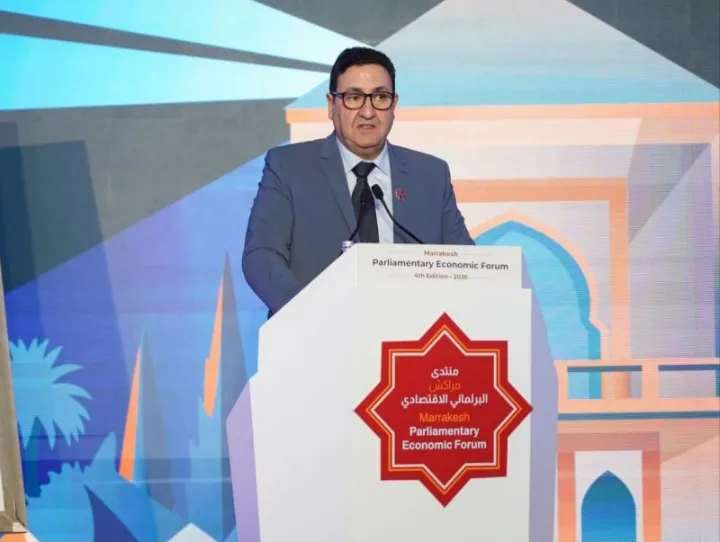
The Marrakech Parliamentary Economic Forum for the Euro-Mediterranean and Gulf regions, hosted by the Moroccan House of Councillors in collaboration with the Parliamentary Network of the International Monetary Fund and the World Bank, recently featured Aisha Rashid Al-Laytheem, a member of the Federal National Council of the UAE. During a session focused on "Enhancing Job Creation through the Blue Economy," Al-Laytheem emphasized the rapid growth of the blue economy sector globally. This sector offers a wealth of economic and investment opportunities linked to ports, maritime transport, sustainable tourism, renewable energy, marine industries, and food security, becoming a crucial element in the equation of economic security and sustainable development worldwide.
Al-Laytheem pointed out that small and emerging enterprises have proven to be the true engines of innovation in modern economies. Their adaptability to technological changes and ability to meet market demands make them the fastest in providing job opportunities, particularly among the youth. Consequently, successful economies today are those that possess a legislative and financial environment capable of supporting entrepreneurs and transforming ideas into productive projects.
Moreover, the UAE has placed significant emphasis on supporting the blue economy and enhancing its position as a global hub for ports, logistics services, and maritime trade. The nation is dedicated to developing policies that support entrepreneurship, digital economy, and innovation while providing an attractive environment for startups through flexible legislation, business incubators, funding programs, and investments in technology and artificial intelligence. Al-Laytheem affirmed that empowering youth economically and providing them with opportunities is the foundation for stability, development, and sustainability.
Addressing Climate Change and Food Security
In a related session, Hashima Yasser Al-Afari, another member of the Federal National Council, discussed the topic of "Addressing the Impact of Climate Change on Food Security." She highlighted that the effects of climate change on food security have direct implications for the economic, social, and humanitarian stability of nations. International reports indicate that over 295 million people in 53 countries faced acute food insecurity in 2024 due to ongoing conflicts and climate changes. Approximately 80% of the world's population vulnerable to crop damage and hunger due to climate change resides in Sub-Saharan Africa, South Asia, and Southeast Asia, where poverty and hardship are particularly severe among agricultural households.
Al-Afari further stated that international crises and regional conflicts have demonstrated that food security is no longer merely an economic issue; it has become a critical component of national security and global stability, especially in the context of rising food, energy, and transportation costs, as well as the impact on international trade and maritime corridors.
She affirmed that the UAE adopts a clear vision to enhance food security and environmental sustainability by investing in agricultural technology, smart farming, water desalination, clean energy, and innovation in natural resource management. Additionally, the UAE seeks to build international partnerships, diversify import sources, and enhance the resilience of food supply chains. The country is committed to confronting the effects of climate change through international cooperation and partnership, technology transfer, agricultural innovation support, sustainable project financing, and the development of legislations and policies that enhance resource efficiency and safeguard food security for future generations.
As reported by al-ain.com.