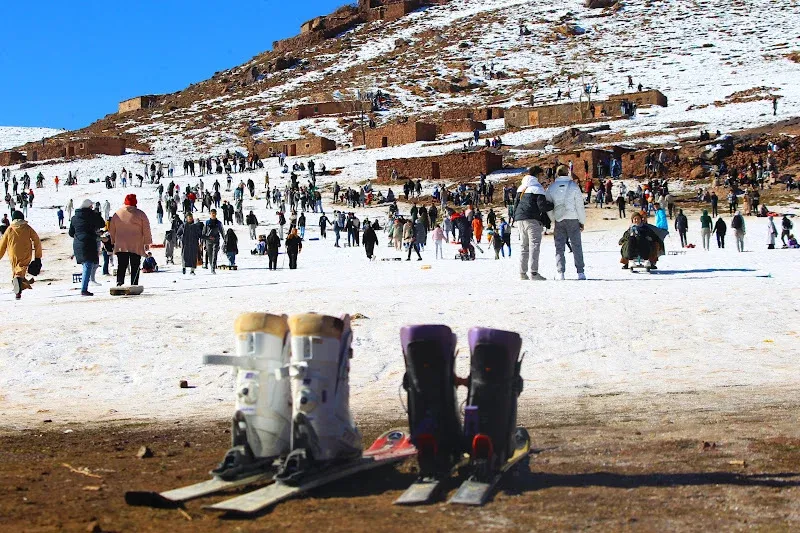
Situated just 74 kilometers from Marrakech, the Oukaimeden ski resort, nestled in the High Atlas Mountains at altitudes between 2,500 and 3,200 meters, is on the verge of a profound transformation that aims to redefine its status on the national tourism map. This ambitious project is spearheaded by the Moroccan Company for Tourism Engineering, which has initiated an international call for tenders exceeding 100 million dirhams. The primary objective is to rehabilitate this destination and introduce a new vision that diversifies its offerings, moving beyond the traditional association with the winter sports season.
Historically linked to skiing, Oukaimeden is now grappling with challenges posed by climate fluctuations and diminishing snowfall stability, along with changing visitor behaviors. These factors prompted a reassessment of the existing model and a shift towards a concept that places the overall experience at the heart of the tourism offering, rather than relying solely on seasonal activities. The new strategy envisions transforming Oukaimeden into a year-round mountain destination targeting a broader demographic, including families, local visitors, and international tourists.
The initiative aims to ensure a continuous flow of visitors while enhancing the economic value of each visit through a diversification of activities and an increase in the duration of stays. The first phase of the project will focus on launching easily accessible and quickly consumable activities such as skiing, snow play trails, tubing, and designated areas for ski instruction. The goal is to make the experience of reaching the site straightforward and engaging from the very beginning, without requiring prior expertise.
In subsequent phases, the offerings are expected to expand to include more advanced skiing trails, a variety of sports and entertainment activities, and the integration of summer pursuits such as mountain biking and hiking along natural paths. This gradual approach is designed to foster repeat visits and transform the destination into a space that remains in use throughout the year.
The choices made in Oukaimeden reflect a departure from some international models that place professional skiing at the forefront. Instead, the approach embraced in Oukaimeden aims to broaden the base of beneficiaries by incorporating skiing as part of a larger system rather than the sole central activity. The investment program includes immediate operational measures for the destination through essential facilities, including the installation of a new cable car, the creation of recreational and educational spaces, and comprehensive infrastructure upgrades to secure the site.
The project also involves acquiring operational equipment and appointing an administrative operator for two years to ensure a practical and organized launch. In parallel, investors are expected to present a comprehensive vision for the second phase, which includes reactivating lifts to the peaks, creating panoramic viewing points, and developing tourism experiences that combine natural and cultural dimensions. The economic stakes extend beyond merely increasing visitor numbers, although an initial target of 50,000 visitors has been set for the first phase. The focus will also be on establishing a model based on multiple income sources, increasing onsite consumption rates, and achieving financial sustainability in the medium term.
The project's implications stretch into the surrounding areas, with expectations of creating job opportunities and stimulating the local economy in the Greater Atlas communities, thereby enhancing the attractiveness of the Marrakech-Safi region. In this context, the mountain is being reintegrated into the development dynamics as a productive area rather than a marginal one. What is happening in Oukaimeden reflects a broader trend of rethinking mountain tourism in Morocco, adopting models that are less seasonally dependent and more reliant on diverse experiences. The success of this project could pave the way for the adoption of this approach in other destinations, as the sector seeks more flexible and sustainable solutions.
As reported by hespress.com.