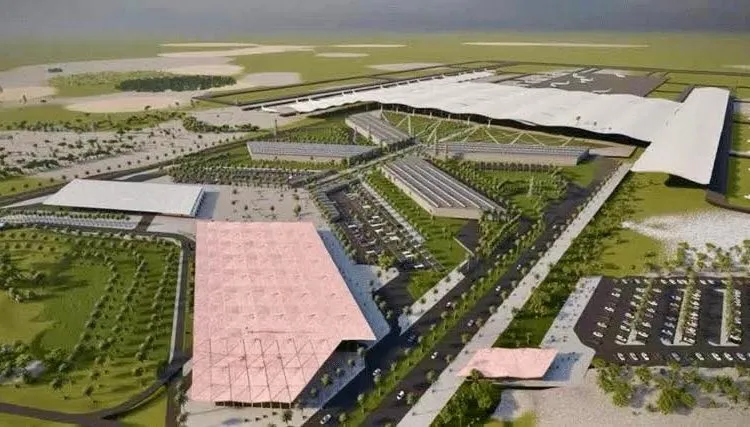

Mohammed V Airport and the high-speed rail line are embarking on a significant phase of infrastructure development, following the Moroccan National Railways Office's announcement of a call for bids for civil engineering studies and works. This initiative includes the construction of rail structures crossing Regional Road No. 3038, as well as hydraulic structures along the Bouskoura River, with an estimated investment of 180 million dirhams excluding taxes. This project is part of broader efforts to extend the high-speed rail line from Kenitra to Marrakech and enhance the railway system in the Greater Casablanca area. This region is particularly critical due to the dense traffic of trains and vehicles leading to the country's largest airport.
Complex Railway Project at Mohammed V Airport
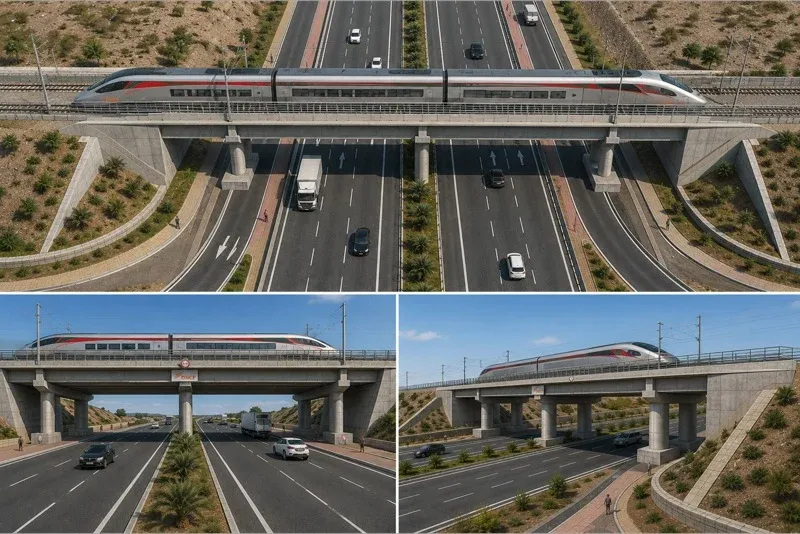
The undertaking involves the construction of two railway bridges over Regional Road 3038. One bridge is designated for the high-speed rail, while the other will accommodate a reconfigured classic rail line, necessitating the removal of the existing structure. In addition to the bridges, the project will see the establishment of seven hydraulic structures along the traditional rail platform, including one associated with crossing the Bouskoura River. The significance of this work is underscored by the need to align the new railway structures with drainage networks and to protect the railway platform, particularly in a zone where railway, road, and hydraulic infrastructures intersect.
The road aspect of the project involves expanding Regional Road 3038 to three lanes in each direction, along with the construction of a roundabout and access lanes. This expansion aims to accommodate the increasing traffic towards Mohammed V International Airport and maintain smooth traffic flow during and after the project's completion.
New High-Speed Rail Bridge over the Airport Road
A standout feature of this project is the railway bridge dedicated to the Kenitra-Marrakech high-speed line, which spans approximately 68 meters and consists of four sections. The design is based on a slab supported by encased beams that carry two railway tracks, relying on two supports and three central columns anchored by deep foundations. A significant challenge is to construct this bridge without disrupting traffic on the road leading to the airport or adversely affecting the existing train operations. This requirement necessitates meticulous coordination between excavation, construction phases, network diversions, and the establishment of new structures.
The data from the national railway program indicates that the high-speed rail line between Kenitra and Marrakech extends approximately 430 kilometers, which will significantly enhance the service to Mohammed V Airport, offering better connectivity to major cities and the rapid transit network. This project alone is allocated around 53 billion dirhams as part of a national railway program valued at a total of 96 billion dirhams.
With an estimated construction cost of 180 million dirhams excluding taxes, the National Railways Office has indicated that the total value, when including taxes, is approximately 216 million dirhams. The project has a stipulated execution period not exceeding seven months, which includes one month for preparations before entering the fieldwork phase. This timeline reflects significant pressure given the scale of the structures to be built and the nature of the site, which does not allow for extended disruptions to traffic.
Consequently, the tender requires high financial and technical qualifications from competing companies, including an average turnover of no less than 400 million dirhams in recent years, along with proven experience in constructing bridges within high-traffic areas. Additionally, a provisional guarantee of 2.7 million dirhams must be provided.
The most challenging aspects of the project are not merely related to the volume of concrete or the length of the bridges but rather how the construction will be executed. The work will occur alongside existing electrified and operational classic railway lines and near a major access road to Mohammed V Airport. Therefore, the project mandates the continuous flow of vehicular traffic and avoids complete road closures while maintaining the operation of existing rail services. This may necessitate technical operations during specific timeframes or continuous work, all under strict safety standards.
Moreover, the project involves protecting sensitive equipment surrounding the site, including communication and fiber optic networks, with financial penalties imposed for delays or unreasonably disrupting train movements or damaging existing infrastructure.
The new high-speed rail line is a pivotal element in reshaping transportation around Casablanca. The Moroccan National Railways Office has initiated a series of projects aimed at developing rapid regional trains, creating and updating stations, enhancing network capacity, and connecting the airport and new areas to the railway system. The major projects in Greater Casablanca include a program to develop approximately 260 kilometers of electrified railways and the construction or expansion of dozens of technical structures, alongside new stations and maintenance facilities, all designed to build a regional transport network capable of meeting the increasing demand for travel.
The significance of these new works extends beyond merely addressing a crossing point between the rail and road; it prepares a strategic segment of the route that will ultimately position Mohammed V Airport as a station directly linked to the high-speed rail system. Future plans suggest that this project will enable a connection between Rabat and Casablanca Airport in approximately 35 minutes, alongside reducing travel times between Tangier, Casablanca, and Marrakech.
Thus, the investment of 180 million dirhams in bridges, hydraulic structures, and surrounding roads becomes part of a larger project to reorganize transportation along the Casablanca axis. The focus is not solely on constructing two railway structures but on creating a transport hub that integrates high-speed rail, traditional lines, roads, and the airport into a framework capable of accommodating greater traffic in the years to come.
As reported by attasiaa.com.