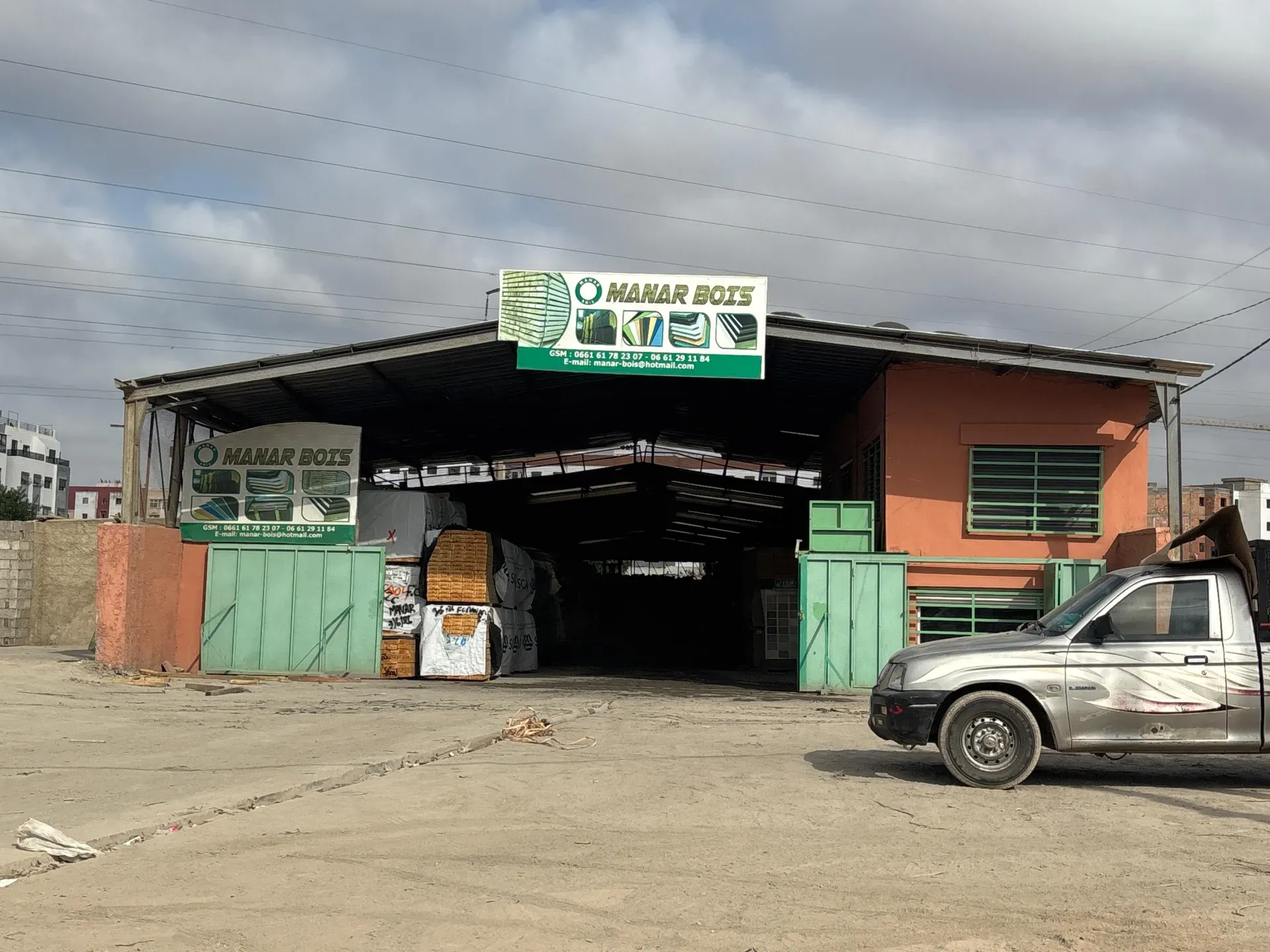
Years ago, Moroccan national Maryam Al-Sayed made a bold decision to resign from her position at a public hospital to take on the role of information systems manager at her family's company, which specializes in the import, export, and local marketing of timber. Maryam shares with Al Jazeera that her company, which has branches in several Moroccan cities, employs around 20 family members in various roles. This family business is founded on the principle of specialization, where each family member and external employee has a defined role that aligns with their educational background and professional experience.
For Maryam, who holds a Bachelor's degree in Computer Science and is a mother of two, working alongside her husband and in-laws represents an opportunity to devote her expertise and efforts to ensure the success of this family investment. She highlights the flexibility of this experience, which allows her to balance her family obligations with her professional duties without any compromise. The nature of her digital work, as she explains, grants her the privilege of remote work, as her tasks can be accomplished using only a computer and an internet connection, enabling her to work from the company office or from home when faced with pressing family circumstances.
Family businesses constitute approximately 93% of all Moroccan companies and contribute over 60% of the national added value, according to a national study conducted by the Moroccan Family Business Institute with support from the International Finance Corporation, the results of which were announced earlier this month. This study reveals that these businesses create around 65% of job opportunities in Morocco, amounting to nearly 6.3 million jobs.
Understanding Family Businesses
A family business is defined as an enterprise controlled by two or more individuals from the same family, whether in terms of management, holding positions, or capital ownership. Researchers have added another criterion to identify family businesses, which is the transfer of ownership and managerial responsibility across generations. A study conducted by sociologists Abdelghani Mandib and Tahar Saber, published in the Knowledge Journal in 2024, distinguishes two types of family businesses in Morocco based on capital size:
- The first type originates from modest social backgrounds with limited financial resources, aiming primarily to ensure survival, provide job opportunities for family members, and maintain a reasonable family income.
- The second type comprises family businesses that descend from small bourgeois origins, striving to accumulate financial and real estate assets to secure bank guarantees for investment loans, which enhances their transactions and revenues, thus elevating them from small to medium and large enterprises.
Family businesses in Morocco are primarily active in construction, agriculture, banking, industry, tourism, services, and private education.
The Role of Family Businesses in Social Stability
Economist Amin Sami, in an interview with Al Jazeera, asserts that family businesses are not merely economic units but rather "structures of social stability." Their role is particularly pronounced in small and medium-sized cities, where they serve as a safety net against local economic voids by providing job opportunities and stimulating trade and services, thereby reducing economic migration towards major cities like Casablanca, Tangier, and Rabat.
Sami notes that the proximity of these economic units to their communities makes them more adaptable to integrating youth, especially family members. However, he warns that if these businesses remain unstructured, they could shift from being a stabilizing factor to a source of vulnerability. In such cases, while they may generate job opportunities, they often lack sufficient protection and productivity.
Abdallah Al-Farkhi, president of the Moroccan Confederation of Micro, Small, and Medium Enterprises, emphasizes that family businesses are a cornerstone of the national economy due to their contributions to wealth creation and social stability. However, he expresses caution regarding the accuracy of the reported figures, suggesting that the Family Business Institute's study primarily focused on organized and structured businesses with a minimum level of continuity and governance.
Farkhi elaborates that incorporating data on very small businesses, which employ fewer than 10 individuals, would drastically alter the overall picture, as this category represents the backbone of the national economy with over 4 million businesses, constituting around 98% of all companies in both the structured and unstructured sectors. Most of these ventures were not established as family businesses but as individual attempts by youth seeking alternatives to unemployment. Furthermore, about 70% of them face bankruptcy within the first five years of operation, making it difficult to discuss family succession or generational continuity within them.
Despite this, he believes that family businesses in Morocco embody an economic and cultural model that reflects values of trust, family solidarity, and attachment to the land, indicating that many of the largest national economic groups began as modest family businesses before evolving into significant economic entities with operations across the African continent.
The continuity and transfer of management to subsequent generations, particularly the third generation, present a significant challenge for family businesses. The Family Business Institute's study indicates that the average lifespan of family businesses reaches 24 years, with the second generation managing about 31% of these enterprises. Only 15% of them surpass a fifty-year lifespan and reach the third generation.
Families often delay arrangements for management succession, which can lead to internal conflicts among partners and clashes of interests. International studies show that less than 12% of family businesses worldwide survive to the third generation. Sami stresses that the failure of generational succession impacts not only the family but also an entire network of employees, suppliers, and customers, leading nationally to the demise of medium-sized businesses before they can mature, resulting in the loss of productive expertise and the forced sale of assets under pressure, while market concentration increases in the hands of larger players.
He emphasizes the need to manage succession as an institutional matter rather than an emotional one by drafting a family charter, preparing a succession plan, separating ownership from management, introducing independent competencies, and linking government support to the readiness of family businesses for transition. Al-Farkhi also underscores the importance of gradually separating ownership from management, asserting that establishing clear governance rules within family businesses and early engagement of the new generation in decision-making will contribute to their continuity across generations.
Any approach to supporting family businesses should not only focus on large and medium-sized stable enterprises but should also include very small businesses, as they represent the real reservoir of future family businesses. He calls on the government to create an agency named "Morocco for Very Small Enterprises" and establish a public bank dedicated to this category, as he believes that financing is the key to sustainability, and sustainability is a prerequisite for transition.
As reported by aljazeera.net.