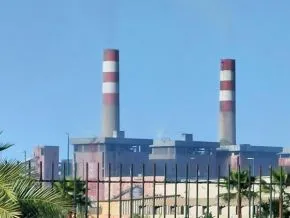
Morocco's Upper House Rejects State Control of Samir Refinery
The upper house of the Moroccan Parliament has officially rejected a proposal advocating for the renationalization of the Samir oil refinery, thus keeping this crucial industrial asset closed. This decision was reported on June 18 by Morocco's state news agency, MAP. The proponents of the proposal argued that reinstating state control over the refinery would bolster the nation’s fuel reserves and enhance stability in supply. However, opponents raised concerns about the ongoing international arbitration proceedings and the significant debt burden the facility carries, which exceeds $4 billion.
This latest rejection marks yet another setback in a long-standing political debate that has persisted in Morocco for over a decade. There have been consistent demonstrations led by hundreds of former employees, who are supported by national labor unions, advocating for the reopening of the refinery and the restoration of their jobs. The Samir refinery, located in the strategic Atlantic port city of Mohammedia, once played an integral role in Morocco’s industrial landscape by satisfying nearly 65% of the domestic fuel demand with a remarkable refining capacity of 200,000 barrels per day.
Originally built and operated by the Moroccan state from 1959 to 1997, the refinery was sold to Corral Morocco Holdings, a Swedish company owned by Saudi billionaire Sheikh Mohammed Hussein Al Amoudi. Following the accumulation of massive debts, the Casablanca Commercial Court ordered the refinery's court-supervised liquidation in 2016, rendering it inactive.
Dependence on Imported Fuel and Financial Challenges
The rejection of the renationalization proposal comes at a time when Morocco finds itself increasingly reliant on imported fuel, particularly in light of energy security concerns exacerbated by the geopolitical crisis in the Strait of Hormuz. Reports indicate that the Moroccan government has been expending approximately 3 billion dirhams (around $330 million) monthly on fuel subsidies. In February 2026, a bid of about $3.5 billion was submitted by Dubai-based MJM Investments to acquire the refinery's industrial assets, but the Casablanca Commercial Court deemed this bid inadmissible due to incompatibility with the established terms of the court-supervised sale process.
The future of the Samir refinery remains a contentious issue, illustrating the complex interplay between the need for energy security and the legal and financial hurdles posed by the liquidation process. The ongoing situation underscores the challenges faced by Morocco as it navigates its energy landscape amidst significant external pressures.
As reported by ecofinagency.com.