The Rise of Moroccan Migrants in Sports
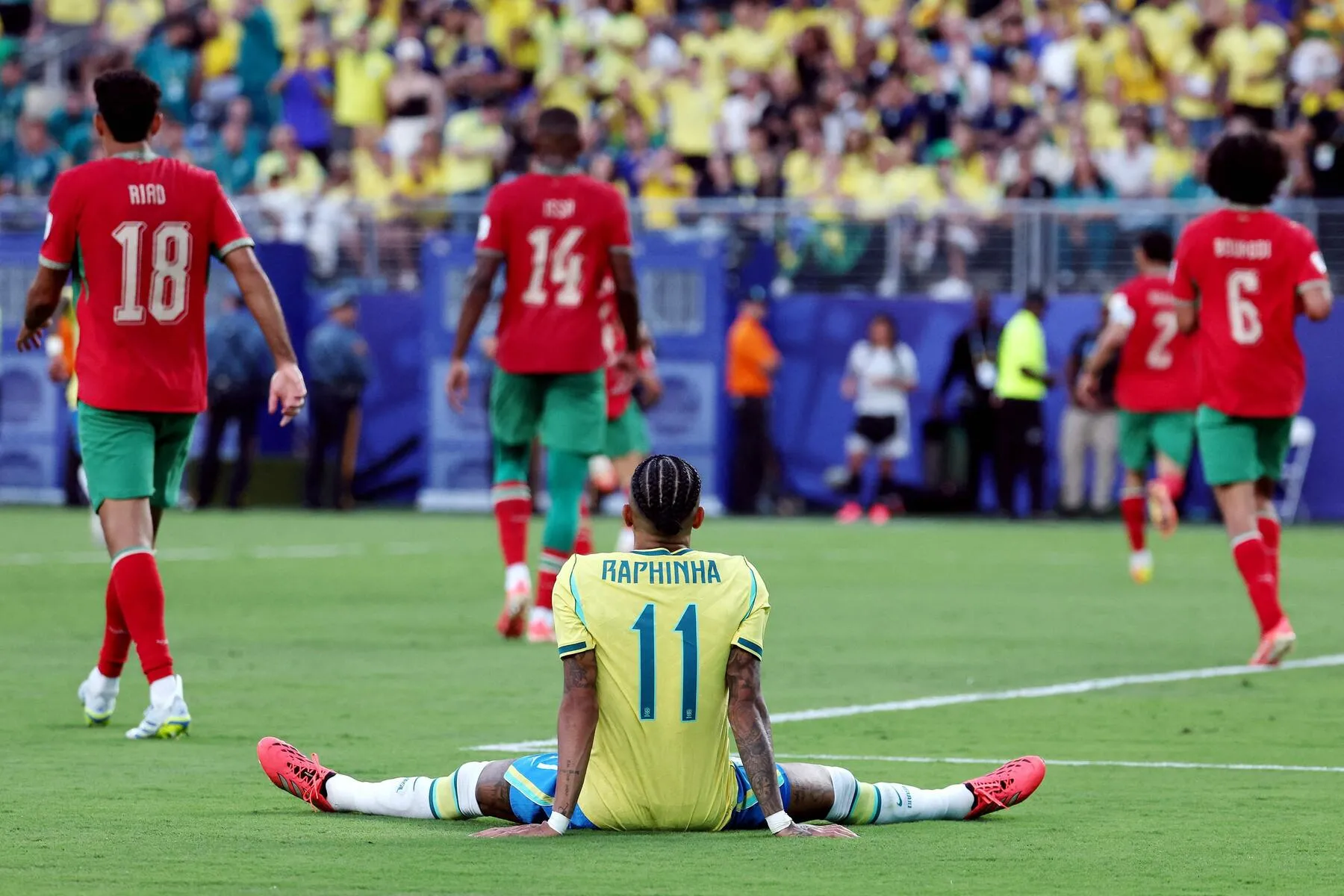
As the world eagerly anticipates the 2026 FIFA World Cup in America, an age-old debate resurfaces, now perhaps with even more vigor: why do the children of Moroccan migrants consistently transform into champions, forming the backbone of the national team, achieving results and performances that far exceed those of Moroccans from within the country, despite the differences in origin, upbringing, and education? Some migrants portray this phenomenon as a noble sacrifice, a generous contribution from those whose parents left in search of a better life, yet they have not forgotten their roots. While this perspective holds some truth, it alone does not fully explain the complex dynamics at play.
On the other hand, some individuals from Morocco's interior view the issue solely through the lens of the resources provided to national teams. They assert that if those resources were allocated to local Moroccans, they too would be willing to endure hardships on the field in defense of the national jersey. Amidst these sentiments, the truth often gets obscured. Neither sacrifice alone clarifies why a child of Moroccan migrants becomes a world-class player, nor do the available resources alone account for the lack of similar talent production within the country at the same pace. While financial support, infrastructure, and mentorship are undoubtedly important, there exists a deeper, more intrinsic factor: the individual themselves. How do they develop? How do they perceive themselves? And how do they cultivate self-confidence before anything else?
The Insights of Football Federation President Fouzi Lekjaa
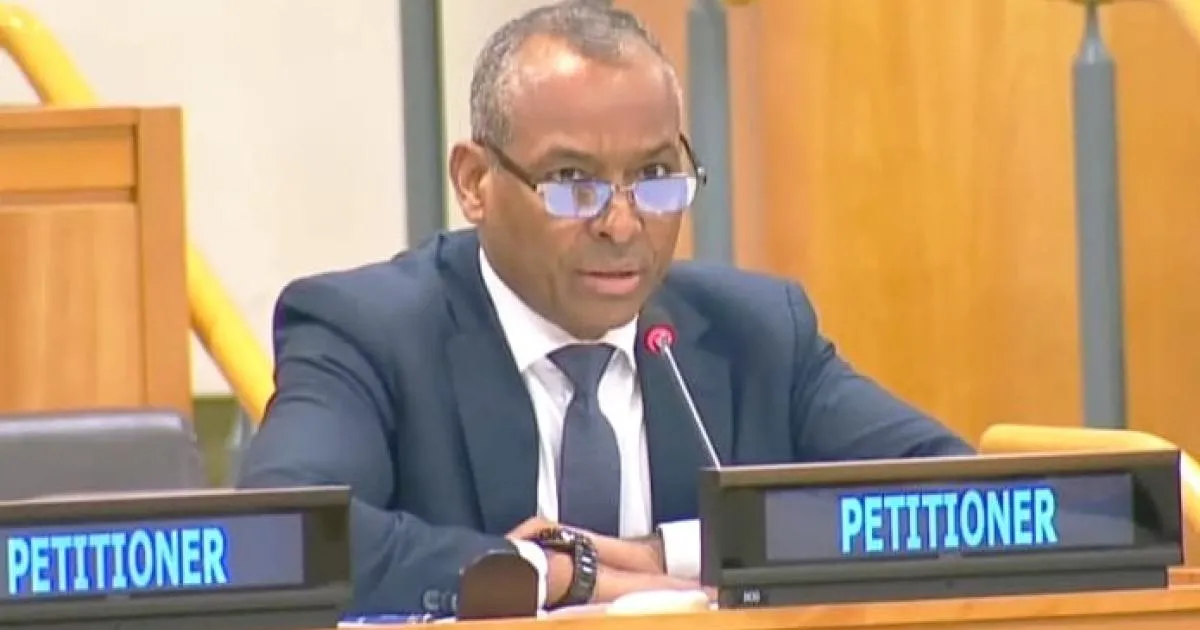
Only Fouzi Lekjaa, the president of the Royal Moroccan Football Federation, has provided a rational explanation—not for the success of migrant children per se, as this is a sensitive subject that official representatives tend to avoid—but rather why these children opt to represent Morocco instead of their countries of residence. I elaborated on this in a previous article by discussing the appealing sports project that Morocco is presenting, which these athletes find more enticing and offers more opportunities compared to what their host countries provide.
However, as we navigate through this intricate issue, another significant paradox emerges. Lekjaa, who has been dubbed by party coordinator Fatima Zahra Mansouri as the government’s “roundabout”—the person where all choices and policies converge due to his control over the budget—when he decided to conduct a public interview targeting Moroccans primarily rather than an international audience, found no national platform to address his people. Instead, he resorted to a foreign platform named "Aether," coincidentally sharing the space only with another Moroccan journalist, Mohamed Rmash. This scenario, where a Moroccan official speaks with a Moroccan journalist on Moroccan soil, yet chooses a foreign platform, illustrates a broader issue: there seems to be no desire from Lekjaa or the Moroccan state to implement even a fraction of what they do in football to develop and elevate domestic journalism and the media landscape. If that were the case, he would have first opted for national platforms to communicate with Moroccans.
Shortly after this interview, cameras captured Lekjaa at the national team's training ground in America, refusing to even glance at a Moroccan journalist pursuing him for a statement—a scene that encapsulates everything. As I reflect on these contradictions, particularly those related to the national team's composition and the wealth of exceptional talents emerging from the Moroccan diaspora, I am reminded of Mustafa Hajjaji's book, "Social Backwardness: An Introduction to the Psychology of the Oppressed Man."
There is nothing material that can solely explain the impotence and paralysis that suffocate Moroccans while they remain within their homeland, compared to the explosive potential they unleash as soon as they step into a "different world"—a realm that stimulates their positive attributes, where they feel they are humans expected to succeed, rather than victims expected to endure. In both sports and media—let us confine our discussion to these two fields for now—Moroccan migrants excel in showcasing their athletic talents without necessarily being academic failures, as seen with rising star Ayoub Bouaddi. In media, Moroccan journalists, including those who were raised and educated in Morocco, become global screen stars simply by transitioning to a "different world." Would journalist Hashem Al-Halbra, currently managing Al Jazeera's Washington bureau, have become such an esteemed and reference-worthy media figure had he remained in Morocco years ago? The question is not directed at individuals but at the state: what are we doing to people here so they do not become who they could have been? What are other countries doing that suddenly reveals to them their potential to succeed?
The secret and the explanation lie within the pages of Mustafa Hajjaji's book. What hinders the Moroccan individual is their profound feeling of being "oppressed." Oppression here is not merely an ornamental term, a political insult, or synonymous with poverty. As Hajjaji elaborates, oppression is a long and complex relationship that reshapes the psyche. An oppressed individual is not born incapable; rather, they are gradually led to feel powerless day after day. They do not emerge with a lack of self-confidence; the school, the administration, the street, the hospital, authority, the media, and sometimes even the family, conspire to convince them to lower their heads to get by.
From birth until death, almost everything tells Moroccans that they are under the weight of oppression. The hospital where one is born gathers all that oppresses their mother and father, sowing the first seeds of inferiority. The road they travel, the pavement they walk upon, the school that raises them, and the administration that governs their lives and intervenes from their earliest experiences in the struggle of “keep going until you get there” and “grease the wheels,” all teach them one thing: nothing happens because you deserve it or have the right to it, but rather because you begged, paid, or knew someone who intervened for you.
Then comes our relationship with the state, where all tools converge—including the disaster of new media, which receives its directives from the local authority—to create a relationship of oppression, submission, and personality breakdown. A state that does not address the citizen as a partner but as an object, and a media that does not aid in understanding but forces one to swallow the dominant narrative. An administration that does not facilitate life but reminds them daily that they have nothing unless permitted. This is what Mustafa Hajjaji refers to as the psychology of the oppressed individual. An individual who has lived long under oppression is not only materially or socially affected but is psychologically shaped in a damaged manner. They become fearful of initiative, hesitant in the face of opportunity, quick to anger with those weaker than themselves, and submissive to the powerful, lacking self-confidence and full of doubts about their ability to change.
When this oppressed being cannot confront the source of their oppression, they direct their anger towards those similar to them or those weaker. Thus, societies under oppression become spaces where individuals bite at each other. I do not intend to imply that Moroccans in the interior are less intelligent, talented, or patriotic; such a notion is absurd and degrading. The reality is that the environment in which Moroccans in the interior live does not unleash their potential; rather, it exhausts it. It does not tell them, "You are capable," but rather questions, "Who are you?" and "Who are you the son of?" Even this collective exodus we undertook, we who can afford private school fees, is fundamentally an attempt to escape this fate of oppression.
I know several friends who have been fortunate enough to reach the upper-middle class and are paying a heavy price to educate their children in foreign mission schools—not necessarily because their education is always better, nor because they prefer the language of Molière over their mother tongue, but simply to spare their children from the doses of oppression, submission, and defeat that the Moroccan individual drinks throughout their upbringing and daily life, turning them into damaged beings, devoid of hope and despairing of themselves before anyone else. I do not claim that Moroccans find in mission schools, European clubs, or international media outlets a paradise. They encounter competition, harshness, sometimes racism, and pressure, but they also find something essential: a clear framework, a realm of recognition, the possibility of advancement if they work hard, and a sense that their talent can pave the way.
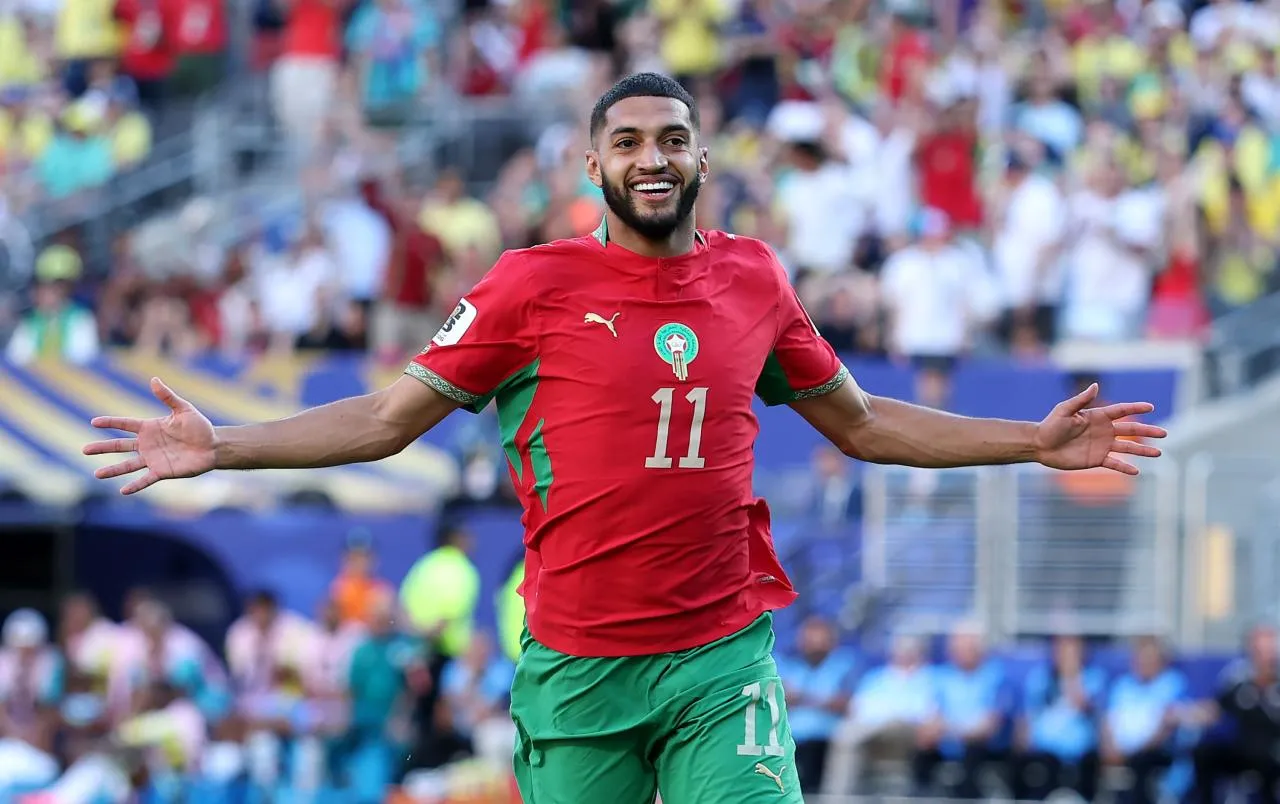
This is why individuals like Ayoub Bouaddi, Achraf Hakimi, Mohamed Rmash, and Hashem Al-Halbra succeed. The migrant player does not love Morocco more than someone raised in Fez, Safi, or Khouribga. They succeed because they were raised in an environment that told them from the outset that their talent is a project and that their intelligence is a value. When they chose Morocco, they did not do so as an escape from failure, but rather as a compelling sports project. Similarly, Moroccan migrant journalists succeed only if they leave—not because they suddenly become more intelligent but because the camera that was inside demanded they be an appendage to authority, a beautifier of mediocrity, or a beggar for statements, whereas the camera abroad requires them to ask, to understand, to deliver, and to carve out a name for themselves.
The difference is not in genetics but in the conditions of human production. The most dangerous aspect of oppression is that it does not kill a person at once. Instead, it keeps them alive while robbing them of the possibility of becoming the best version of themselves. It makes them reconcile with the little they have, fear the abundance, doubt themselves whenever they approach an opportunity, and believe that success is an exception rather than the rule. The psychology of the oppressed Moroccan is not an eternal fate. This is the hopeful aspect of Mustafa Hajjaji's idea. Oppression creates a defeated psyche, yes, but it does not eliminate the possibility of liberation, which begins when society stops manufacturing fearful individuals and when the school transforms from a space of punishment into a space of trust, the administration shifts from a tool of humiliation to a service, and the media evolves from a device for numbing the populace to a realm opening eyes.
You cannot instill oppression into a person from childhood and then expect them, on match day, to "eat the grass" in defense of the jersey. Before asking them to eat the grass, first give them a sense of being human—not just a file in a local administration, not a number in a unified social register, and not a being waiting for permission to dream.
As reported by thevoice.ma.