Understanding the Link Between Personality Traits and Climate Anxiety
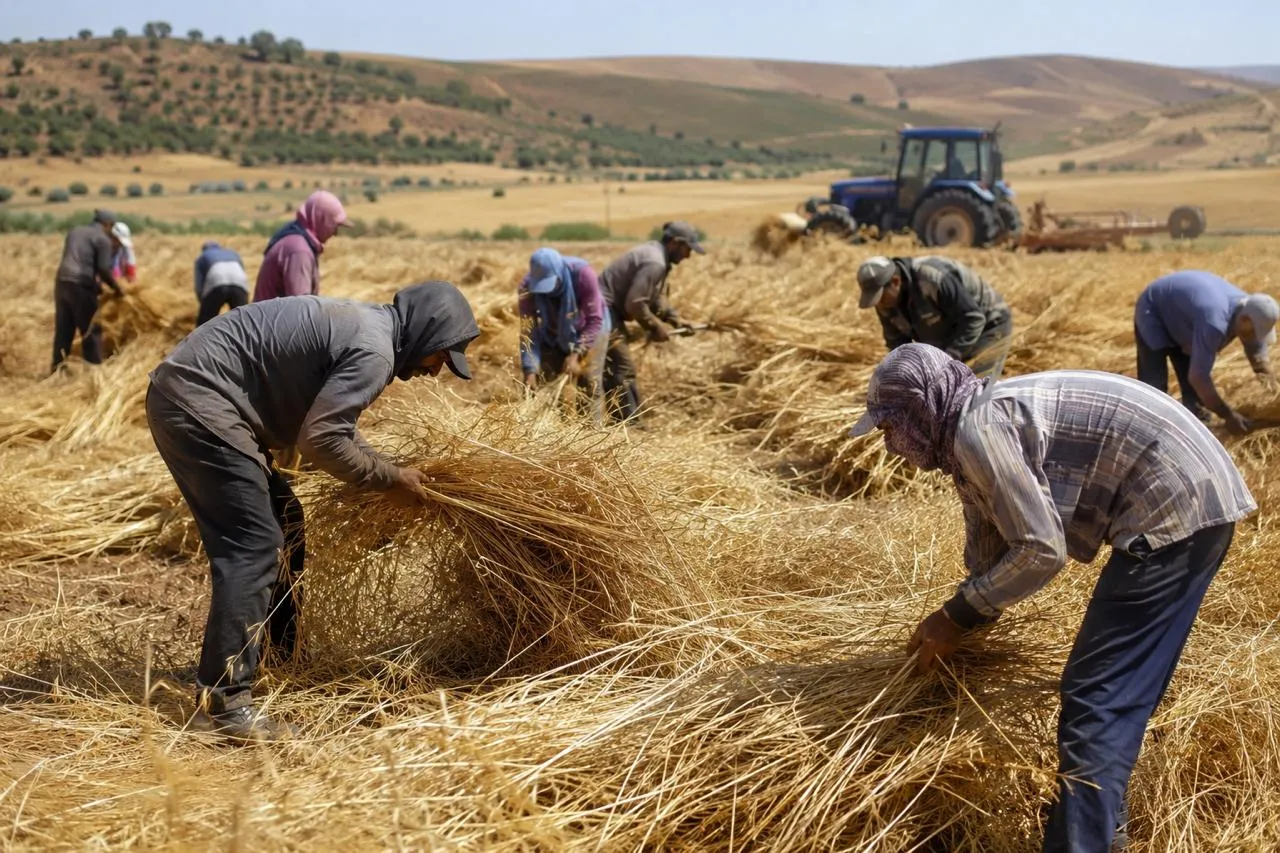
A recent study has unveiled that the personality traits of Moroccan farmers significantly influence their levels of anxiety related to climate risks. The findings indicate that emotional stability is associated with reduced anxiety about climate change, while traits such as openness to experiences and extraversion correlate with heightened levels of concern. This analysis was based on a survey of 331 households of cereal farmers in the Marrakech-Safi region, identified as one of the most vulnerable areas in Morocco to the impacts of climate change.
The study, published in June 2026 in the "Scientific Reports" journal by Nature, highlights a psychological dimension that has been less emphasized in climate change research within Morocco. The researchers focused on what they termed the "affective perception of climate risks," which refers to the anxiety and preoccupation individuals feel regarding climate threats and their potential effects on their lives and livelihoods.
The research concluded that variations in anxiety levels among farmers are not solely linked to their exposure to climate risks or their socioeconomic conditions; they are also influenced by their relatively stable psychological and personality traits, even when living under identical environmental conditions and facing similar risks. The study utilized field data collected from November 2024 to March 2025 across four provinces in the Marrakech-Safi region, selected for its representation as a natural laboratory for studying the effects of climate change. This region spans an area of 38,167 square kilometers and features a semi-arid climate with significant rainfall variability, where nearly half of its area receives less than 300 millimeters of rain annually, rendering it one of the most vulnerable regions to climate fluctuations.
The Role of Agriculture in Rural Livelihoods
The report emphasizes that agricultural activities serve as the primary source of livelihood for rural populations in the region. Over the past two decades, the sector has faced increasing pressures due to successive droughts, rising temperatures, and declining rainfall, leading to groundwater depletion and reduced agricultural productivity. Cereal cultivation, particularly wheat and barley, stands out as a crucial activity for 96,612 farmers in the area, relying on it for income and livelihood despite recurring losses attributed to climate disturbances.
To measure personality traits, the researchers employed the globally recognized "Big Five" personality model, which includes openness to experiences, conscientiousness, extraversion, agreeableness, and neuroticism, the latter being reversed to gauge emotional stability. The analysis revealed that emotional stability was the trait most strongly associated with lower climate-related anxiety, while extraversion and openness to experiences were linked to increased levels of anxiety and concern regarding climate risks. The researchers explained that individuals who are more open and socially interactive tend to seek information and stay updated, which enhances their awareness of climate threats and renders them more sensitive to such risks.
Conversely, the results indicated that farmers exhibiting high levels of emotional stability and personal discipline are less likely to express climate-related anxiety, which the researchers attributed to their greater ability to regulate emotions and cope with uncertainty and stress. The study also found a negative correlation between the trait of agreeableness and levels of climate anxiety, suggesting that these farmers might benefit from social support networks and local solidarity that alleviate their feelings of individual risk.
Notably, the study revealed that participating farmers demonstrated relatively high levels of personal discipline, agreeableness, and extraversion, with average scores of 3.93 out of 5 for discipline, 3.97 for agreeableness, and 3.82 for extraversion. In contrast, the average score for openness to experiences was 2.85, while emotional stability averaged at 3.00. The researchers believe these findings reflect the nature of Moroccan agricultural communities, which heavily rely on social solidarity, collective action, and planning to confront environmental and economic challenges.
Additionally, data indicated that the primary sources of climate anxiety among farmers were linked to crop yield, with an average concern score of 2.78 out of 5 regarding the impact of climate change on agricultural productivity, followed by anxiety about the well-being of the local community at an average of 2.68. Concerns related to household income and family health were reported at relatively lower levels, indicating that direct agricultural impacts remain the most salient in farmers' perceptions of climate risks.
The study also analyzed what are termed "higher-order personality traits," which encompass broader psychological constructs combining several core traits. In this context, researchers found that the trait of "psychological resilience," which combines openness and extraversion, was associated with higher levels of climate anxiety, while "psychological stability," which merges emotional stability, agreeableness, and discipline, was linked to lower anxiety levels. This finding reveals a complex psychological balance between the tendency to seek information and engage with the surrounding environment on one side, and the ability to regulate emotions and adapt psychologically on the other.
The report also highlighted a non-linear relationship between social integration and climate anxiety, noting that farmers with moderate levels of social integration exhibited lower anxiety levels, while anxiety levels rose once again among those with higher social integration. The researchers suggest that strong social networks can provide mutual support that diminishes the sense of risk; however, they may also contribute to the collective transmission of fears and pressures when shared environmental threats escalate.
Regarding the social and economic characteristics of the studied sample, the results revealed that the majority of farmers belong to the age group between 40 and 79 years, with an average of only 4.52 years of education. The average length of residence in local communities was approximately 50.92 years, reflecting a strong connection to the land and rural areas. The average household size was found to be six individuals, with an average of 1.63 dependents per family. Concerning exposure to extreme climate phenomena, farmers reported experiencing an average of 4.98 major climate events over the past two decades.
The agricultural data showed that the average farm size was 17.63 hectares, with 66% of the land located in flat areas, while 73% of farmers considered their land to have high fertility. The study recorded the ownership of various production and livestock assets by agricultural households, which serve as essential mechanisms for dealing with economic and climatic shocks.
The researchers emphasized that the study's results do not imply that personality traits directly dictate adaptation behavior or its success concerning climate change. Instead, they reveal influential psychological links in how farmers perceive and feel about risks. They clarified that risk perception represents a crucial stage preceding adaptation decision-making, and understanding the psychological differences among individuals can aid in designing more effective and targeted policies.
In light of these findings, the report calls for developing climate communication strategies that take into account the psychological diversity within Moroccan agricultural communities, noting that standardized messages may not be equally effective across all demographics. It also recommended leveraging agricultural advisory services and early warning systems to deliver messages tailored to the varying thought patterns and responses among farmers, considering emotional and psychological dimensions alongside technical and economic aspects.
The study posits that incorporating the psychological dimension into climate adaptation policies could enhance the effectiveness of public interventions aimed at building resilience in Moroccan rural communities, particularly in the most vulnerable areas facing drought and water scarcity. It also stressed the importance of continued scientific research in this field through long-term studies that track the evolution of perception and behavior over time, facilitating a better understanding of the relationship between climate anxiety and actual adaptation decisions among Moroccan farmers.
As reported by lakome2.com.