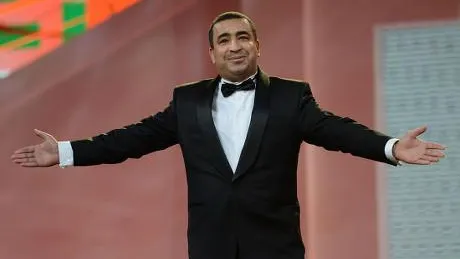
Abdelkrim Abou Obeid: A Dual Legacy in Cinema and Sports
Discussing the life and career of Abdelkrim Abou Obeid necessitates acknowledging two pivotal dimensions that have defined his journey: a distinguished career in the world of cinema and international production, coupled with a significant involvement in sports, particularly with Kawkab de Marrakech during a period characterized by both ambition and challenges. Today, as Kawkab de Marrakech navigates one of the most delicate phases in its recent history, the name of Abdelkrim Abou Obeid frequently resurfaces in the conversations among supporters and commentators. His mention is not solely due to his previous leadership of the club; rather, many perceive him as a symbol of a vision, a project, and a management style that seems to be currently lacking.
In the cinematic realm, the spotlight often shines on actors and directors, yet there exist individuals who work diligently behind the scenes, contributing quietly to the success of major productions. Abdelkrim Abou Obeid is one of those unsung heroes, a recognized producer and production manager who has played a crucial role in establishing Morocco as a prime destination for international film shoots. Born in Marrakech and raised in the historic neighborhood of Bab Doukkala, the vibrant alleys of the medina, rich in color and heritage, have greatly influenced his artistic sensitivity and deepened his attachment to his hometown, which remains central to his narrative.
His professional journey began away from the limelight, on film sets and within production teams. Year after year, he climbed the ranks through hands-on experience, eventually becoming one of the most respected figures in the Moroccan audiovisual sector. A pivotal moment in his career came with the founding of 'Dune Films', which has since evolved into one of the leading film production service companies in Morocco. Through this venture, he successfully built solid bridges between the Kingdom and major international studios, aligning Morocco with prestigious global projects.
Abou Obeid's name is linked to numerous world-renowned productions filmed in Morocco, such as 'Kingdom of Heaven', 'Babel', 'Prince of Persia', and 'John Wick: Chapter 3'. He has also attracted many international television productions, leveraging his logistical and organizational expertise for these projects. In 2012, his contributions were formally acknowledged at the Marrakech International Film Festival, honoring a generation of behind-the-scenes professionals who have helped enhance the cinematic landscape of the Kingdom.
A Visionary Leader in Moroccan Football
However, Abdelkrim Abou Obeid's influence extends beyond the film industry. In economic and sports circles in Marrakech, he is recognized as a leader who embraced an ambitious vision when he assumed the presidency of Kawkab de Marrakech, one of the most iconic clubs in Moroccan football. It is essential to note that he was elected unanimously in July 2010 for a four-year term, succeeding Rachid Benrami, amidst high expectations aimed at injecting new dynamism into the club and steering it towards a more modern and structured management approach.
At a time when Moroccan clubs were striving to embrace professionalism, he championed an investment-driven model, emphasizing good governance and the diversification of financial resources. Drawing on his business experience, he sought to transpose modern management practices into the sports domain, aspiring to construct a sustainable institutional project. Of course, the transition from the business world to football was fraught with challenges, as financial constraints, public pressure, and the demand for immediate results complicated the management of a football club. Thus, evaluating his tenure at Kawkab cannot be restricted to mere sporting outcomes; it must also consider the ideas and reforms he endeavored to implement.
Abdelkrim Abou Obeid's departure from Kawkab de Marrakech occurred under unique circumstances. He resigned alongside coach Jawad Milani while the club was positioned fifth in the league, indicating the team's competitiveness at that time. His exit was not a result of poor sporting performance or a string of bad results; rather, it reflected his refusal to operate in an environment marked by internal tensions and conflicts surrounding the club. True to his principles of governance and institutional integrity, he opted to step back rather than continue his mandate in an atmosphere he deemed incompatible with his vision of sports management.
Opinions regarding this period remain divided. Some argue that the ambitions expressed exceeded tangible achievements, while others believe he possessed a vision ahead of its time, particularly concerning governance, economic sustainability, and the development of the club's self-generated resources. From an academic perspective, Abdelkrim Abou Obeid's experience serves as a genuine case study in the evolution of sports management in Morocco, raising critical questions about the relationship between vision and means, ambition and reality, and long-term projects versus the culture of immediate results.
The frequent mention of his name today does not necessarily signify a desire to return to the past; rather, it reflects the profound discomfort surrounding Kawkab de Marrakech and the quest for leadership capable of guiding the club out of its recurrent crises. When supporters and observers once again look towards figures like Abdelkrim Abou Obeid, it highlights the magnitude of the void felt and the nostalgia for a time when discussions centered more on projects and prospects rather than conflicts and crises.
The lingering question remains: Will Abdelkrim Abou Obeid ever return to the presidency of Kawkab de Marrakech if the conditions are favorable? Or is the invocation of his name merely a message from a segment of the club's community expressing a desire for a genuine project that can restore Kawkab's prestige and rightful place in Moroccan football? From Bab Doukkala to the grand international studios and onto sports responsibilities, the trajectory of Abdelkrim Abou Obeid showcases a remarkable journey. His story serves as a reminder that success is not solely measured by titles or positions held, but also by the ideas one leaves behind and the impact one makes within the institutions and communities served.
For some, legacies are built under the spotlight, while others construct theirs in the shadows. Abdelkrim Abou Obeid undoubtedly belongs to this latter category, leaving it to time, actions, and history to render the final judgment.
As reported by lopinion.ma.