
The Great Escape: A Reflection on Desperation and Hope
The term "The Great Escape" evokes the gripping historical narrative crafted by Australian author Paul Brickhill, which details the audacious escape of Allied prisoners from a Nazi camp during World War II. This tale, laden with suspense and creativity, has inspired countless adaptations, including a Hollywood film that continues to captivate audiences even six decades later. In recent events along the borders with Ceuta, a Spanish enclave, we are reminded of this narrative as we witness a different yet equally poignant form of escape—the desperate flight of hundreds of Moroccans seeking a better life.
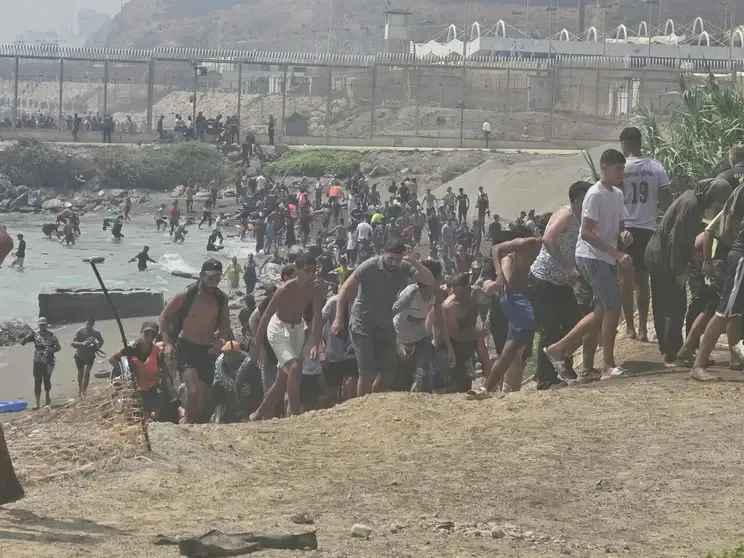
What transpired at the border with Ceuta can only be described as a modern-day "Great Escape." As families, including infants, women, and the elderly, scale mountains and wade through waters, their plight symbolizes a collective yearning to flee from a life of despair. This mass migration occurs amidst a backdrop of national celebrations in Morocco, where the monarchy commemorates the Throne Day—a day celebrating the king and his court. However, for many, this celebration is overshadowed by suffering and hopelessness, as they abandon the land that has long perpetuated their subjugation in search of freedom and dignity.
As we observe these heart-wrenching scenes, it is difficult not to feel a profound sadness for those trapped in a cycle of despair so deep that some express a wish for death rather than endure the life of humiliation they face in their homeland. Years of unfulfilled promises and deceit from their government have left many feeling abandoned, caught between the harsh realities of their current situation and the glimmers of hope that lie beyond the horizon of their native land.
The images captured by those fleeing, and reported by Spanish authorities, reflect a dire state of hopelessness among our neighbors. The Moroccan regime's attempts to portray itself as the "Switzerland of Africa" or "Japan of the Arabs" crumble under the weight of these stark realities. The cries of the people resonate with a clarity that cannot be ignored, revealing a truth that the monarchy has long attempted to mask.
One poignant story shared by a refugee describes an elderly man suffering from terminal cancer, who longed to escape his homeland for a chance at peace, while another couple, blessed with newborn twins, hoped to give their children a better life, illustrating the duality of despair and hope inherent in this human crisis. The calls from Ceuta's authorities for a state of emergency, prompted by the influx of Moroccans seeking refuge, underscore the urgency of the situation, highlighting that this is not merely a fraction of the population, but a significant wave of humanity in search of safety and stability.
In light of these events, one cannot help but wonder if "The Great Escape" serves as an appropriate title for the recent episodes in Ceuta. The resonance of this phrase extends beyond its historical connotations, encapsulating the profound human struggle for dignity and survival in the face of overwhelming odds.
As reported by echoroukonline.com.