
The Evolving Diplomatic Landscape between the United States and Morocco
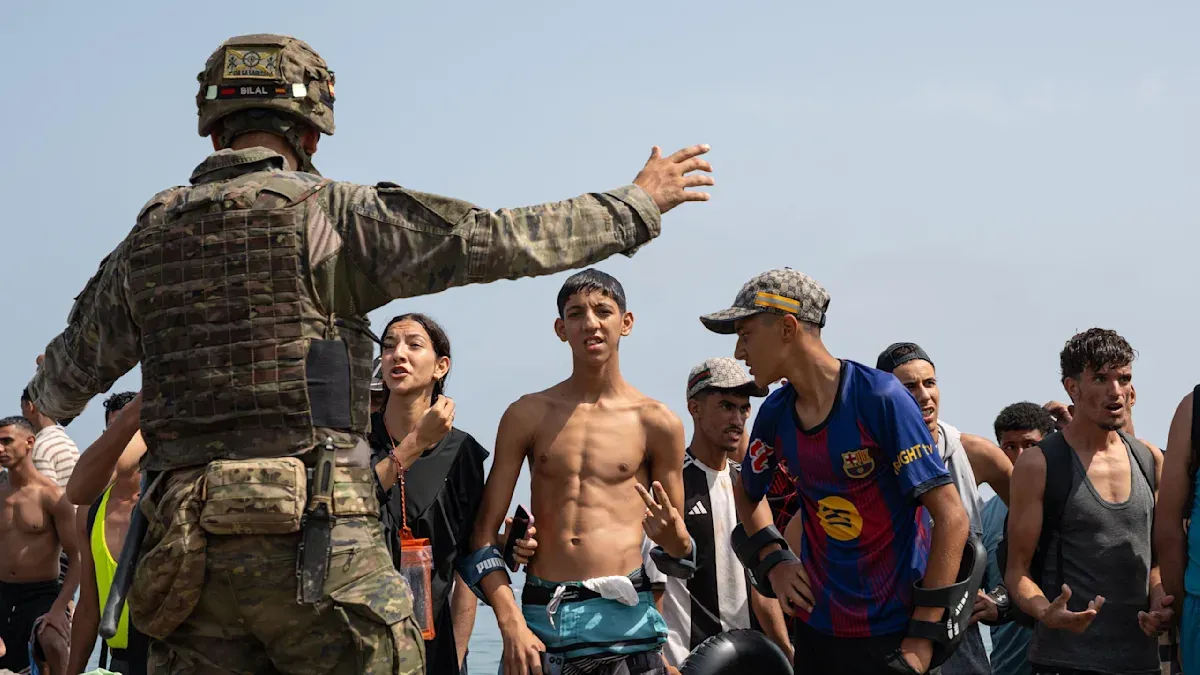
The diplomatic stance of the United States has attributed the recent invasion of Ceuta to the "direct result of the deliberate efforts by the Government of Spain to facilitate mass illegal immigration into Europe." Former President Donald Trump has described the footage of the crisis as "terrible." On July 30, while thousands were crossing the border, he congratulated King Mohammed VI on the anniversary of his accession to the throne, renewing a promise of friendship for the next 250 years. This unequivocal position from the White House is a natural consequence of a strategic alliance that benefits Rabat through military support, recognition of territorial boundaries, and justifications for its foreign policy actions, while simultaneously allowing Washington to strengthen its influence in North Africa.
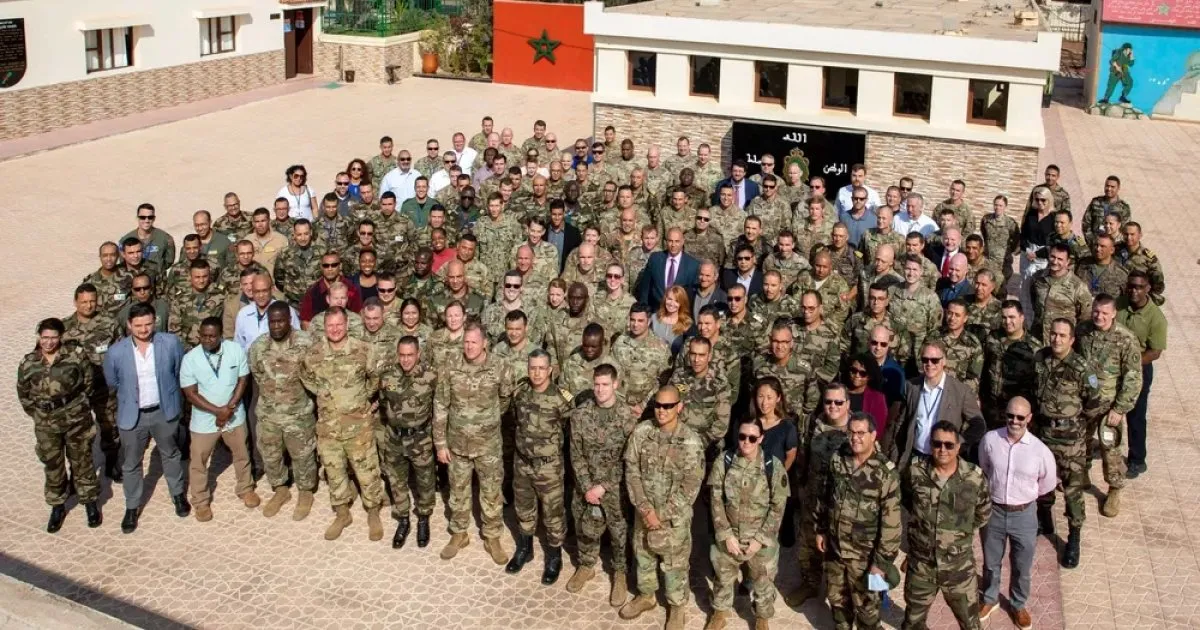
The United States has sold Morocco an arsenal worth approximately 7.4 billion euros, which includes twenty-five state-of-the-art F-16 fighter jets, Apache and Chinook helicopters, eighteen HIMARS launchers, missiles, and radar systems. In April, both governments signed a defense plan extending until 2036, granting Morocco access to NATO-reserved armaments and establishing it as the first African partner of the tactical data system Link-16. The African Lion exercise, the largest US military maneuver in Africa, brought together over 5,600 troops from around forty countries in Agadir, Tan-Tan, Kenitra, and Dakhla this spring, featuring B-52 bombers escorted by Moroccan F-16s and live HIMARS fire for the first time.
In a significant move before leaving the White House, Trump recognized Morocco's sovereignty over Western Sahara in exchange for Rabat establishing relations with Tel Aviv. Last October, at the behest of the United States, the UN Security Council endorsed Morocco's autonomy plan as the basis for negotiation, which Mohammed VI hailed as a pivotal moment for the region. Recently, a report from the Capitol placed Ceuta and Melilla within "Moroccan territory" and supported Senator Marco Rubio's proposition to facilitate dialogue regarding their "future status." Meanwhile, the Moroccan caucus, led by congressman Mario Díaz-Balart, has advocated for the designation of the Polisario Front as a terrorist organization.
Investments and Strategic Interests in Washington and Brussels
This alliance is viewed as a commercial gamble from Rabat's perspective. According to foreign agent records from the Department of Justice, Morocco allocated nearly three million euros (3.5 million dollars) in 2025 to defend its interests in the United States. Since 2015, this total has reached 58.9 million dollars, with 12.7 million coming from the state-owned phosphate giant OCP in 2020, the same year that saw the recognition of Western Sahara.
In Brussels, the _Qatargate_ scandal—the largest corruption scandal in the history of the European Parliament—had a Moroccan dimension. Belgian investigations identified Ambassador Abderrahim Atmoun as a link to the network of former MEP Pier Antonio Panzeri, where 700,000 euros were found, and pointed to external espionage by the Moroccan kingdom. This intricate web of diplomatic and economic relations highlights the precarious balance of power in the region, where Spain's national security coexists with a neighbor purchasing NATO materials without being a member of the organization. In recent weeks, the autonomous cities have seen their "future status" articulated in an official document from the House of Representatives for the first time.
The agricultural sector is also bearing the brunt of these geopolitical maneuvers. The US Department of Agriculture has included Morocco among the seven priority countries in its Food for Progress program, with a budget of 226 million dollars. Meanwhile, Brussels expanded preferential tariff treatment under the Association Agreement to tomatoes and melons grown in Western Sahara, circumventing a ruling from the European Court of Justice that had previously excluded those products for not being Moroccan. As a result, Spain is losing three thousand agricultural operations annually, totaling over thirty thousand in the last decade.
In the think tanks of Washington, there is already speculation about using Morocco as a leverage against a Spain perceived as "unreliable." As in 1975, when Washington and Paris facilitated the first Green March to prevent an independent Sahara, Spain finds itself pressured to accept a future dictated by external forces.
In the Maghreb, Morocco and Algeria have maintained a closed land border since 1994 and have broken diplomatic relations since 2021, competing for regional hegemony, particularly over Western Sahara. Algeria supports the Polisario Front while Morocco consolidates its control over the territory. Both neighbors are engaged in the largest arms race in Africa, with contracts with Moscow from Algeria and with Washington and Tel Aviv from Rabat. The Maghreb gas pipeline, which runs through Morocco, has been shut down since 2021 due to Algerian decisions, and every diplomatic gesture from Madrid towards one capital is met with a corresponding reaction from the other.
The Sahel, a semi-arid strip stretching from the Atlantic to the Red Sea through Mauritania, Mali, Burkina Faso, Niger, and Chad, holds often-overlooked importance for European security, currently accounting for over half of the world's terrorism deaths. In this region, the geopolitical landscape has turned against the United States, particularly following France's expulsion from three key countries in the Sahel, leading Washington to dismantle its drone bases in Niger in 2024.
The mission of the US Africa Command is clear: to counter the activities of China and other adversaries on a continent that the United States cannot afford to ignore. Central to this strategy is the control of the Strait of Gibraltar, through which one hundred thousand ships pass annually, accounting for over a tenth of global maritime traffic and crucial energy supplies for Europe. As Moscow expands its influence in the region, Morocco presents itself to Washington as a stable territory, an army trained under the same standards as the American military, and a migration barrier at the Strait, alongside a pivotal role in the future of Western Sahara and the Atlantic corridor leading to the future port of Dakhla, with a highway named after Donald Trump.
Beyond Morocco, Spain's influence in the region appears limited. Relations with Algeria have deteriorated since 2022, marked by the withdrawal of the ambassador and the suspension of the Friendship Treaty. However, there seemed to be a potential thaw in relations when Prime Minister Pedro Sánchez visited Algiers on July 20, just ten days before the assault, to seal a "new phase" and secure more gas from Algeria, which is already Spain's primary supplier. Some interpret this rapprochement—more hopeful than informed—as a possible explanation for the timing of the latest invasion of Ceuta. In Tunisia and Libya, Madrid's footprint is barely more than symbolic.
In the Sahel, Spain once contributed the largest contingent to the European training mission in Mali, which was closed in 2024 when Russian influence had already taken hold in Bamako. Mauritania remains a key player, guarding the Canary route with a contingent of Spanish police and civil guards on the ground, courted by Madrid, Brussels, Washington, and Rabat, which has recently tightened its security cooperation with Nouakchott. For Washington, the arrangement is straightforward: arms and diplomatic support in exchange for a bulwark against Moscow and Beijing. For Madrid, the same equation results in a loss of influence in the Sahara, repercussions for agriculture, and, so far, two invasions of Ceuta. It is a zero-sum game in which, since 1975, Spain has lost what Morocco has gained.
As reported by eldebate.com.