The Essence of Morocco's Nation-State
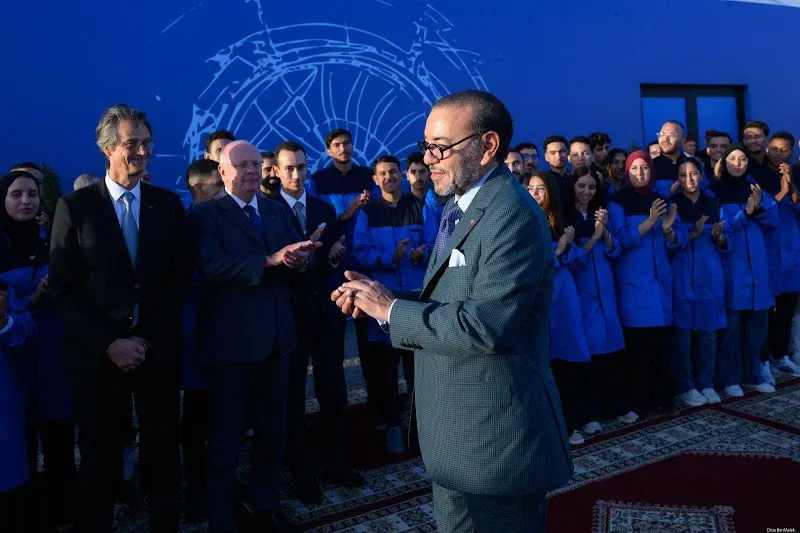
The recent address by His Majesty King Mohammed VI on the occasion of the 27th anniversary of the Throne Day has effectively redirected the discourse towards one of the fundamental pillars of the Moroccan experience. The King emphasized that "Morocco is an ancient state, drawing its strength from its deep-rooted traditions as a nation-state, where institutions play their roles within a framework of harmony and integration." This statement transcends mere political description; it encapsulates the philosophy of the Moroccan state shaped over centuries of history, explaining the secret behind its continuity and its capacity to adapt to internal and international transformations.
The discussion of the nation-state in Morocco diverges significantly from the European experience. In Western political thought, the concept of the nation-state is closely linked to European revolutions, particularly the French Revolution, and subsequently to movements for the unification of nation-states during the 19th century. However, Morocco established a sovereign state with political boundaries, central authority, and religious and historical legitimacy centuries before these European developments, providing it with elements of continuity that have preserved its unity despite the onslaught of crises and transformations.
Since the inception of the Idrisid dynasty, the Moroccan state has successfully established a political model based on the unity of the Sultan, the community, and the reference framework, granting it an extraordinary resilience. While many neighboring countries have faced successive collapses and interruptions in their political structures, Morocco has maintained the continuity of its statehood and the succession of ruling families without interruption of its political entity or loss of legitimacy.
Understanding the Significance of the Pledge of Allegiance
In this context, the King's reference to the "nation-state" carries a unique significance; it not only indicates the existence of a state with institutions but also highlights a society historically linked to its institutions and political and religious references within a continuous relationship between the ruler and the ruled. The pledge of allegiance, or Bay'ah, represents one of the most crucial foundations of this relationship. In the Moroccan experience, the Bay'ah is not merely a ceremonial protocol or a traditional inheritance; it is a political and ethical contract based on mutual rights and duties between the nation and its Imam. Islamic political jurisprudence has framed this contract as a reciprocal commitment: a commitment from the ruler to establish justice, safeguard religion, protect the country, and cater to the people's interests, alongside a commitment from the nation to obey in good conduct and uphold the unity of the community.
From this perspective, the Bay'ah can be viewed as a form of contractual legitimacy known in Islamic history, albeit differing in its references and mechanisms from the social contract theories developed by modern European thinkers such as Hobbes, Locke, and Rousseau. While those theories emerged from a philosophical conception of the individual's relationship with the state, the Bay'ah originated from a conception that intertwines religious, political, and social legitimacy within a historical framework specific to Islamic societies. It is noteworthy that even Western democracies do not always rely on direct elections to choose their heads of state. For instance, the United States utilizes the Electoral College system, where citizens elect electors who subsequently choose the President. This system reflects the idea of mediation in producing political legitimacy, a concept recognized by various political systems throughout history in different forms.
In traditional Moroccan experience, the people of resolution and contract have played this role as representatives of tribes, scholars, dignitaries, and social forces, participating in the ratification and announcement of the Bay'ah. Although the historical and institutional contexts between the two experiences differ, both are grounded in the principle that legitimacy is not solely built on direct individual expression but also on representative mechanisms that reflect the balance of society and its institutions. This does not imply equality between the two systems but rather highlights the existence of historically diverse forms of producing political legitimacy.
What makes the Moroccan Bay'ah unique is that it has not remained merely a mechanism for selecting a ruler; it has evolved into a framework that has preserved the continuity of the state through the centuries. While Europe witnessed bloody revolutions, civil wars, and the collapse of monarchies, Morocco has maintained the continuity of its institutions and has been able to adapt its political system to significant transformations without losing its identity or historical legitimacy. Consequently, it is not surprising that the Throne Speech identified stability as Morocco's primary strategic asset. Stability is not a matter of chance nor a product of a temporary international circumstance; it is the result of a historical accumulation and a political culture based on the continuity of the state, effective institutions, and harmony among its various components.
This element of stability gains even greater significance in a world currently facing unprecedented turmoil. Wars, economic crises, natural disasters, and technological transformations have reshuffled the priorities of nations, making security and stability prerequisites for development. This context sheds light on the King's statement that stability has become a "rare currency" and represents Morocco's "strategic capital." Stability is no longer an end in itself; it has become the foundation for building a strong economy, attracting investments, developing strategic industries, and enhancing national sovereignty. Every economic, industrial, and tourism indicator mentioned in the speech finds its explanation in the presence of a stable state, coherent institutions, and a long-term strategic vision.
Moreover, one of the most prominent messages of the speech is the assertion that the achievements realized "transcend governmental and parliamentary timelines." This phrase establishes a profound understanding of the Moroccan state; it affirms that major projects are not contingent upon changes in governments or parliamentary majorities but are part of the state’s continuity, where institutions and governments succeed one another in implementing a singular strategic vision. The strength of Morocco, as reflected in the Throne Speech, lies not only in the magnitude of its investments or growth rates but in possessing a historical model of the state capable of balancing authenticity and modernization, maintaining the continuity of legitimacy while developing institutions, and achieving equilibrium between stability and renewal. Hence, throughout its long history, Morocco has remained a self-sufficient state, able to adapt to changes without losing its identity or unity.
Therefore, the concept of the "nation-state" invoked by His Majesty the King is not a celebratory description but rather a key to understanding the entirety of the Moroccan experience—a journey that has transformed continuity into a source of strength, stability into a condition for development, and historical and institutional legitimacy into the foundation for building the future.
As reported by hespress.com.